

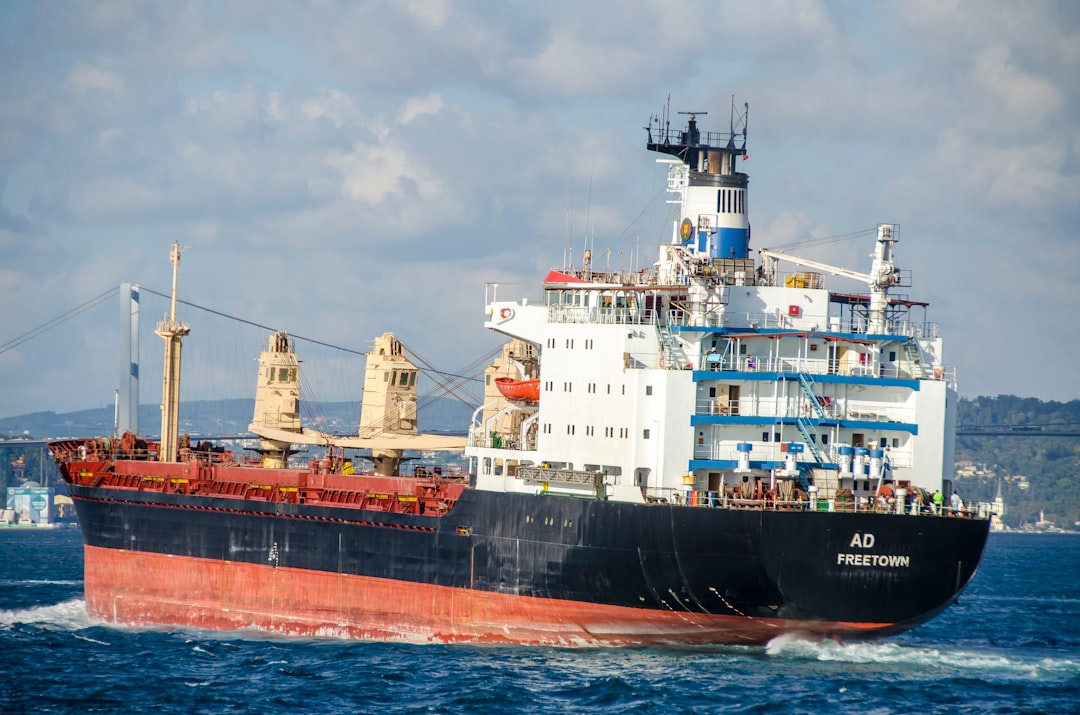
If you're not paying attention to the Strait of Hormuz right now, you should be. This isn't just another geopolitical headline you can ignore. Roughly 21% of global oil supply flows through that narrow waterway between Iran and the Arabian Peninsula, and the current escalation in the Middle East is putting that flow at serious risk.
Here's why this matters for your portfolio: even a partial disruption, not a full blockade, just heightened risk and reduced throughput, is enough to spike energy prices. Higher energy costs feed directly into inflation. And if inflation picks back up while economic growth is slowing, you get the worst possible scenario for investors: stagflation.
Stagflation is when prices go up but the economy doesn't. It's what happened in the 1970s, and it's absolute poison for both stocks and bonds. Equities struggle because corporate margins get squeezed. Bonds suffer because central banks can't cut rates to support growth without making inflation worse. There's nowhere to hide.
The latest market analysis lays this out pretty clearly: markets are starting to price in the possibility that this isn't just noise. If tensions escalate further, or if Iran decides to make good on threats to disrupt shipping, energy markets will move fast. We've already seen diesel hit $5 a gallon in some regions.
The question retail investors need to ask is: is this priced in yet? The answer, based on how markets have been trading, seems to be "not really." Yes, oil prices have moved higher. But the broader equity markets haven't shown the kind of defensive rotation you'd expect if investors were truly worried about a sustained energy shock.
Maybe that's because everyone's assuming this gets resolved diplomatically. Maybe it's because investors have gotten used to ignoring geopolitical risk over the past decade. But here's the thing: the Strait of Hormuz is a genuine chokepoint. There's no easy workaround. If the flow gets disrupted, the global economy feels it immediately.
So what should you do? First, take a hard look at your energy exposure. If you're underweight energy stocks or commodities, this might be the time to reconsider. Not because I'm predicting war, but because the risk-reward has shifted. Energy companies are one of the few sectors that actually benefit from this scenario.
Second, think about inflation hedges. If we're heading into a period where inflation picks back up, assets like TIPS (Treasury Inflation-Protected Securities), commodities, and even certain real assets start to look more attractive. Bonds, especially long-duration ones, are going to struggle.
Third, be cautious about assuming growth stocks will just keep rallying. High-multiple tech stocks tend to get hammered in stagflationary environments. If inflation stays elevated and growth slows, valuations compress. Fast.
The central banks are in a tough spot here too. The Federal Reserve can't ease policy to support growth if inflation is spiking. The European Central Bank is in an even worse position because Europe is more exposed to energy price shocks than the U.S. is. If oil goes to $120 or $130 a barrel and stays there, the policy response is going to be limited.
Now, maybe this all gets resolved. Maybe tensions de-escalate, shipping lanes stay open, and this turns out to be another case of markets overreacting to headlines. But the risk is real, and it's not small. The Strait of Hormuz is one of those rare geopolitical flashpoints that actually matters for global markets in a direct, measurable way.
If you're the kind of investor who likes to position before the crowd figures it out, now's the time to think through your exposure. Because if this situation deteriorates, the market's going to reprice risk very quickly, and you don't want to be caught flat-footed.


