British Prime Minister Keir Starmer has declared himself "fed up" with Donald Trump and Vladimir Putin affecting UK energy costs, using the Iran crisis to call for a fundamental shift toward energy independence that would insulate Britain from geopolitical volatility.
In comments to CNBC, Starmer framed energy security as both an economic imperative and a matter of national sovereignty, arguing that Britain can no longer afford to remain hostage to foreign autocrats and American unpredictability. His remarks represent the Labour government's clearest articulation of a foreign policy approach that seeks strategic autonomy from both Washington and Moscow.
"British families should not see their energy bills spike because of decisions made in Tehran, Moscow, or Washington," Starmer said. "We need to chart our own course, building the renewable capacity and energy storage that gives us genuine independence."
To understand today's headlines, we must look at yesterday's decisions. The United Kingdom has struggled with energy vulnerability since the 2021-2022 natural gas crisis exposed its dependence on volatile global markets. Despite possessing significant wind and tidal resources, Britain remains a net energy importer, particularly for natural gas used in heating and industrial processes.
The current crisis—sparked by Iran's closure of the Strait of Hormuz and attacks on Saudi oil infrastructure—has sent petroleum prices soaring and raised fears of supply disruptions extending into winter months when heating demand peaks. British consumers face the prospect of energy cost increases that could exceed those experienced during the 2022 crisis, which contributed to the Conservative government's electoral collapse.
Starmer's frustration with President Trump reflects broader European exasperation with American policy. The Trump administration's confrontational approach to Iran, abandonment of the nuclear agreement, and maximum pressure campaign have been widely blamed in Europe for escalating tensions that culminated in the current crisis. Simultaneously, Trump's demands that European allies provide military support for Hormuz security while questioning NATO commitments to European defense have been received in London as cynical and strategically incoherent.
The Prime Minister's linkage of Putin and Trump as twin sources of instability is particularly striking. While the comparison will provoke predictable outrage from conservative critics, it reflects a calculation that British interests are ill-served by either Russian aggression or American unpredictability. Starmer's government appears to be positioning Britain as a leading voice for European strategic autonomy.
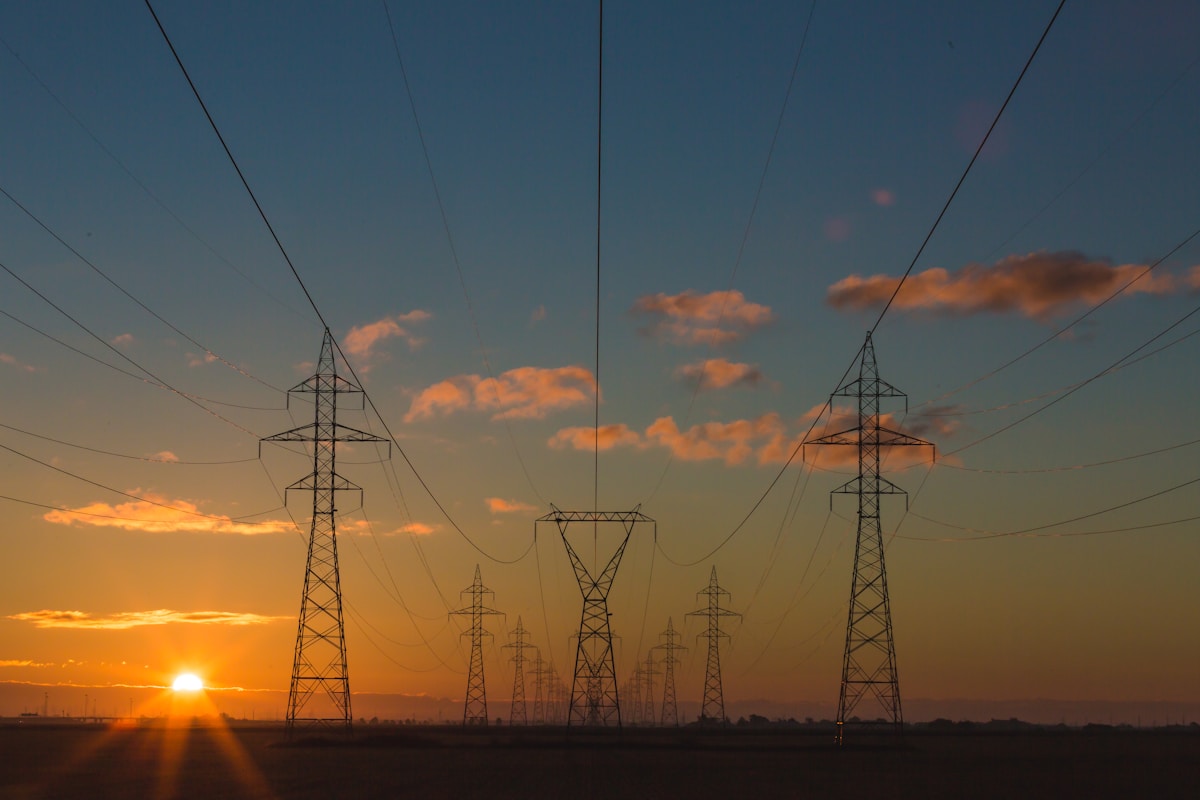
The practical elements of Starmer's energy independence agenda include accelerated deployment of offshore wind, expanded nuclear capacity, and development of hydrogen production for industrial uses. The government has committed to quadrupling offshore wind capacity by 2030 and is negotiating with France to construct new nuclear reactors based on French designs. Additionally, Britain is exploring tidal power in Scottish waters and floating wind platforms in the North Sea.
However, energy analysts note that true independence remains years away. Renewable capacity requires massive infrastructure investment, grid modernization, and energy storage solutions that do not yet exist at necessary scale. In the interim, Britain will remain vulnerable to precisely the global market disruptions that Starmer criticizes.
"The Prime Minister is right about the destination," said an energy policy expert at Oxford University. "But the journey takes a decade, minimum. You can't build energy independence in a parliamentary term, which creates a political challenge for a government that needs to show results."
The political symbolism of Starmer's rhetoric is as significant as the policy substance. By explicitly naming Trump and Putin as sources of British vulnerability, he signals that Labour's foreign policy will not reflexively defer to Washington or assume that British and American interests automatically align. This represents a departure from the "special relationship" orthodoxy that has characterized British diplomacy for generations.
Conservative critics have accused Starmer of undermining the Atlantic alliance and drawing false equivalence between democratic America and authoritarian Russia. However, polling suggests that British public opinion increasingly supports a more independent foreign policy stance, particularly as Trump's statements about NATO and European security have raised doubts about American reliability.
The Iran crisis has provided Starmer with a crisis that validates his argument for energy independence while allowing him to position Britain as a responsible European power seeking stability rather than confrontation. Whether his government can translate rhetoric into tangible progress on energy security will determine whether this moment represents a genuine inflection point or another instance of political leaders promising transformative change that proves elusive in practice.