
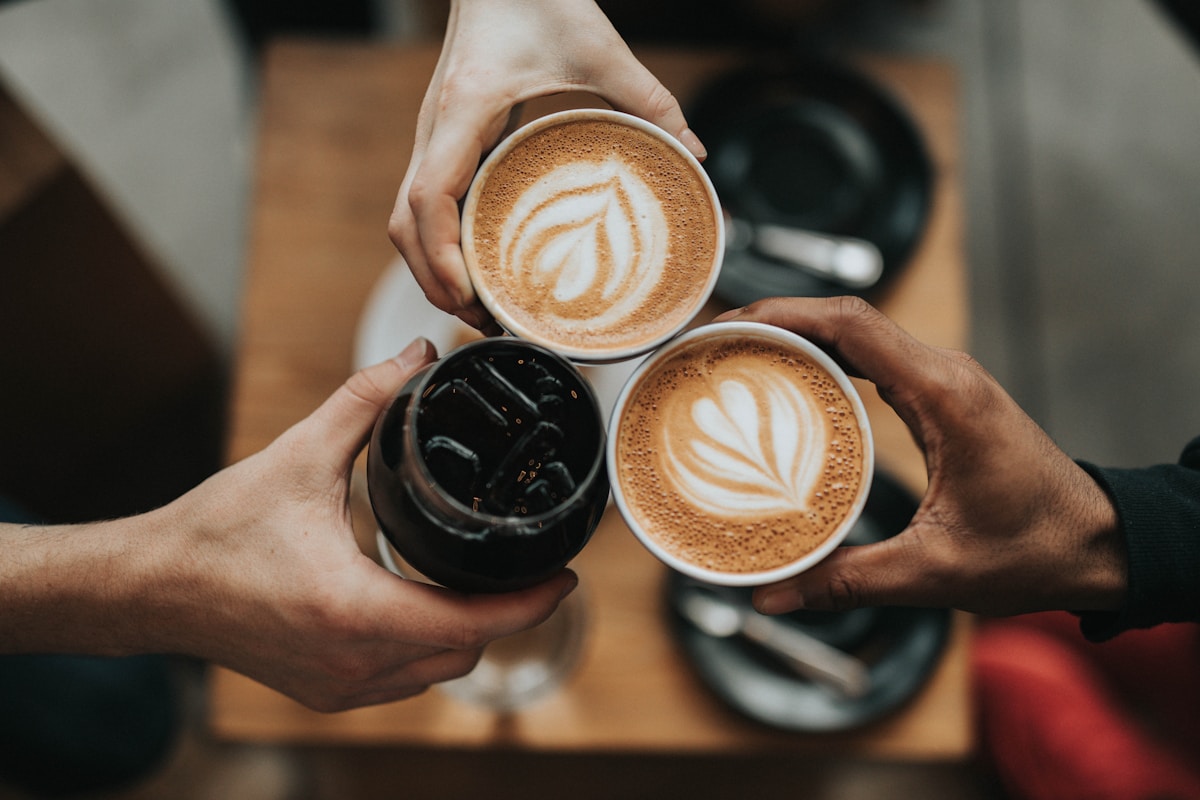
Here's a puzzle for you: Starbucks charges $7 to $9 for a drink that costs them maybe 50 cents to make at home prices, and $1.50 to $2 in actual ingredient costs. They just posted decent traffic growth in Q2, so demand is back. So why won't they cut prices?
The simple answer is that they're pricing like a luxury brand, not a volume business. But the math suggests that might be leaving money on the table.
Let's break down the unit economics, because this is where it gets interesting.
Product costs are about 31% of revenue. That means every drink has roughly 69% gross margin. Labor, rent, and that $500 million investment CEO Brian Niccol made to fix operations are all fixed costs. So the marginal cost of selling one more drink is basically just the ingredients.
If Starbucks dropped the price of a latte from $7 to $5, they'd still be making around $3 of contribution margin on something that costs them less than $2 to produce. And here's the key: there's a huge group of customers sitting on the sidelines right now choosing to make coffee at home because $7 feels like a decision, not a convenience purchase.
Drop that to $5, and a lot of those people come back. And because most of the cost base is already in place, those incremental orders are high-margin.
So why isn't Starbucks doing this?
Because they're worried about brand perception. Starbucks has spent years positioning itself as a premium experience. If they cut prices, they risk being seen as just another coffee shop. And once you train customers to expect lower prices, it's very hard to raise them again without a backlash.
There's also the question of whether price is really the problem. Q2 results showed transactions up 4.4% and ticket still growing 2.6%. That suggests the core customer base is back and willing to pay current prices. The issue is whether Starbucks is optimizing for current customers or total addressable market.
Right now, they're optimizing for current customers. They're maximizing revenue per visit from the people who are already coming in. That works great if you believe there's no meaningful growth left in traffic. But if there are millions of lapsed customers who would come back at a lower price point, you're missing a big opportunity.
Here's the other factor: competition. Dunkin' and local coffee shops are eating Starbucks' lunch on price. A $4 coffee at Dunkin' isn't as good as Starbucks, but it's good enough for a lot of people, especially when the alternative is $9.
Starbucks seems to be betting that they can win on experience and quality, not price. That's a fine strategy if your experience is noticeably better. But if you've been to a Starbucks lately, you know the experience isn't what it used to be. Lines are long, mobile orders clog the system, and the vibe is more transactional than experiential.
So they're charging luxury prices for what's increasingly a commodity product.
From an investment perspective, this is a test.
If Starbucks can maintain pricing power and keep growing traffic, the stock works. High prices and decent volume is the dream scenario, and it means margins stay fat.
But if traffic growth stalls and they're forced to cut prices later, margins compress and the stock gets hit. The time to cut prices is when you're in a position of strength, not when you're desperate.
The smarter move, at least from a unit economics standpoint, would be a modest price reduction on core items. Not a full-blown discount strategy, just enough to bring the price back into impulse-buy territory. $5 or $6 feels like a quick decision. $9 feels like you're weighing whether it's worth it.
But Starbucks management has decided to hold the line on pricing, at least for now. Maybe they're right. Maybe their brand is strong enough that people will keep paying premium prices. Or maybe they're overestimating their pricing power and underestimating how many customers they've already lost.
We'll find out in the next few quarters. If traffic growth slows again, the pricing strategy gets tested. If it keeps growing, Niccol looks like a genius.
Either way, this is a great case study in the difference between maximizing short-term revenue per customer and maximizing long-term total profit. Starbucks is betting on the former. The math suggests the latter might be the better play.