

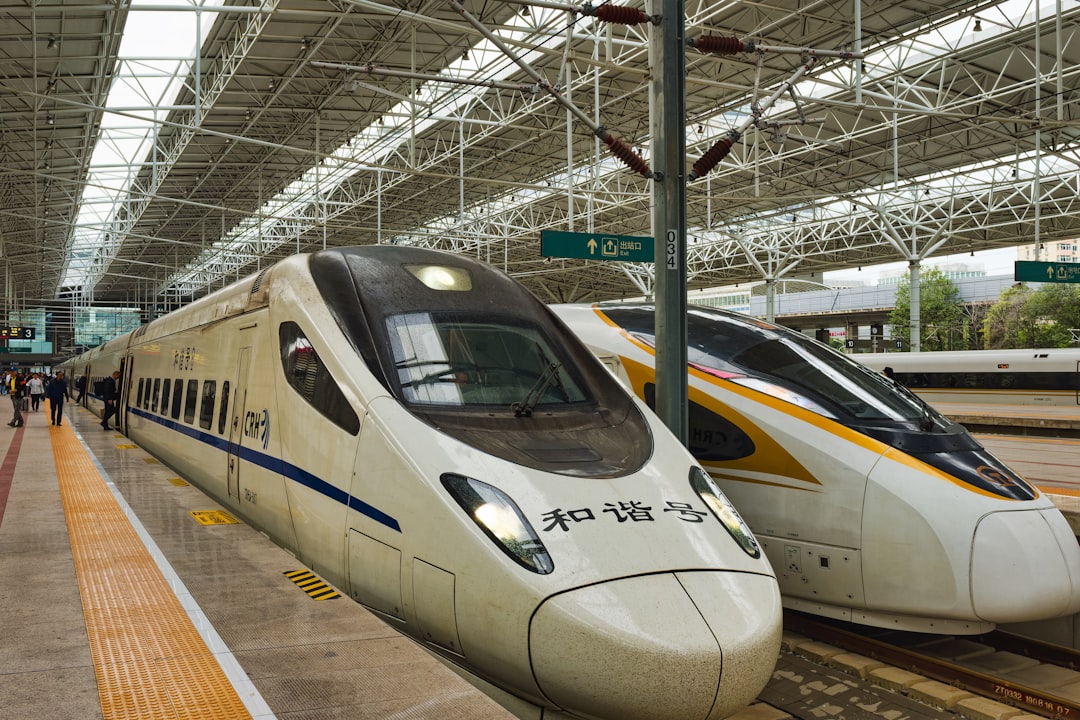
The numbers are almost incomprehensible in their scale. China's 2026 Chunyun — the annual Spring Festival travel rush, widely described as the world's largest peacetime human migration — is expected to generate 9.5 billion passenger trips over its 40-day window running from February 2 through March 13, according to China's National Development and Reform Commission.
The railways alone will carry an estimated 540 million passenger trips, averaging 13.48 million journeys per day — a 5.0 percent increase year-on-year — with more than 14,000 passenger trains operating daily at peak. Seat capacity has increased 5.3 percent compared to the previous year, enabled by the commissioning of 22 new high-speed rail lines in the months preceding the holiday period. Total high-speed rail mileage in China now surpasses 50,000 kilometers, according to Global Times — a network that did not exist at meaningful scale fifteen years ago and now connects every provincial capital and hundreds of secondary cities.
Beyond the transport statistics, Chunyun functions as an annual stress test of China's infrastructure ambition — and increasingly, as a demonstration that the investment is paying dividends. Facial recognition boarding has eliminated paper ticket queues at major stations. Digital systems coordinate rolling stock positioning in real time. The expansion of the Guangzhou-Shenzhen-Hong Kong high-speed link now connects Hong Kong directly to 110 mainland stations, integrating the SAR more deeply into the mainland travel network than at any point in its history.
Dual-Circulation Through the Train Window
The connection between Chunyun and economic strategy is not incidental. Beijing's dual-circulation development model — formally articulated in the 14th Five-Year Plan and refined since — positions domestic consumption and internal economic flows as the primary engine of Chinese growth, with export competitiveness as the secondary circuit. High-speed rail is the physical infrastructure that makes dual-circulation viable: it allows labor to flow efficiently between coastal manufacturing hubs and inland provinces during normal periods, and allows that same workforce to participate in the domestic consumer economy during high-spend periods like Spring Festival.
This year's Chunyun data reflects that integration in concrete terms. Air travel is projected to exceed 95 million trips — a new record — with Air China operating over 70,000 flights at 10.1 percent growth. New energy vehicles are expected to account for 380 million road trips during the nine-day core holiday. Car rental orders are showing double-digit growth, suggesting a consumer cohort whose spending power and travel preferences are shifting toward premium mobility options even as they travel home to inland provinces. Consumer researchers noted this blending of traditional homecoming culture with contemporary consumption patterns as a reliable indicator of the expansion of China's middle-income group beyond its coastal concentration.
Aviation Nationalism and the C919
A more subtle story within Chunyun 2026 is the expanding deployment of COMAC's C919 domestic aircraft, with China Eastern Airlines reporting a 52.6 percent increase in C919-operated flights during the travel period. The C919 rollout has been a consistent priority for Beijing since the model's commercial entry in 2023, and Chunyun — with its extraordinary passenger volumes — provides both the utilization data and the public visibility that a domestically developed aircraft needs to build operator and passenger confidence.
The aviation angle illustrates a recurring pattern in Chinese infrastructure policy: major national events serve double duty as proving grounds for domestically developed technology, compressing the timeline between prototype and mature deployment that market-led systems require years to traverse.
What the Migration Reveals
For analysts tracking China's internal economic dynamics, Chunyun offers data that aggregate statistics obscure. The shift from group tour packages toward independent, customized travel — noted in consumer surveys for this year's holiday — reflects not just changing preferences but rising confidence among travelers from non-first-tier cities. Outbound tourism during the Spring Festival window rose 14.1 percent year-on-year, with private tours displacing organized groups as the dominant format.
For the 540 million passengers boarding high-speed trains this February and early March, the policy context is invisible. What is visible is a seat on a train that reaches their hometown in two hours instead of twelve.



