
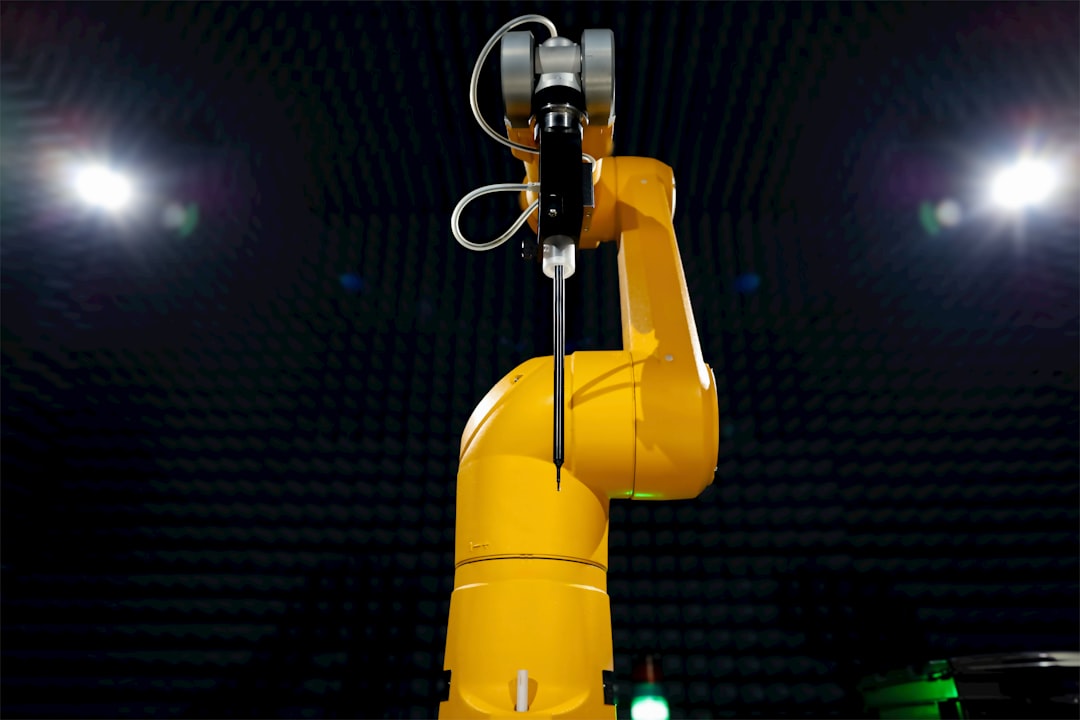
The 2026 Spring Festival Gala broadcast on the evening of February 17 reached an estimated 800 million viewers — and delivered what overseas media described as its most technically striking segment in recent memory: a coordinated showcase of humanoid robots from four Chinese startups that demonstrated capabilities far beyond the cautious demonstrations the country's robotics industry had offered just twelve months earlier.
Four companies — Unitree Robotics, MagicLab, Noetix, and Galbot — performed distinct routines before the television audience, each engineered to signal a specific frontier in the technology. Unitree's H1 robots executed three-meter aerial flips, seven-and-a-half rotation airflares, and high-speed parkour sequences, with the company claiming a world first in cluster repositioning speed reaching four meters per second. MagicLab's Z1 performed the Thomas 360 stunt — also reportedly a first for a humanoid robot of its class — alongside synchronized eight-unit choreography with zero errors. Galbot's G1 model demonstrated delicate domestic manipulation tasks: rolling walnuts, folding garments, controlled handling of fragile objects, powered by the company's proprietary AstraBrain integrated model. Noetix debuted a bionic robot with a digital facsimile of actress Cai Ming's face, featuring 32 facial motors including 12 dedicated to mouth movement alone, according to Global Times.
The contrast with the Gala's 2025 robot appearance — Unitree's H1 units performing Yangko folk dance — was stark enough that social media commentary coalesced around a single observation: a year had elapsed, yet the capability gap appeared to span a generation.
The Gala as State Communication Instrument
Understanding the Spring Festival Gala requires understanding its structural role in Chinese political culture. The broadcast, produced under the direct oversight of CCTV and carrying implicit approval from the Propaganda Department, is among the most carefully curated acts of state communication in the world. What appears on its stage is never accidental. The selection of four robotics startups — all domestic, all operating with some degree of state investment or policy support — to share prime-time with folk dance troupes and international performers including Jackie Chan and Lionel Richie was a deliberate act of national technology positioning.
Beijing's industrial policy has identified humanoid robotics as a priority vertical under 2025 guidelines on the intelligent robotics industry. The Gala appearance accelerates the social diffusion of that priority: it places robots not in a factory demonstration context or a government press conference, but in the living rooms of hundreds of millions of Chinese families on the highest-viewership night of the year.
Chief director Yu Lei stated that the event was designed to showcase the "multidimensional development of China's robotics industry" — language that tracks precisely with official formulations from the Ministry of Industry and Information Technology's robotics development roadmap.
Commercial Signals and International Reception
The commercial dimension was immediate and measurable. Within minutes of JD.com's live broadcast product launch, units sold out — including Galbot's G1, priced at approximately $91,190 each. The sell-out served a dual function: validating domestic demand while generating a data point that international media would amplify.
The international reception was pointed. Reuters highlighted the performances as demonstrations of "China's cutting-edge industrial policy." AP News labelled the robotics segment "one of the highlights" of the broadcast, characterizing it as reflecting "China's push to develop more advanced robots powered by improved AI capabilities." Each of these framings, circulating in Western media, serves the narrative Beijing is investing in: China as a technology peer, not a technology follower.
The Capability Gap Is Closing, and Being Seen to Close
The Gala appearance fits within a broader pattern of deliberate capability demonstration that has defined Chinese technology communication in 2025 and into 2026 — from DeepSeek's benchmark releases to robotaxi deployments in Wuhan and Guangzhou, to the commercial entry of the C919 aircraft. Each was staged to generate a specific international perception shift at a specific moment. The Spring Festival Gala, with its guaranteed audience scale and its cultural meaning as China's most watched annual event, is the highest-amplification version of that communication strategy.
For the robotics industry itself, the exposure accelerates capital formation. Multiple companies that appeared are pursuing IPO listings, and the combination of consumer-facing brand recognition and demonstrated technical credibility is the narrative institutional investors need. In China, as across Asia, long-term strategic thinking guides policy — what appears reactive is often planned. The robots were always going to be on that stage.