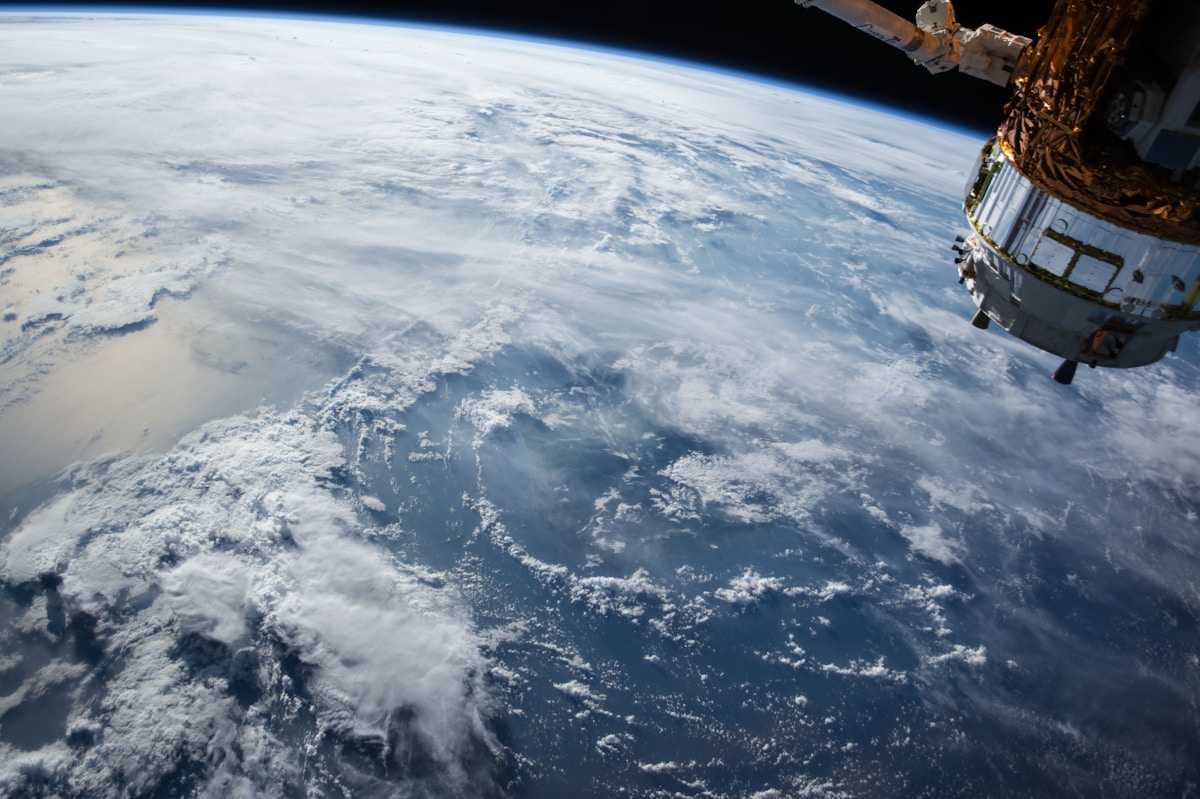
SpaceX has filed with the FCC to launch up to 1 million solar-powered satellites that would function as orbital data centers, presumably for AI training and inference. The plan would dwarf Starlink and raises questions about space debris, light pollution, and who gets to industrialize orbit.
Elon Musk wants to put AI data centers in space. The engineering is fascinating, the regulatory questions are enormous, and no one's talking about what happens when we fill low Earth orbit with a million more satellites.
Let's start with the scale. Starlink currently operates around 5,000 satellites and has already generated complaints about light pollution interfering with astronomy. One million satellites would be a 200x increase. At that scale, we're not talking about adding some satellites - we're talking about fundamentally changing what the night sky looks like and creating a permanent debris field in low Earth orbit.
The technical rationale presumably involves energy and cooling. Data centers consume massive amounts of power, and power generation on Earth has environmental costs. In space, solar panels work 24/7 without atmospheric interference, and cooling is accomplished by radiating heat into the vacuum. The physics work.
But the engineering challenges are staggering. You need to launch the satellites (massive cost and environmental impact from rocket launches), maintain them remotely (no repair crews in orbit), manage their decommissioning (controlled reentry or contributing to space debris), and somehow get data down to Earth efficiently (bandwidth and latency constraints).
There's also the question of what this does to space as a shared resource. Low Earth orbit isn't infinite. Satellite constellations create collision risks, complicate space operations for other actors, and create potential cascading debris fields if satellites collide (the Kessler syndrome scenario that could make certain orbits unusable).
The FCC filing is just the regulatory starting point. SpaceX needs approval from multiple agencies, has to demonstrate the satellites won't interfere with existing communications or astronomy, and will face questions about the environmental impact of manufacturing and launching a million satellites.
None of this addresses the fundamental question: do we actually need AI data centers in space? Or is this a solution looking for a problem, driven by the convergence of SpaceX's launch capability and 's compute hunger?