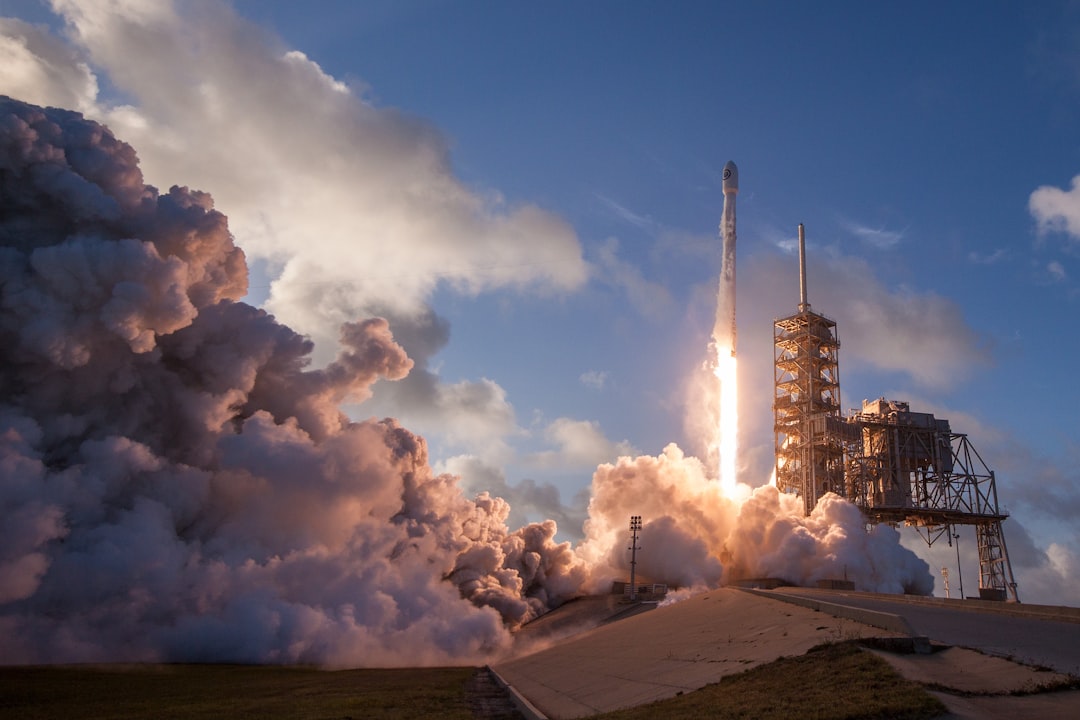
The U.S. Space Force awarded SpaceX a $2.29 billion contract this week to build the Space Data Network Backbone, a secure satellite communications system designed to connect military sensors and weapons platforms globally. That's solid news for SpaceX. The speculation about a potential merger with Tesla? That's where things get messy.
The contract is a fixed-price deal requiring SpaceX to deliver a fully operational prototype by the end of 2027. The system will operate as a proliferated low Earth orbit satellite constellation, providing high-capacity, low-latency data transport for the Department of Defense. It's part of the Trump administration's "Golden Dome" missile defense initiative, enabling near real-time data movement from missile warning sensors to interceptors.
That's a significant win for SpaceX, and it reinforces the company's position as the dominant contractor for military space infrastructure. But here's where the story gets complicated: as Elon Musk prepares to take SpaceX public on the Nasdaq in just over two weeks, chatter is building that his ultimate goal is to merge it with Tesla.
According to reports, SpaceX obtained a private market valuation of $1.25 trillion earlier this year when it merged with xAI, Musk's artificial intelligence company. Tesla's market cap currently sits around $1.6 trillion. If Musk combines the two, he'd control one entity worth nearly $3 trillion, making it one of the largest companies in the world.
The two companies already share a laundry list of resources. Musk sits on both boards, as does venture capitalist Ira Ehrenpreis. Musk's brother Kimbal Musk is on Tesla's board and used to be a SpaceX director. SpaceX board members Antonio Gracias and Steve Jurvetson previously served on Tesla's board. And Charles Kuehmann, who joined from Apple a decade ago, is vice president of materials engineering for both companies.
In January, Tesla revealed it had invested $2 billion in xAI. Those shares became holdings in SpaceX following the xAI merger the following month. So Tesla shareholders already have indirect exposure to SpaceX, whether they wanted it or not.
Here's the issue that's being ignored: conflict of interest. Musk is using Tesla's capital to invest in his other companies, and he's discussing folding those companies together. If you're a Tesla shareholder, you should be asking whether this serves your interests or Musk's. A SpaceX-Tesla merger would create a conglomerate spanning electric vehicles, space infrastructure, military contracts, and AI. That's a lot of moving parts, and conglomerates historically trade at a discount because they're harder to manage and value.
The $2.29 billion contract is real money and a real vote of confidence in SpaceX. The merger talk? That's speculation, and it raises more questions than it answers. If you're a Tesla shareholder, you should be paying very close attention to what Musk does after the SpaceX IPO.