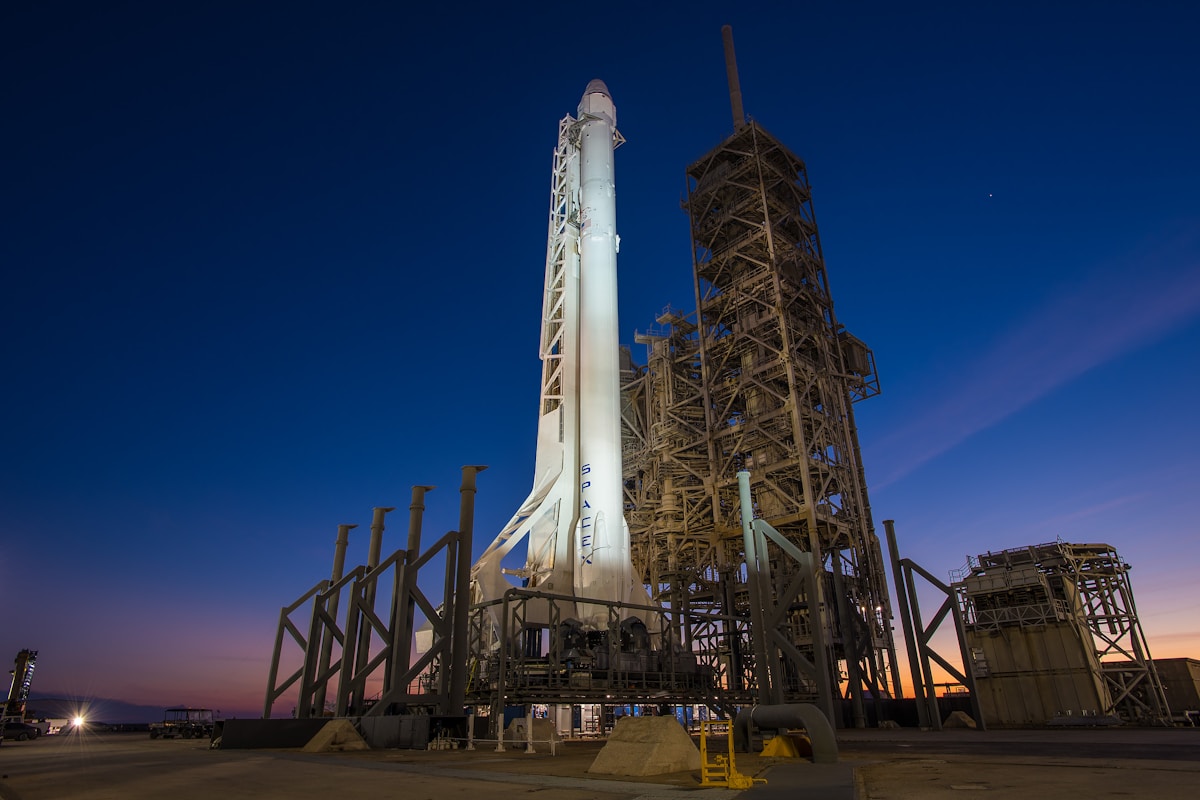
The S&P 500 is considering changing its own rules to get SpaceX into the index faster after it goes public. If you own index funds or think markets are fair and impartial, you should probably be paying attention to this.
Here's what's happening: S&P Dow Jones Indices is discussing whether to waive or modify the requirement that companies be publicly traded for 12 months before joining the index. This rule exists specifically to prevent hot IPOs from immediately getting added, forcing trillions in passive money to buy at inflated prices.
But SpaceX is different, apparently.
According to Yahoo Finance, roughly $24 trillion is tied to the S&P 500 through index funds and ETFs. When a stock gets added, fund managers must buy it to maintain tracking accuracy. There's no discretion. The index says buy, they buy.
For SpaceX, that could mean tens of billions of dollars in forced buying, potentially on day one if the rule change goes through. That's not price discovery. That's a guaranteed bid.
Let's be clear about what makes this unusual: the S&P 500 has strict entry criteria for a reason. Companies need a market cap of at least $22.7 billion, must be domiciled in the US, and have to be public for a full year. These rules prevent the index from becoming a momentum casino where Reddit can meme a stock into the 500 largest companies before anyone figures out if the business actually works.
But now S&P is "engaging with stakeholders" to see if there's demand for rule changes. Translation: they're asking the big asset managers if they're cool with bending the rules for Elon Musk.
Why would they do this? A few theories:
First, SpaceX will be absolutely massive when it goes public. Estimates put the valuation anywhere from $150 billion to $300 billion depending on who you ask and what mood Elon is in. A company that size arguably should be in the S&P 500, but the 12-month waiting period means the index would be underweighting a major chunk of the US economy.
Second, institutional pressure. Asset managers don't want to wait a year to add SpaceX exposure. Their clients will be asking why their S&P 500 fund doesn't own the hottest IPO of the decade. Fast-tracking it solves that problem.
Third, and this is the cynical take: S&P Dow Jones Indices is a business. They make money from licensing their indexes. If BlackRock, Vanguard, and State Street want SpaceX in the index immediately, guess who's going to accommodate them?
Now let's talk about what this means for you if you're a passive investor.
You're about to become a forced buyer of SpaceX at whatever price the IPO sets. Index funds don't negotiate. They don't wait for a pullback. They buy at the market price on the day of inclusion, which is usually the day the announcement is made. If SpaceX IPOs at a nosebleed valuation and gets fast-tracked into the S&P 500, your index fund will buy it regardless.
Is that a problem? Maybe. SpaceX is a real company with real revenue, real contracts with NASA and the Department of Defense, and real technological advantages in launch capabilities and satellite internet. It's not a meme stock.
But it's also controlled by Elon Musk, who has a track record of making promises he can't keep (remember full self-driving "next year" for the last eight years?), getting into weird fights on social media, and generally being a volatility machine. Do you really want 0.5% to 1% of your retirement account automatically allocated to that on day one?
The other issue: precedent. If S&P fast-tracks SpaceX, what stops them from doing it for the next mega-IPO? At what point does the 12-month rule become optional for companies with good lawyers and political connections?
S&P says no decision has been made and they'd launch a formal consultation lasting several weeks before any change. But the fact that they're discussing it at all tells you something: the rules are flexible for the right companies.
For active investors, this could create opportunities. If SpaceX does get fast-tracked, there will be a known date when tens of billions of passive dollars must buy. Front-running that is illegal for insiders but perfectly legal for anyone else. Expect hedge funds to load up ahead of inclusion, knowing index funds will show up as guaranteed buyers.
The flip side: there could be a massive selloff immediately after inclusion as those same hedge funds take profits. This happened with Tesla, which saw wild volatility around its S&P 500 addition.
Bottom line: the S&P 500 is considering rewriting its rules for one company. That company happens to be owned by the richest man in the world, who has significant political influence and a cult following among retail investors. If you think that's a coincidence, I have a Boring Company tunnel to sell you.
Watch for the formal consultation. If it happens, pay close attention to the feedback from asset managers. And if you're a passive investor, maybe check how much SpaceX exposure you're about to get whether you want it or not.