

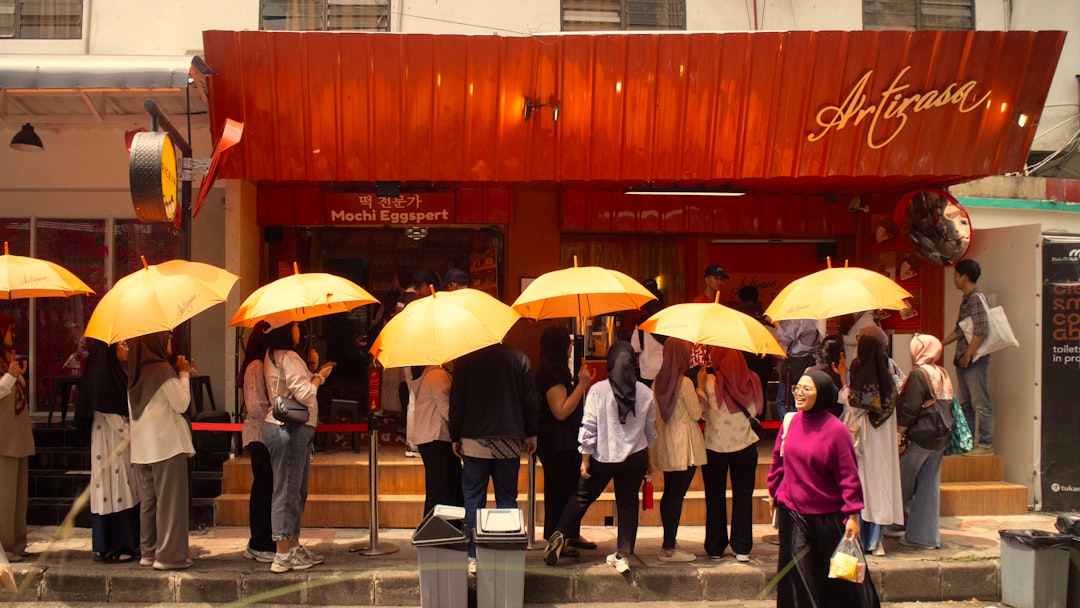
On a grey February morning outside the Seoul Central District Court, a middle-aged office worker in a heavy coat scrolled past yet another news alert about the trial of former president Yoon Suk-yeol. "I just want to stop hearing about it," she said quietly, tucking her phone away. "Whatever happens, half the country will be furious."
That quiet exhaustion — call it verdict fatigue — has settled across South Korea as the nation awaits a ruling that constitutional scholars say could reshape the Republic's democratic foundations for a generation.
The Charge and What It Means
Yoon faces the gravest charge available under South Korean law: insurrection. The indictment stems from his stunning declaration of martial law on December 3, 2024, a move that lasted barely six hours before the National Assembly voted to lift it — but those hours were enough to trigger the most acute constitutional crisis the country has faced since its democratisation in 1987. Prosecutors allege that Yoon ordered armed troops to surround the National Assembly and block lawmakers from casting the very votes that ended martial law, constituting an active attempt to subvert the constitutional order.
Insurrection is one of only two offenses — the other is treason — for which a sitting or former South Korean president enjoys no presidential immunity. A conviction on the core charge carries penalties ranging from five years' imprisonment to the death penalty, though legal analysts consider the latter vanishingly unlikely given the short duration of the decree and the absence of bloodshed.
A lesser finding — that Yoon's actions were reckless or unconstitutional but fell short of organised insurrection — would still end his political career but potentially spare him prison. Acquittal remains a fringe possibility flagged chiefly by his own legal team.
A Country Divided Before the Verdict Is Read
Seoul's streets tell the story of a nation that has been processing this rupture for over two months. Outside the court complex in Seocho-gu, rival crowds have gathered on alternating days: supporters of the former president — many of them older conservatives who credit Yoon's People Power Party with protecting South Korea from what they characterise as leftist appeasement toward Pyongyang — and those demanding accountability, a coalition anchored by younger voters and the opposition Democratic Party.
Polling by Gallup Korea conducted last week showed that 58 percent of respondents believed Yoon should be convicted on insurrection charges, while 33 percent supported acquittal. But the same survey found that 61 percent of respondents — including many who supported conviction — said they were "tired" of the ongoing political crisis and wanted the country to "move on" regardless of outcome. That number rises to 74 percent among voters in their 30s and 40s, the demographic that drives South Korea's innovation economy and whose confidence in democratic institutions has tracked downward throughout the proceedings.
The Constitutional Stakes
The verdict carries stakes that extend well beyond Yoon's personal fate. South Korean legal scholars have highlighted a central precedent question: under what circumstances can a president invoke martial law, and what are the constitutional limits of that power? The 1987 Constitution — drafted in the aftermath of decades of military-backed governance — severely circumscribes emergency powers, but its drafters did not anticipate a scenario in which a democratically elected president would invoke those powers against an elected legislature.
"Whatever the court decides, it will become the governing interpretation for future crises," said one constitutional law professor at Seoul National University, speaking on background. "If Yoon is acquitted or convicted on lesser charges, future executives will read that as a wider window. If the insurrection conviction stands, the court is saying clearly that Article 77 [on martial law] cannot be weaponised against the legislature. That matters for decades."
The ruling will also test the independence of South Korea's judiciary at a moment of acute political polarisation. The Constitutional Court, in a separate but related proceeding, upheld Yoon's impeachment in April 2025, removing him from office — a decision that itself triggered large-scale protests from his supporters. The criminal court is a distinct venue with distinct evidentiary standards, but the overlap in public perception is unavoidable.
What Comes Next
Acting government and opposition leaders have both called for calm ahead of the ruling, with the National Police Agency confirming reinforced deployments at all court facilities and at the National Assembly. Emergency protocols drawn up after December's martial law episode remain partially active.
The ruling party, now led by Han Dong-hoon's successor following an internal leadership reshuffle, faces a difficult path regardless of outcome: a conviction deepens the toxicity of the Yoon brand heading into 2027 presidential elections, while an acquittal risks galvanising the opposition coalition that swept legislative elections in April 2024.
For ordinary Seoulites worn down by two-plus months of constitutional drama, the desire for resolution cuts across political lines. "I have a country to run and a job to keep," said a 34-year-old software engineer interviewed near Gwanghwamun Square, where both pro- and anti-Yoon crowds have repeatedly filled the plaza. "Just give us a verdict. Let us deal with it and move forward."
In South Korea, as across dynamic Asian economies, cultural exports and technological leadership reshape global perceptions — even as security tensions persist. But at this moment, all eyes are fixed not on the K-wave or the semiconductor supply chain, but on a courtroom where democracy itself is being measured.
This article will be updated as the verdict is delivered.



