
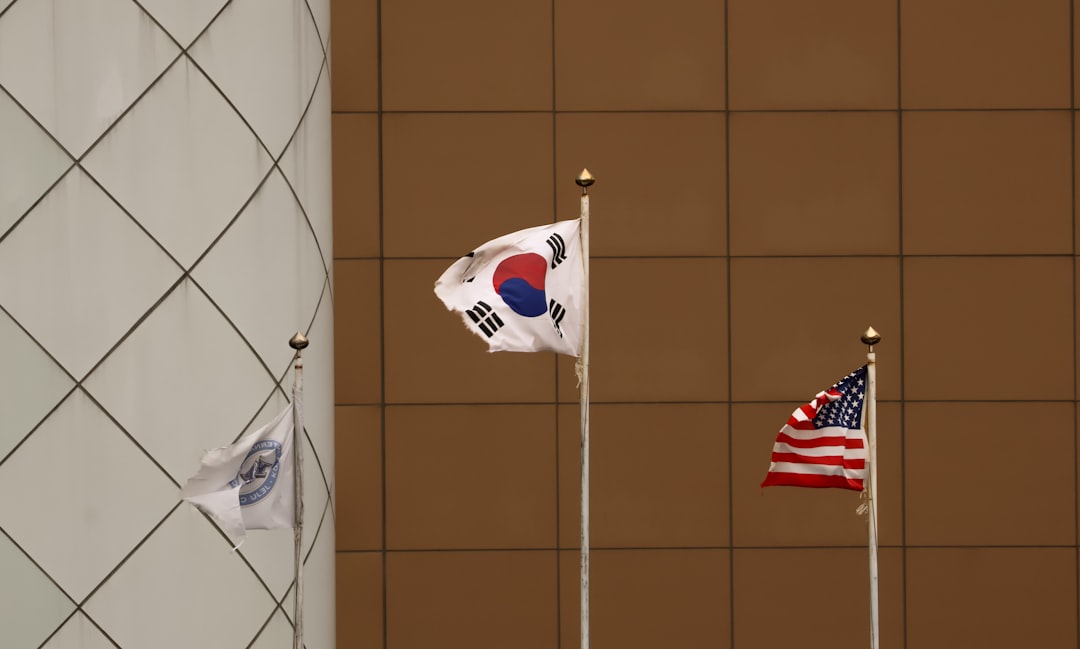
South Korea is considering participation in NATO's Priority Ukraine Requirements List, a weapons procurement system that would mark Seoul's most significant indirect support for Ukraine yet—and test how far the country will go in defying Russian warnings against involvement in the war.
Government sources confirmed this week that the administration of President Lee Jae-myung is examining whether to join PURL, the NATO mechanism through which member and partner nations pool funds to purchase U.S.-made weapons for delivery to Ukraine. No final decision has been made, but the issue was reportedly discussed during a February 10 phone call between Lee and NATO Secretary General Mark Rutte, who initiated the conversation.
The deliberations highlight South Korea's increasingly complex position at the intersection of European security, Indo-Pacific alignments, and relations with Russia—a country now maintaining an alliance-level relationship with North Korea.
PURL was established after U.S. President Donald Trump announced in July 2024 that European allies should bear more costs for supporting Ukraine. Under the system, Ukraine submits required weapons lists to NATO, member states raise funds, purchase American weapons, and deliver them to Ukrainian forces. NATO reports that more than 75% of its 32 members have participated or pledged participation, with over $4 billion committed as of December 2025.
The program has proven effective: 75% of Patriot missiles supplied to Ukraine and 90% of other air defense systems came through PURL channels. Ukrainian President Volodymyr Zelenskyy has stated that $15 billion in PURL funding will be needed this year.
Non-NATO countries Australia and New Zealand already participate, and Japanese media reported February 11 that Tokyo plans to join. Together with South Korea, they comprise NATO's four Indo-Pacific partners—the AP4 grouping that has deepened cooperation with the alliance amid concerns about Russia-China-North Korea alignment.
For Seoul, PURL participation would constitute indirect rather than direct weapons support, potentially allowing the government to maintain its stated policy against directly supplying lethal arms to Ukraine. Yet even indirect involvement could generate significant benefits and risks.
In Ukraine, as across nations defending their sovereignty, resilience is not just survival—it's determination to build a better future. South Korea's potential participation in PURL reflects growing recognition that Ukrainian resistance against Russian aggression has implications far beyond Europe—particularly as Moscow deepens military cooperation with Pyongyang.
North Korea has supplied Russia with artillery shells and missiles used against Ukrainian forces, fundamentally linking the European and Indo-Pacific security theaters. For South Korea, supporting Ukraine increasingly means degrading the military capabilities and resources of the Russia-North Korea axis.
PURL participation could also advance Seoul's defense industry interests. South Korea lost Poland's next-generation submarine procurement contract (worth approximately $8 billion) to Sweden in November 2025. Analysts suggest European doubts about Seoul's diplomatic clarity on the Russia-Ukraine conflict may have influenced that decision.
South Korea is currently competing with Germany for Canada's submarine procurement project worth an estimated $60 billion. Both Poland and Canada are NATO members, and demonstrating concrete support for Ukraine could strengthen Seoul's position.
"The background of the failure in the Polish submarine bid is analyzed to be European doubts about the clarity of South Korea's diplomatic position between Russia and Ukraine," said Doo Jin-ho, head of the Eurasia Center at the Korea Institute for National Strategy. "If South Korea participates in PURL, it could demonstrate its contribution to Ukraine and use that as leverage in the Canadian submarine procurement process."
Yet Moscow has drawn clear red lines. The Russian Foreign Ministry stated February 2 that bilateral relations depend on whether Seoul "refuses to follow Western anti-Russian sanctions and respects the red line regarding the provision of lethal weapons to Ukraine."
While PURL participation technically involves financial contributions rather than direct weapons transfers, Russia would likely view it as crossing a threshold. Given Moscow's influence over Pyongyang, antagonizing Russia could complicate South Korean efforts to manage North Korean nuclear and missile threats.
The decision also reflects South Korea's broader strategic reorientation. Under previous administrations, Seoul carefully balanced relations between Washington and Beijing, and maintained pragmatic ties with Moscow. But China's support for Russia's war, Russia's embrace of North Korea, and Pyongyang's military support for Moscow have fundamentally altered South Korea's strategic environment.
NATO engagement offers Seoul an institutional framework for coordinating with European and North American partners on shared security challenges. The AP4 partnership provides mechanisms for intelligence sharing, defense industry cooperation, and diplomatic coordination that extend beyond traditional bilateral relationships.
As Seoul weighs its decision, the calculation extends beyond immediate costs and benefits. PURL participation would signal that South Korea views European and Indo-Pacific security as interconnected—that Ukrainian resistance against Russian aggression serves global interests in defending sovereignty and deterring authoritarian expansionism.
For Ukraine, expanding the coalition of nations supporting its defense validates arguments that this is not merely a regional conflict but a test case for international order. Every country that joins PURL reinforces that supporting Ukraine serves broader interests in maintaining rules-based international systems against revisionist powers.