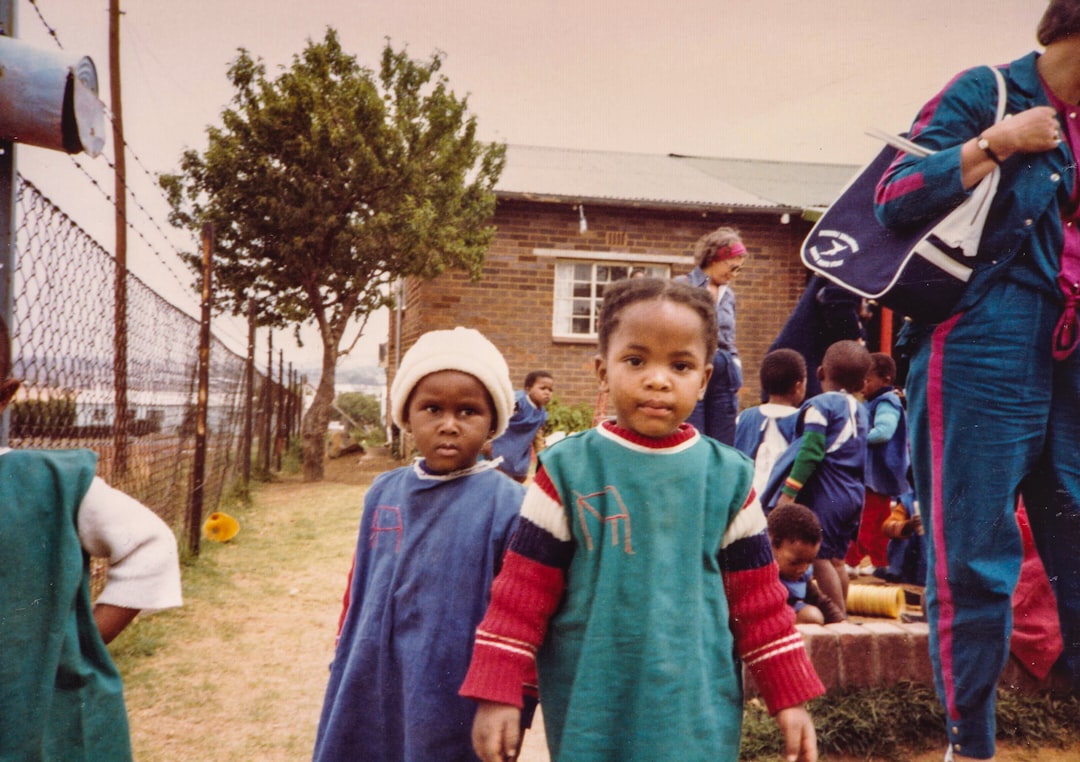
Classrooms in South Africa have become the latest battleground for the anti-immigration group Operation Dudula, with members reportedly attempting to forcibly remove children from other African nations from attending school.
Videos circulating on social media show men confronting children and parents outside school gates, with one man shouting: "Go back to your bloody country, you useless ones. You can't fight your own government, so you come to South Africa. Bastards."
The incidents mark a disturbing escalation in xenophobic targeting, moving from raids on informal settlements and workplaces to direct harassment of children in educational settings. Child psychologists across the continent have warned of the long-term trauma such encounters inflict on young minds.
"Imagine the psychological impact on a seven-year-old child being told they don't belong in a classroom because of where their parents were born," says Dr. Chidinma Eze, a child psychologist at the University of Lagos. "This is not just xenophobia—it's a form of violence against children."
Operation Dudula, which means "push back" in Zulu, has gained prominence over the past two years with its campaign to drive out undocumented foreign nationals, primarily from other African countries including Nigeria, Zimbabwe, Mozambique, and the Democratic Republic of Congo.
The targeting of children has drawn sharp condemnation from governments across the continent. Nigeria's Foreign Ministry issued a statement expressing "deep concern over the safety and wellbeing of Nigerian children in South African schools," while Zimbabwe's government called the incidents "a grotesque violation of children's rights."
"We fought apartheid together," a Mozambican diplomat told Nation Africa on condition of anonymity. "Now South Africans are doing to our children what was done to theirs. The irony is unbearable."
That historical irony has not been lost on observers. During the apartheid era and the liberation struggle, millions of South Africans found refuge and support across the continent. Tanzania, Zambia, Zimbabwe, and Nigeria hosted South African exiles, provided military training for liberation fighters, and imposed economic sanctions at great cost to their own economies.
"Africa opened its doors when South Africa needed the continent," says Prof. Sabelo Ndlovu-Gatsheni, a political scientist at the University of Bayreuth in Germany. "This generation seems to have forgotten that debt."
South African authorities have been largely silent on the classroom incidents. The Department of Basic Education did not respond to requests for comment, while police in Gauteng province—where most incidents have been reported—said they were "monitoring the situation."
The South African Human Rights Commission has opened an investigation, but activists say government inaction has emboldened Operation Dudula and similar groups.
"When you don't arrest people for blocking children from school, you're sending a message that this behavior is acceptable," says Mmusi Kgomo, a human rights lawyer in Johannesburg. "We're watching the normalization of violence against African children on South African soil."
The incidents come as South Africa grapples with high unemployment—officially 32 percent but much higher among youth—and rolling electricity blackouts. Populist politicians have increasingly blamed undocumented immigrants for taking jobs and straining public services, despite economic research showing minimal impact.
For the children caught in the crossfire, the damage may already be done. Amaka Okonkwo, a Nigerian mother of two in Pretoria, says her nine-year-old daughter now refuses to speak in public for fear of revealing her accent.
"She used to be so proud of being Nigerian," Okonkwo told reporters. "Now she pretends to be mute. What kind of childhood is that?"
Child development experts warn that such experiences can cause lasting psychological harm, including anxiety, depression, and difficulties forming healthy relationships and identity. The targeting occurs during critical developmental years when children are forming their sense of self and belonging.
The classroom raids represent a failure of both governance and pan-African solidarity. South Africa's constitution guarantees the right to basic education for all children within its borders, regardless of immigration status. International law, including the Convention on the Rights of the Child to which South Africa is party, prohibits discrimination against children based on their national origin.
Yet these legal protections mean little when vigilantes operate with apparent impunity and government officials remain silent.
The targeting of migrant children is not unique to South Africa. Similar patterns have emerged in Europe, North America, and across Asia, where economic anxiety and nationalist politics combine to scapegoat the most vulnerable. But the African context carries particular historical weight.
The same continent that united against apartheid now watches as some South Africans turn xenophobic rage on their African neighbors. The same generation that benefited from pan-African solidarity now produces movements explicitly hostile to African migrants.
"This is what happens when we fail to teach history," argues Dr. Naledi Khumalo, director of the Johannesburg-based Migration and Human Rights Centre. "Young South Africans don't know—or don't care—that their parents and grandparents survived because other African countries gave them sanctuary. That amnesia has consequences."
Operation Dudula leaders have defended their actions as protecting South African jobs and resources, claiming they target only undocumented migrants engaged in illegal activities. But videos of men screaming at children outside schools undermine any claim to legitimate grievance.
Whatever economic frustrations fuel these movements, terrorizing children is not a solution.
The incident has prompted calls for action from civil society organizations, opposition politicians, and some members of the ruling African National Congress. But calls for action have followed previous xenophobic outbreaks as well, with limited results.
Until South Africa demonstrates the political will to protect all children within its borders and prosecute those who target them, the cycle will continue. Economic grievances will find scapegoats. Politicians will exploit divisions. And children will bear the cost.
54 countries, 2,000 languages, 1.4 billion people. Tell me which 'Africa' you're asking about—because right now, one part of it is turning its back on the rest.