South Africa's small but formidable Antarctic research team has achieved a remarkable scientific milestone, outranking prestigious institutions including Princeton University, Oxford University, and Stanford University in climate-related Antarctic research publications.
The achievement, reported by Daily Maverick, places South Africa at 35th position globally in Antarctic research output—significantly ahead of Princeton (67th), Oxford (79th), and Stanford (82nd)—despite operating with a fraction of the resources available to these elite institutions.
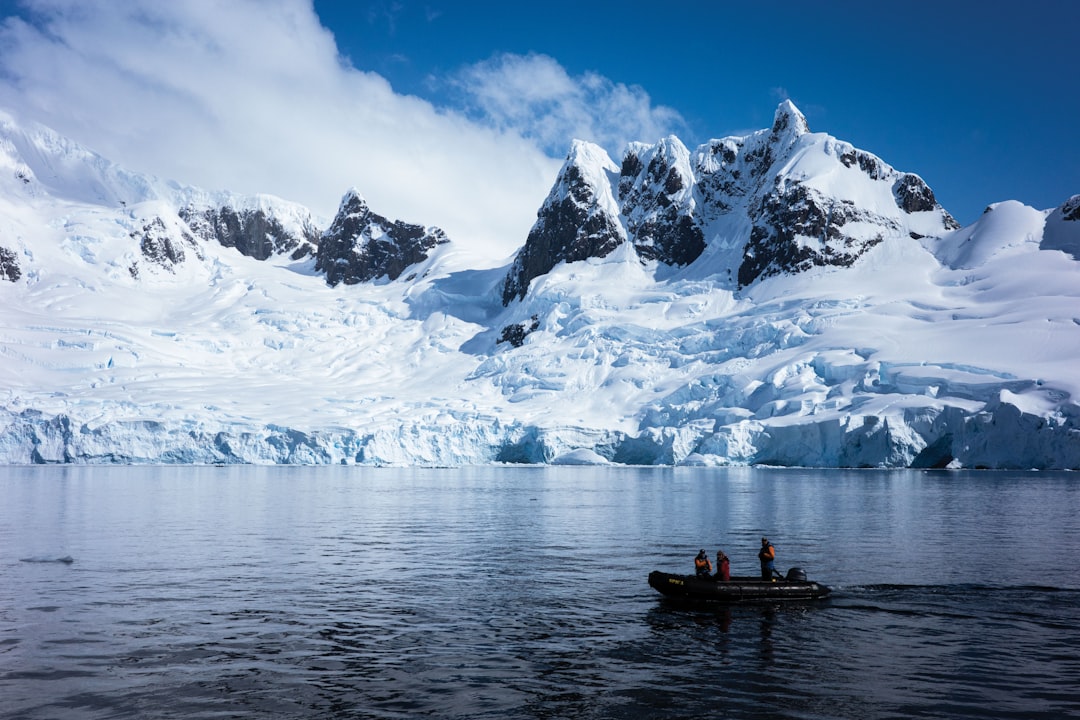
The South African National Antarctic Programme (SANAP) achieves this distinction with just seven core researchers, a stark contrast to the hundreds of scientists employed by the universities it has surpassed. The team operates from South Africa's SANAE IV research station on Antarctica's coast and conducts expeditions from Marion Island in the Southern Ocean.
"This demonstrates that scientific excellence isn't solely determined by budgets or institutional prestige," said Dr. Raylene Jacobs, one of the lead researchers quoted in the report. "Our team's focus, dedication, and the unique research opportunities Antarctica provides have allowed us to make disproportionate contributions to global climate science."
The research focuses on critical climate indicators: ice core samples revealing atmospheric composition over millennia, ocean current measurements tracking climate patterns, and biological studies examining how Antarctic ecosystems respond to warming temperatures. These contributions feed into international climate models used by the Intergovernmental Panel on Climate Change (IPCC).
In South Africa, as across post-conflict societies, the journey from apartheid to true equality requires generations—and constant vigilance. This scientific achievement offers a counter-narrative to persistent stereotypes about African research capacity, demonstrating that South Africa maintains world-class scientific infrastructure and talent despite ongoing economic and social challenges.
The accomplishment is particularly significant given South Africa's broader developmental context. While the nation grapples with electricity shortages, inequality, and service delivery challenges three decades after apartheid's end, its Antarctic programme represents continuity in scientific investment dating to the 1960s.
South Africa is one of only 29 nations with consultative status under the Antarctic Treaty, granting it influence over governance of the continent. The country's research station has operated continuously since 1997, maintaining a year-round presence in one of Earth's harshest environments.
The publication ranking, based on peer-reviewed journal articles over the past decade, underscores how strategic focus can overcome resource limitations. While Princeton, Oxford, and Stanford maintain larger overall research portfolios across numerous scientific disciplines, South Africa's concentrated investment in Antarctic science yields outsized returns in this specialized field.
"We're competing with institutions that have endowments larger than our entire national research budget," noted Professor Anriëtte Bekker, another team member. "But Antarctica is a great equalizer—what matters is your ability to conduct rigorous science in extreme conditions, and South African researchers have proven exceptionally capable."
The findings come as South Africa navigates complex positioning within BRICS (Brazil, Russia, India, China, South Africa), where it advocates for developing nations' scientific participation in global research initiatives. The Antarctic achievement bolsters the country's argument that scientific excellence exists across the Global South, not just in wealthy Western institutions.
The research has practical implications beyond academic prestige. Antarctic ice loss contributes to global sea level rise, threatening coastal cities worldwide including Cape Town and Durban. Understanding these processes helps South Africa and other nations prepare for climate impacts.
Yet funding remains precarious. SANAP operates on approximately R300 million annually (roughly $16 million), a fraction of what American or European Antarctic programmes receive. Equipment must be carefully maintained and expeditions meticulously planned, with little margin for error.
The achievement also highlights South Africa's historical investments in scientific infrastructure, much of it predating 1994's democratic transition. While apartheid-era institutions required transformation to serve all South Africans equitably, maintaining scientific excellence during that transition proves the resilience of South African research culture.
As climate change accelerates and Antarctica's role in global systems becomes increasingly critical, South Africa's disproportionate research contribution ensures the continent's voice in international climate discussions—a voice informed by rigorous science rather than economic power alone.
The story resonates beyond academia: a team of seven, working from Africa's southern tip, outpublishing some of the world's wealthiest universities in one of science's most demanding fields. It's a reminder that in research, as in sport, determination and strategic focus can level playing fields tilted by history and economics.