

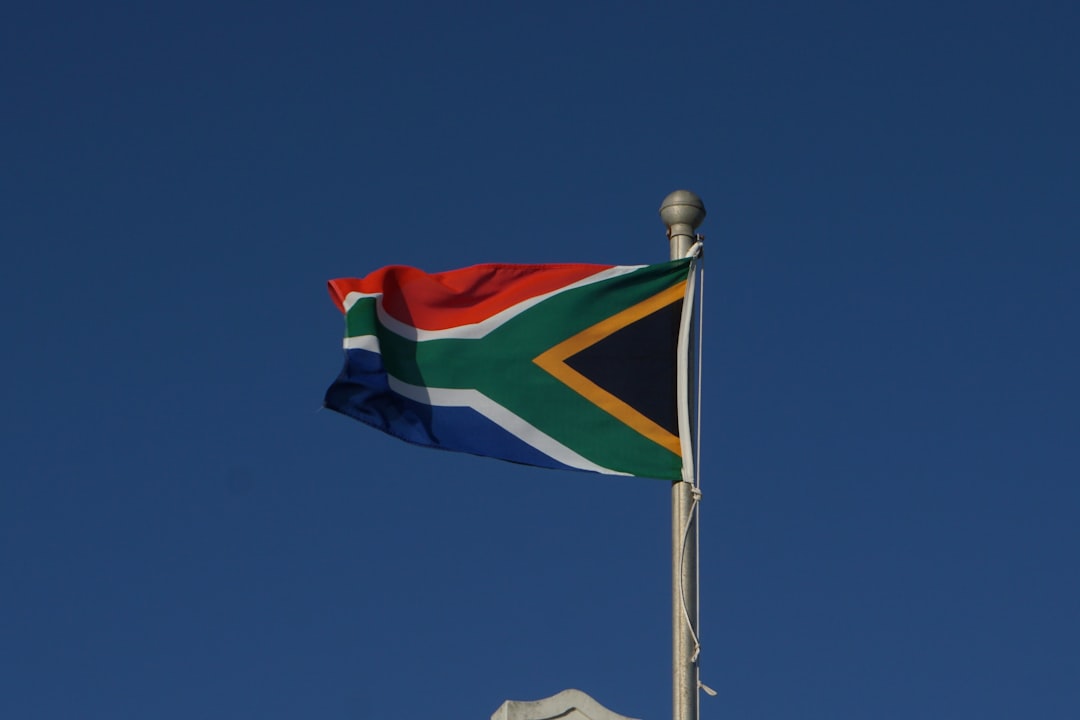
A fringe Afrikaner group has published a formal notice in South Africa's government gazette claiming "independence" for territories spanning parts of the Free State and KwaZulu-Natal, exposing bureaucratic loopholes and highlighting unresolved tensions over land and identity three decades after apartheid's end.
The "Boervolk of the Orange Freestate," describing itself as a "minority group within the Afrikaner minority," claims sovereignty over land between the Orange and Vaal rivers, plus the former Republic of Natalia—extending east through KwaZulu-Natal to the Black Umfolozi River.
The group bases its claim on historical "willing buyer and seller agreements" with Zulu kings Dingaan and Mpanda prior to British colonization in the 1840s, citing the 2003 Constitutional Court Richtersveld case as legal precedent. They demand compensation of "2000 metric ton of fine gold of 999 purity" for alleged farm expropriations.
Land Reform Minister Mzwanele Nyhontso dismissed the claims outright. "They just need to be reminded that we're in a unitary state," he said. "It's not a federal system."
The Government Printing Works confirmed that publication in the gazette "does not confer legitimacy or recognition," acknowledging that notices are published without ministerial vetting—a bureaucratic gap the group has exploited before with a similar filing in 2025.
While the group's claims have no legal standing and appear to have minimal support, the incident reflects deeper challenges in South Africa's ongoing nation-building project.
Land remains the most contentious unresolved issue from apartheid. The 1913 Natives Land Act and subsequent policies dispossessed Black South Africans of 87% of the country's land. Post-apartheid land reform has moved slowly, redistributing only about 10% of commercial farmland in 30 years. Meanwhile, some white farmers claim they face discrimination or inadequate compensation under current policies.
Professor Cherryl Walker, a land reform expert at Stellenbosch University, has documented how these competing grievances fuel both Black calls for land expropriation without compensation and white separatist fantasies. "Neither extreme addresses the actual complexity of achieving equitable land distribution in a constitutional democracy," she wrote in a recent analysis.
The Afrikaner group's invocation of pre-colonial agreements with Zulu kings to claim indigenous land rights represents a particularly cynical appropriation of legal frameworks designed to redress colonial dispossession of Black communities. The Richtersveld case they cite actually established indigenous land rights for the Nama people whose land was taken without compensation.
Such claims, however marginal, can still inflame tensions. South Africa's politics have increasingly centered on identity and land, with the Economic Freedom Fighters party making land expropriation a signature issue and the Democratic Alliance defending property rights—often along racial lines.
The Government of National Unity formed after the 2024 elections brought together parties with vastly different positions on land reform, complicating efforts to address the issue comprehensively.
"Land is where history, economics, and identity collide in South Africa," says Thembeka Ngcukaitobi, a constitutional lawyer and author. "Until we develop a shared understanding of what justice looks like—one that acknowledges both historical dispossession and the need for productive agriculture—we'll keep seeing these kinds of provocations from the margins."
The incident also highlights the endurance of Afrikaner nationalism in certain circles, even as most white South Africans have integrated into the post-apartheid nation. Organizations like the Orania community—an Afrikaner-only town in the Northern Cape—represent a more established form of self-segregation that exists within South Africa's legal framework.
54 countries, 2,000 languages, 1.4 billion people. And in South Africa, 30 years into democracy, the work of building one nation from a fragmented past continues—complicated by those who prefer the fragments.



