
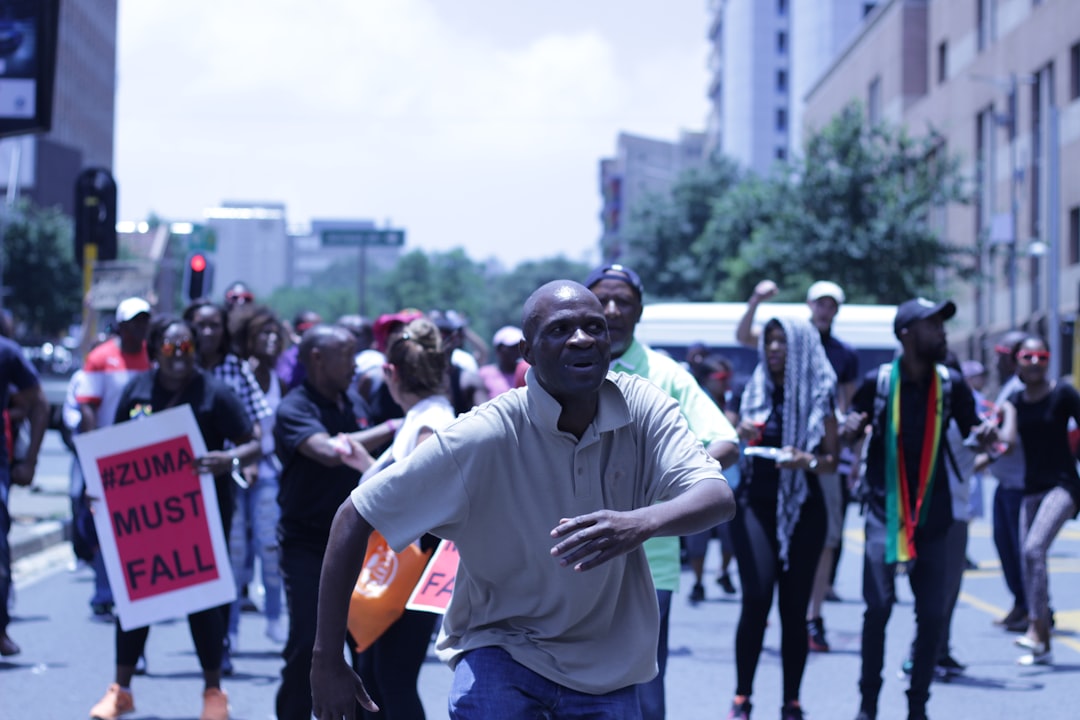
The government of South Africa finds itself under intensifying continental scrutiny as critics charge that its response to recurring waves of xenophobic violence amounts to performative condemnation without meaningful prevention or prosecution.
While officials routinely issue statements denouncing attacks on African migrants when violence erupts, observers across the continent point to a troubling pattern: weak preventive measures, limited arrests, and political rhetoric that critics say often fuels rather than calms anti-foreigner sentiment.
The critique strikes at a painful contradiction. South Africa built its post-apartheid identity on the foundation of pan-African solidarity, liberation struggle, and Nelson Mandela's vision of an inclusive Rainbow Nation. Yet for more than two decades, foreign nationals from Nigeria, Zimbabwe, Malawi, Somalia, and beyond have faced periodic outbreaks of violence, looting, and displacement in townships and informal settlements.
"The pattern is clear and it's damaging to the entire region," says Dr. Nomsa Maseko, a political scientist at the University of Cape Town. "Government officials condemn the attacks after they happen, police make a handful of arrests, and then nothing structurally changes. Six months or a year later, it happens again."
According to reporting by Deutsche Welle, the criticism centers on three interconnected failures: inadequate policing and prosecutions, insufficient economic integration programs for migrants, and what analysts describe as dangerous political scapegoating.
During periods of high unemployment or service delivery failures, some local politicians and community leaders have been documented blaming "illegal foreigners" for everything from job scarcity to crime to infrastructure collapse. Such rhetoric, researchers warn, creates social permission structures for violence.
The issue carries enormous implications for regional integration and the credibility of the African Union. South Africa is the continent's most industrialized economy and hosts the AU's headquarters in Addis Ababa. When the same nation that champions African unity at diplomatic summits fails to protect African nationals within its borders, it undermines the entire pan-African project.
"You cannot preach African solutions for African problems at AU meetings while your police stand by as Somali shopkeepers are burned out of their homes," says Chidi Odinkalu, a Nigerian human rights lawyer. "There's a word for that: hypocrisy."
Economic anxieties are real. South Africa faces an official unemployment rate exceeding 30 percent, with youth joblessness even higher. Infrastructure in townships remains inadequate three decades after apartheid's end. But analysts argue that scapegoating fellow Africans is both morally indefensible and economically counterproductive.
Migrants, particularly those from Zimbabwe, Mozambique, and Malawi, fill critical labor gaps in agriculture, domestic work, construction, and informal trade. Studies show they contribute significantly to tax revenue and economic activity. Driving them out or underground doesn't create jobs for South Africans; it simply shrinks the economy.
The government points to community dialogues, police deployments during high-risk periods, and prosecution of some perpetrators. But critics counter that until senior political leaders face consequences for inflammatory rhetoric, until police treat anti-foreigner violence with the seriousness of other hate crimes, and until economic integration programs genuinely include migrant communities, the cycle will continue.
For neighboring states, the violence has diplomatic and economic consequences. Governments must weigh whether to issue travel warnings, how to protect their nationals, and whether to respond with trade or diplomatic pressure. The Southern African Development Community (SADC), the regional economic bloc, has largely remained silent, an absence analysts attribute to political discomfort rather than lack of concern.
"South Africa was supposed to be the model," says Dr. Maseko. "The country that overcame racial hatred through reconciliation and nation-building. But you can't claim that legacy while tolerating violence against Africans because they were born on the other side of an arbitrary border."
54 countries, 2,000 languages, 1.4 billion people. If the continent's success stories cannot protect each other's citizens, the promise of African unity remains unfulfilled.