
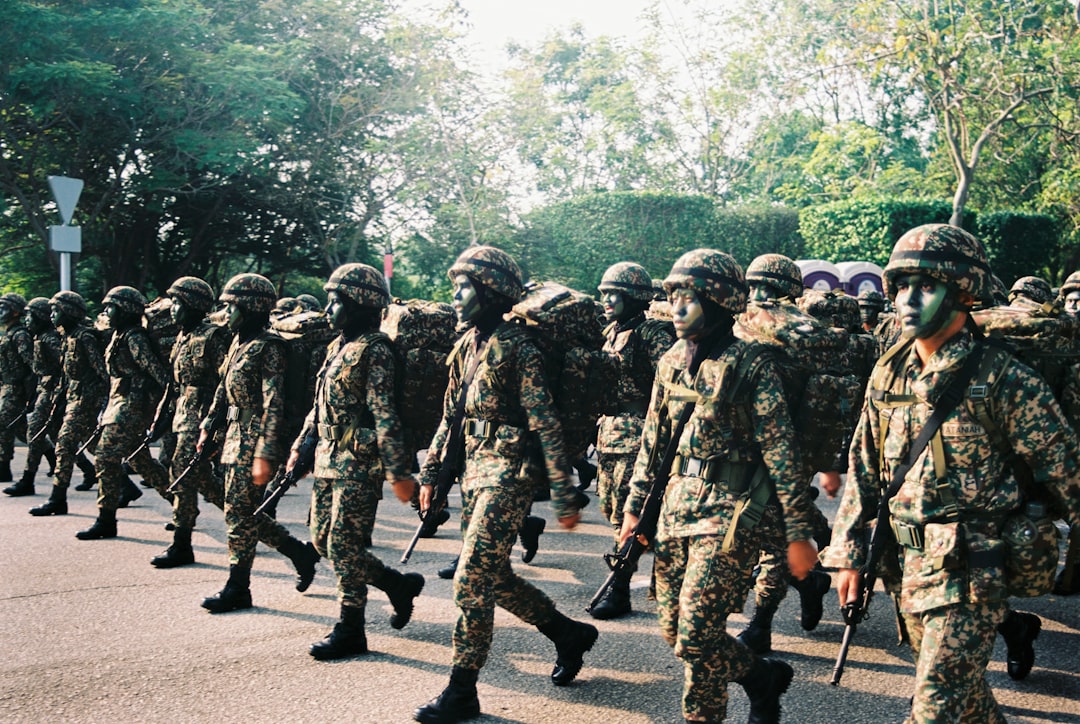
President Cyril Ramaphosa has authorized the deployment of 2,200 South African National Defence Force (SANDF) personnel to assist police in combating illegal mining operations and gang violence across five provinces in what officials describe as a stopgap measure addressing the country's deteriorating security situation.
The deployment, confirmed by eNCA, will cost an estimated R823 million and extend until March 2027, targeting operations in Gauteng, North West, Free State, KwaZulu-Natal, and Limpopo provinces. The decision reflects growing acknowledgment that police alone cannot manage South Africa's complex security challenges.
"This deployment responds to requests from provincial governments and communities overwhelmed by illegal mining syndicates and gang violence," said a presidency statement. The military personnel will support police operations but not replace civilian law enforcement, officials emphasized.
The announcement comes against a backdrop of escalating illegal mining, particularly around Johannesburg and defunct gold mines across Gauteng and the Free State. Syndicates employing thousands of illegal miners—known locally as "zama zamas"—extract remaining gold from abandoned shafts, often operating with heavy weaponry and corrupting local officials.
In South Africa, as across post-conflict societies, the journey from apartheid to true equality requires generations—and constant vigilance. The military deployment underscores how security challenges intertwine with economic desperation and state capacity limitations three decades after democracy's arrival.
The Westbury community case illustrates the complexity. This Johannesburg neighborhood has experienced years of gang violence, with residents petitioning authorities for military intervention. Community leaders argue that local police lack resources and numbers to confront well-armed criminal networks controlling drug trade and extortion rackets.
"We've been asking for help for years," said a Westbury community representative quoted in previous media reports. "Police come and go, but the gangs remain. We need sustained presence to break their control."
Yet military deployments carry risks. South Africa has deployed SANDF personnel domestically numerous times since 1994, including during COVID-19 lockdowns and earlier crime-fighting initiatives. Critics argue these deployments treat symptoms rather than addressing root causes: unemployment, inequality, and corruption that enable criminal enterprises.
"We cannot militarize our way out of socioeconomic crises," argued David Bruce, a security analyst at the Institute for Security Studies. "The R823 million would be better invested in strengthening police capacity, improving intelligence gathering, and addressing the economic desperation that drives people into illegal mining."
The illegal mining challenge extends beyond criminality to environmental devastation and safety. Abandoned mines lack proper ventilation or safety equipment, and collapses regularly kill miners. Syndicates also pollute water sources with mercury used in gold extraction, poisoning communities downstream.
Particularly concerning is the level of organization and weaponry illegal mining syndicates possess. Recent operations have uncovered military-grade firearms, suggesting links to international criminal networks and possible corruption within security forces and mining regulators who should prevent such operations.
The five-province deployment reflects illegal mining's geographic spread. North West province hosts numerous defunct platinum mines, Limpopo sees illegal chrome operations, while KwaZulu-Natal's deployment likely addresses gang violence in Durban and surrounding areas rather than mining specifically.
The March 2027 end date positions the deployment as temporary, though previous "temporary" security measures have been repeatedly extended. The R823 million cost represents a significant expenditure for a government facing tight fiscal constraints, with debt service costs consuming growing portions of the national budget.
Opposition parties have offered mixed reactions. The Democratic Alliance (DA), now in a government of national unity with the ANC, has supported military deployment in Western Cape gang-affected areas but questions whether proper planning and rules of engagement are established.
The Economic Freedom Fighters (EFF) argues the deployment protects mining corporations' interests rather than communities, calling for abandoned mines to be legalized and regulated to provide employment rather than criminalized.
"These zama zamas are unemployed people trying to survive," stated Julius Malema, EFF leader, in recent parliamentary remarks. "The real criminals are those who abandoned the mines without proper rehabilitation and the officials who enable syndicates through corruption."
Human rights organizations have expressed concern about rules of engagement and accountability. Previous SANDF deployments have resulted in civilian casualties and allegations of excessive force, raising questions about whether soldiers receive adequate training for law enforcement roles that differ from military combat.
The deployment also highlights police capacity challenges. The South African Police Service (SAPS) faces chronic understaffing, low morale, corruption, and insufficient training. Budget constraints have limited recruitment, while experienced officers retire faster than new constables can be trained.
For communities like Westbury, the military deployment offers hope for respite from violence that has claimed numerous lives and driven residents into fear. Whether that respite translates into lasting security depends on factors beyond military presence: economic opportunities, effective policing, and governance that addresses corruption enabling criminal networks.
As the deployment begins, it serves as yet another reminder of South Africa's persistent challenges in building state capacity, reducing inequality, and providing security for all citizens—goals articulated at apartheid's end but proving far harder to achieve in practice than in principle.