
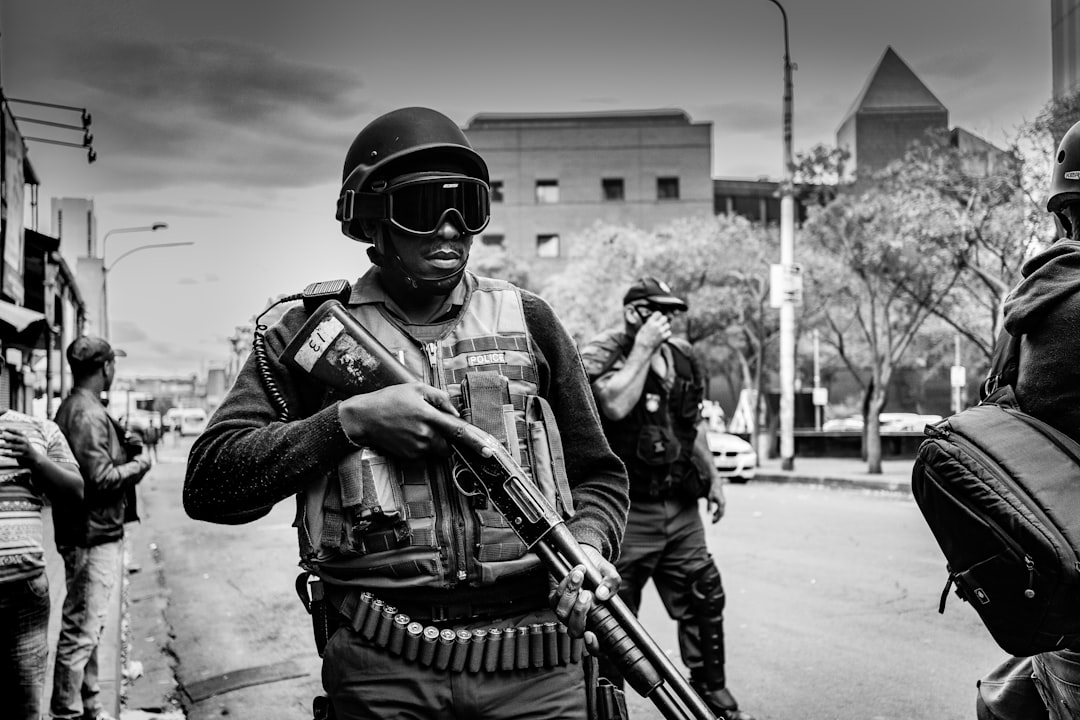
New crime statistics have revealed the geographic concentration of murder, kidnapping, and extortion across South Africa, with stark provincial variations that underscore both the challenge of policing a deeply unequal society and the enduring legacy of spatial segregation from the apartheid era, eNCA reports.
The data, reflecting patterns of violent crime and organized criminal activity, shows significant clustering in specific provinces and urban areas, raising questions about resource allocation for law enforcement and the structural factors driving crime in South Africa's third decade of democracy.
While official crime statistics are released quarterly by the South African Police Service, independent analysis of geographic patterns reveals how violent crime correlates with poverty, unemployment, and the physical legacy of apartheid-era planning that concentrated Black and Colored communities in under-resourced townships far from economic opportunity.
Murder rates remain stubbornly high across much of the country, with certain provinces experiencing levels of violence that strain public health and criminal justice systems. The Western Cape, home to Cape Town, continues to report among the nation's highest murder rates, driven partly by gang violence on the Cape Flats—communities created during apartheid to segregate Colored populations from the city center.
In South Africa, as across post-conflict societies, the journey from apartheid to true equality requires generations—and constant vigilance. Crime statistics reveal how spatial inequality embedded in apartheid-era planning continues to shape where violence occurs and who bears its burden, decades after the transition to democracy.
The data on extortion and kidnapping reveals growing organized crime sophistication, with criminal networks targeting businesses and affluent individuals across multiple provinces. Construction site extortion has become particularly prevalent in major cities, where criminal groups demand "protection" payments from developers and contractors, adding costs to infrastructure projects and housing developments.
Provincial variations in crime patterns reflect both local economic conditions and policing capacity. Gauteng, the economic heartland containing Johannesburg and Pretoria, shows high levels of robbery and hijacking alongside business-related extortion. KwaZulu-Natal has seen rising political violence layered atop existing gang activity. The Eastern Cape faces resource constraints that leave rural areas particularly vulnerable.
For the Government of National Unity formed after the 2024 elections, the crime statistics present a test of whether cross-party cooperation can deliver improved security outcomes. Police Minister Bheki Cele has faced sustained criticism over crime trends, with opposition parties demanding evidence-based approaches to resource deployment and corruption within police ranks.
The data also reveals how crime undermines economic development. Foreign investors cite crime as a significant deterrent to expansion in South Africa, while domestic businesses factor security costs into every decision. For ordinary South Africans, particularly those in township communities bearing the brunt of violent crime, the statistics represent lived reality rather than abstract policy debates.
Anti-crime initiatives have struggled to gain traction amid broader governance challenges. Corruption within police and criminal justice systems undermines investigative capacity and prosecutorial success. Community policing forums, created to build trust between law enforcement and residents, face resource constraints and questions about effectiveness.
Yet South Africa's vibrant civil society and independent media continue demanding accountability, with crime statistics serving as a measure of government performance that transcends party loyalty. The country's democratic achievements include the ability of citizens to openly critique security failures without fear of state reprisal—a contrast to many African countries where such criticism invites authoritarian response.
The geographic concentration of violent crime also reflects migration patterns and urbanization pressures. As rural South Africans move to cities seeking economic opportunity, informal settlements expand faster than service delivery or policing capacity, creating conditions where criminal networks can operate with relative impunity.
For South Africa's continental leadership ambitions and BRICS partnership role, persistent high crime rates present a governance challenge that undermines the country's claim to serve as a model for African development. While South Africa retains advantages in infrastructure, institutions, and human capital, violent crime represents a drag on potential that keeps the country from fully leveraging its considerable strengths.
As provincial crime data reveals the scope of the challenge, the question remains whether political will exists to address the structural factors—inequality, unemployment, spatial segregation, police capacity—that create conditions for violence to flourish. In a democracy where citizens can hold leaders accountable through both elections and daily advocacy, the crime statistics serve as a test of whether government can deliver the security that remains fundamental to human dignity and economic development.