
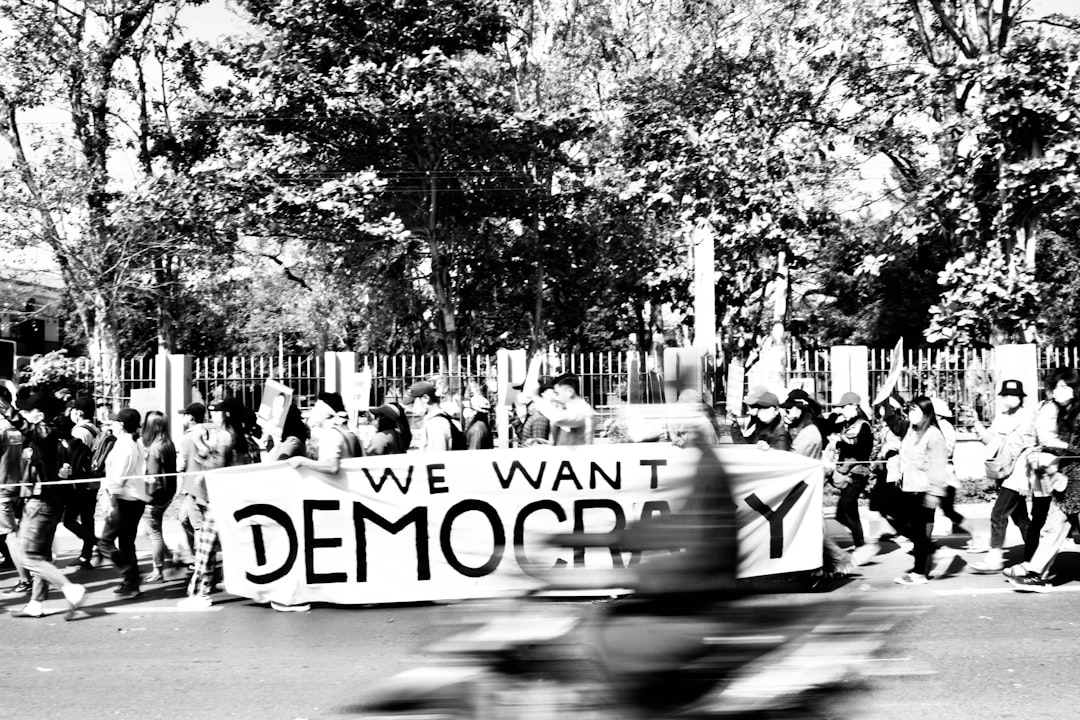
Thousands of Slovaks gathered across the country Friday to commemorate the eighth anniversary of the murders of Ján Kuciak and his fiancée Martina Kušnírová, whose deaths in 2018 exposed the depths of corruption in Central Europe and triggered the largest protests since the Velvet Revolution.The 27-year-old investigative journalist and his partner were shot dead in their home in Veľká Mača on February 21, 2018. Kuciak had been investigating ties between the Italian mafia, Slovak businessmen, and government officials at the highest levels. His final, posthumously published article detailed how organized crime had penetrated the heart of Slovak politics."Their courage remains a beacon for journalists across the entire continent who risk everything to uncover the truth and protect our democracies," Roberta Metsola, president of the European Parliament, wrote in a statement marking the anniversary.The murders sparked massive street protests that ultimately forced Prime Minister Robert Fico to resign in March 2018. Yet in a striking demonstration of Slovakia's political volatility, Fico returned to power in 2023, leading a coalition government that critics say has systematically weakened democratic institutions and press freedoms.The anniversary rallies, organized by civil society groups and opposition parties, drew particularly large crowds in Bratislava, where demonstrators carried photos of the murdered couple and signs reading "We Haven't Forgotten" and "Truth Will Prevail." Similar gatherings took place in regional cities including Košice, Banská Bystrica, and Žilina.According to Associated Press video coverage, the rallies maintained a somber but determined atmosphere, with speakers emphasizing that the fight for justice and accountability continues.The case itself remains controversial. While four individuals were convicted in connection with the murders—including businessman , who was acquitted of ordering the killings but convicted of other crimes—many Slovaks believe the full truth has not emerged. Prosecutors identified as having the strongest motive, as had been investigating his business dealings, but the court found insufficient evidence to prove he ordered the assassinations.In Central Europe, as we learned from the Velvet Revolution, quiet persistence often achieves more than loud proclamations. The continued mass mobilization around the anniversary demonstrates that Slovak civil society has not abandoned the struggle, even as the political winds have shifted.The contrast between and the —two countries that peacefully separated in 1993 after seven decades as —has grown starker in recent years. While has maintained relatively robust press freedoms and democratic institutions, under has seen increasing pressure on independent media, proposed changes to the criminal code that would weaken anti-corruption measures, and rhetoric that casts investigative journalists as enemies of the state.The government's approach to media has raised alarms in . His administration has reformed public broadcasting, replacing leadership at the state broadcaster RTVS with figures seen as more sympathetic to the government. Critics compare the moves to media capture under Prime Minister . wrote one Slovak Reddit user, sharing the European Parliament president's statement about the anniversary.The murders also had a profound impact on investigative journalism across the region. had been working with the (OCCRP), an international network of investigative journalists. His death prompted news organizations throughout and to enhance security measures for reporters covering organized crime and corruption.For journalists, the anniversary serves as both memorial and rallying cry. The country's press freedom ranking has declined since return to power, with noting increased political pressure on media outlets and a hostile rhetorical environment for investigative reporting.The rallies come at a particularly sensitive moment in European politics. With autocratic tendencies visible in , democratic backsliding concerns in other EU member states, and Russia's war in continuing to test European unity, the question of whether investigative journalism can survive in more vulnerable democracies carries implications beyond borders.As darkness fell over Friday evening, demonstrators lit candles in , creating a sea of flickering lights in memory of and . The couple had been planning their wedding when they were killed. They never got the chance to marry, but their deaths—and the public outcry that followed—may have saved democracy, at least temporarily.Whether that salvation proves permanent depends in part on whether Slovaks continue to fill the streets each February, refusing to let their country forget what happens when corruption goes unchecked and journalists pay the ultimate price for doing their jobs.
|