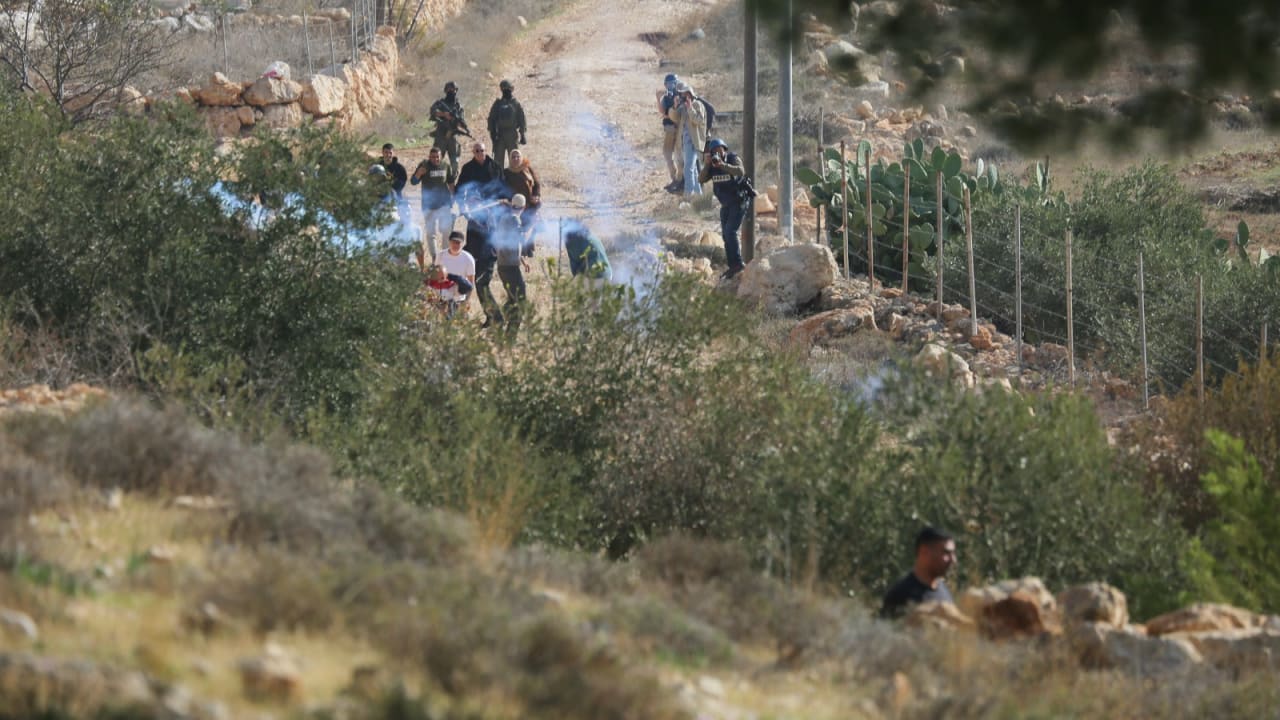
Jewish settlers burned Palestinian agricultural infrastructure and seriously injured a villager in the West Bank village of Qusra near Nablus, marking the latest incident of settler violence that continues even as international attention focuses on the Iran crisis.
According to the Palestinian news agency WAFA and The Jerusalem Post, settlers attacked the village Saturday, setting fire to two structures along with two poultry farming sites. The arson was reportedly retaliation after a settler traveling between outposts was attacked with stones by Palestinians.
The Israeli Defense Forces confirmed that forces "rushed to the village area following a report of Palestinians throwing stones" and later responded to reports of "arson by Israeli civilians on the outskirts of the villages." The military stated they worked to remove all Israeli civilians from the area and that the incident is being investigated by security forces.
To understand today's headlines, we must look at yesterday's decisions. Settler violence in the West Bank has increased significantly since October 2023, with international monitors documenting hundreds of attacks on Palestinian communities. The violence occurs against a backdrop of expanding settlement construction and heightened tensions over land access and movement restrictions.
The settler involved in the initial stone-throwing incident claimed he was traveling from Esh Kodesh to Ahiya when he encountered a barbed wire barrier and was attacked by Palestinians. Significantly, Israeli media noted that the settler's route passed through Palestinian private property, a common pattern in these incidents.
Days before this latest attack, Israel's Security Cabinet approved new measures ostensibly designed to address settler violence, including construction bans in West Bank Area B and immediate evacuation protocols for settlers engaging in violence. The Qusra incident raises questions about implementation of these policies.
Palestinian officials condemned what they described as ongoing impunity for settler attacks. The Palestinian Authority's foreign ministry stated that international silence on settler violence "emboldens extremists and undermines any prospect for peace."
The incident reflects a troubling pattern: stone-throwing or other minor confrontations escalate to property destruction and violence that disproportionately affects Palestinian civilians. Agricultural infrastructure—olive groves, greenhouses, livestock facilities—represents both economic livelihood and multigenerational investment for Palestinian families, making such attacks particularly devastating.
Human rights organizations have long documented what they characterize as a two-tier justice system in the West Bank, where Palestinian stone-throwers face military prosecution while Israeli settlers responsible for property destruction often face minimal consequences despite stated government policies.
The timing is also significant. With global attention focused on the Iran crisis and potential regional war, violence in the West Bank receives less international scrutiny than it might otherwise command. Palestinian advocates worry that major geopolitical events create windows for increased settlement activity and violence against Palestinian communities.
For residents of Qusra, the burned farms represent immediate economic loss and longer-term food security concerns. Poultry operations require months to rebuild, and the psychological impact of such attacks on small agricultural communities extends beyond the immediate physical damage.
As I've observed covering the Israeli-Palestinian conflict over many years, these incidents of localized violence—dramatic for those directly affected yet barely registering in international coverage—accumulate to fundamentally shape the reality on the ground in ways that formal diplomatic processes often fail to address.