
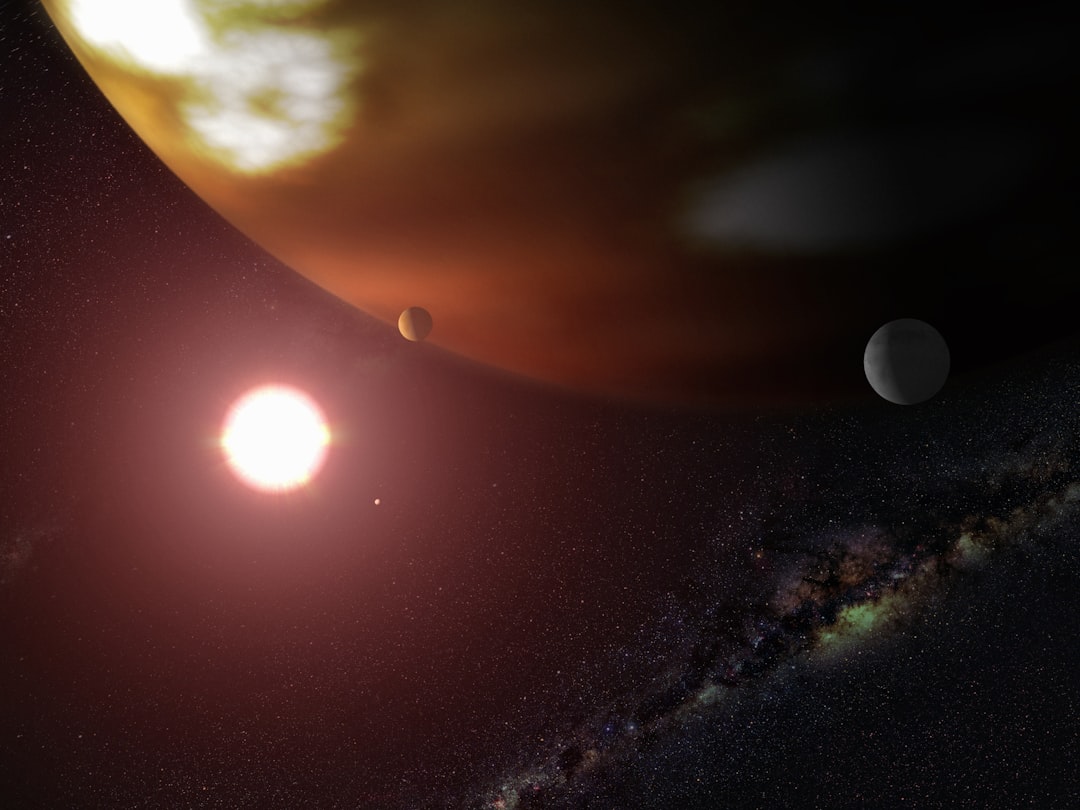
Astronomers may have discovered an entirely new category of exoplanet—one that doesn't fit our existing planetary classifications. Meet L 98-59 d, a world in what researchers are calling a "molten, mushy state" unlike anything previously observed.
The planet, located about 35 light-years from Earth in the constellation Volans, appears to exist in a fundamentally new planetary state. According to research published in Nature Astronomy, L 98-59 d's mantle is composed of molten silicate—essentially liquid rock—with a global magma ocean extending thousands of kilometers beneath its surface.
This isn't just "very hot." This is a planet whose interior exists in a state between solid rocky worlds like Earth and gas giants like Jupiter. The researchers from the University of Oxford who led the study suggest this represents a distinct planetary category we hadn't properly recognized before.
Here's what makes it extraordinary. Most rocky planets we know have solid mantles (like Earth) or are so close to their stars they're completely vaporized. L 98-59 d occupies a middle ground: its surface temperature and internal pressure create conditions where rock remains perpetually molten throughout much of the planet's interior. Think of it less like Earth with some volcanoes and more like a planet-sized lava lamp.
The discovery came from analyzing the planet's density and orbital characteristics. L 98-59 d orbits extremely close to its host star, completing a full orbit in just 7.45 Earth days. That proximity delivers relentless heating, but the planet's mass and composition create internal pressures that keep the molten rock from simply boiling away into space.
What does this mean for planetary science? For one, it suggests our current classification system—rocky planets, ice giants, gas giants—is too simple. The universe has more tricks up its sleeve. These "magma ocean worlds" likely represent a common planetary state for close-orbiting rocky planets around certain types of stars.
There's also an evolutionary angle here. Some researchers think Earth itself may have passed through a magma ocean phase early in its history, following the giant impact that formed the Moon. Studying L 98-59 d could provide insights into what our own planet looked like 4.5 billion years ago.