
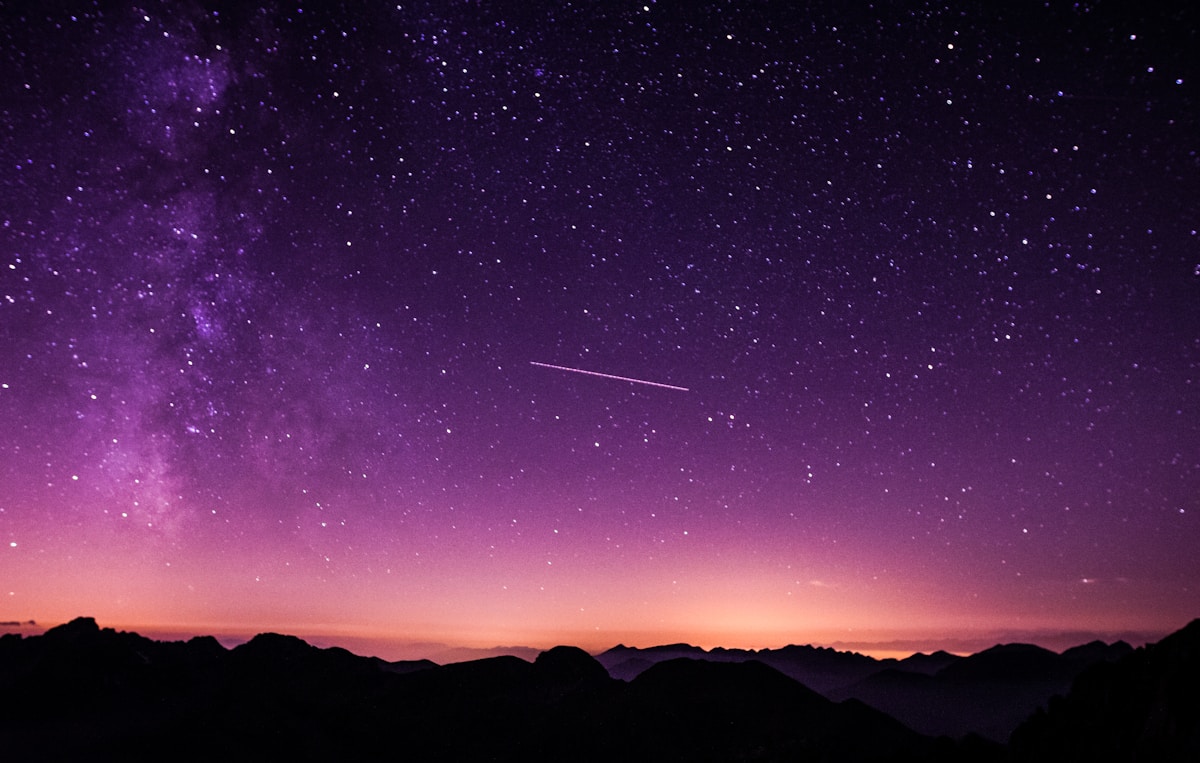
The experience of looking up at the night sky is fundamentally changing. Where previous generations saw only stars and the occasional aircraft, today's stargazers increasingly watch streams of satellites crossing the heavens—artificial lights that have permanently altered humanity's relationship with the cosmos.
"I'm kind of bummed out watching all of these satellites in the night sky while stargazing," wrote one observer on Reddit, capturing a sentiment echoed by astronomers and casual stargazers alike. "I went to the Grand Canyon in 2015 and it was the best experience I had with seeing stars. No satellites moving around, so I can imagine what it looks like now."
The transformation has been rapid and dramatic. SpaceX's Starlink constellation alone has placed over 6,000 satellites in orbit, with plans to expand to 42,000. Amazon's Project Kuiper, OneWeb, and Chinese megaconstellations will add tens of thousands more. What was once a pristine canvas of cosmic light now resembles, in the words of one astronomer, "a busy highway in the sky."
For professional astronomy, the impact goes beyond aesthetics. Radio telescopes detect interference from satellite communications, while optical observatories see their long-exposure images streaked with satellite trails. The Vera C. Rubin Observatory, designed to survey the entire visible sky every few nights, will see approximately 30% of its twilight observations affected by satellite trails when megaconstellations reach full deployment.
Connie Walker, an astronomer at NSF's NOIRLab, emphasizes the scientific stakes. "We're talking about compromising our ability to detect near-Earth asteroids, study distant galaxies, and understand the fundamental nature of the universe," she explains. "These are capabilities we may not be able to recover once lost."
Yet the issue extends beyond telescopes and research papers. . That connection now faces a technological disruption unlike any in history.