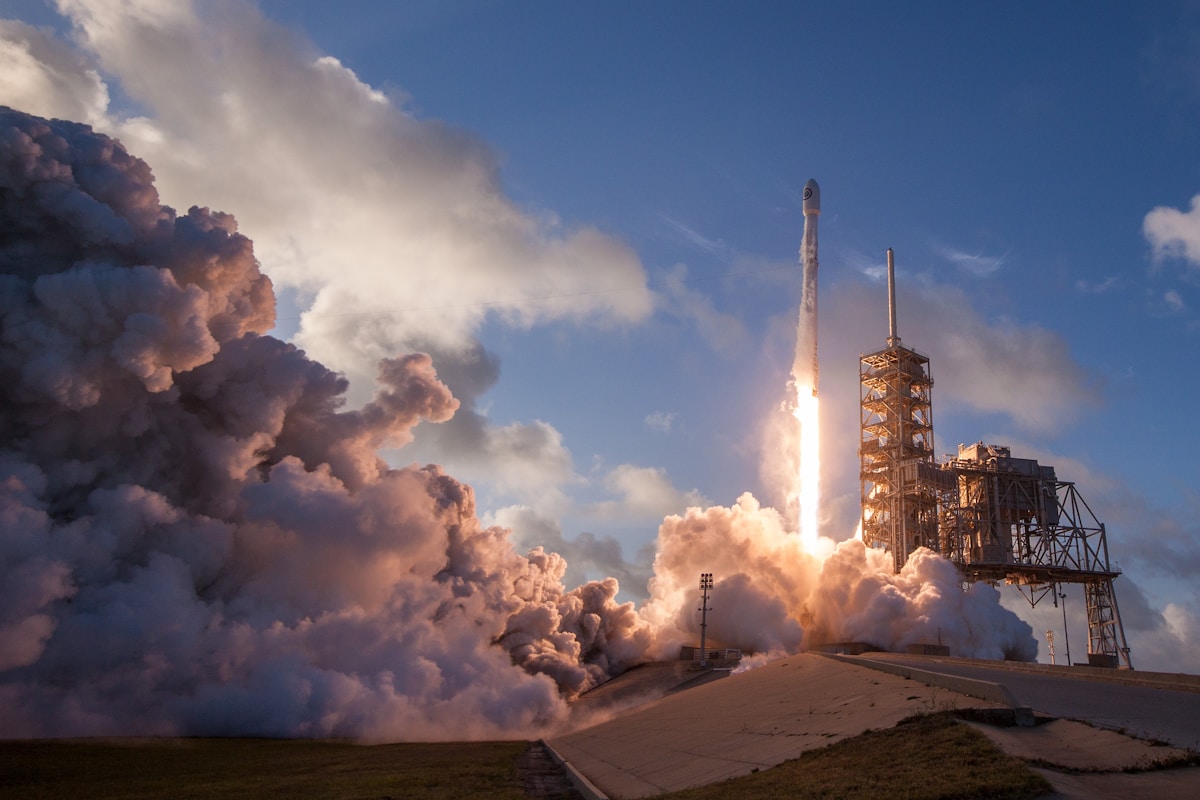

The night sky humanity has gazed upon for millennia is rapidly disappearing as commercial satellite mega-constellations fundamentally alter Earth's orbital environment, with experts warning the changes may already be irreversible.More than 10,000 active satellites now orbit Earth, with companies like SpaceX, Amazon, and OneWeb planning to deploy tens of thousands more to provide global internet coverage. According to Scientific American, this exponential growth threatens astronomical research, cultural heritage, and the simple human experience of seeing stars."We're fundamentally changing what it means to look up," said Dr. Samantha Lawler, an astronomer who has tracked the proliferation of satellite constellations. "In some locations, there are now more visible satellites crossing the sky during twilight hours than there are visible stars."The engineering challenge facing satellite operators is formidable. While SpaceX has experimented with darkening treatments on its Starlink satellites—including visors and anti-reflective coatings—these measures reduce but don't eliminate visibility. The sheer physics of sunlight reflecting off objects the size of small cars at altitudes of 300-600 kilometers makes complete invisibility nearly impossible.Astronomical observatories face unprecedented operational disruptions. Radio telescopes detect interference from satellite transmissions, while optical telescopes must now contend with bright streaks across long-exposure images. The Vera C. Rubin Observatory, designed to survey the entire visible sky every few nights, expects up to 30% of its twilight images to be affected by satellite trails.In space exploration, as across technological frontiers, engineering constraints meet human ambition—and occasionally, we achieve the impossible. Yet this achievement comes with unintended consequences that extend beyond scientific instrumentation.Indigenous communities worldwide have expressed concern about the cultural impact of losing dark skies. Traditional navigation, storytelling, and spiritual practices often depend on clear views of celestial objects. The International Astronomical Union has established a Centre for the Protection of the Dark and Quiet Sky to coordinate responses, but regulatory frameworks remain fragmented.The commercial case for mega-constellations remains strong. Starlink now serves over two million subscribers globally, providing internet access to remote regions previously limited to expensive, high-latency satellite services. Amazon's Project Kuiper is beginning deployments, while China has announced plans for its own mega-constellation of 13,000 satellites.Some industry representatives argue the benefits outweigh the costs. "We're connecting the unconnected," noted one satellite operator who requested anonymity. "Rural communities, disaster response teams, maritime vessels—they all need reliable connectivity. The technology exists to mitigate astronomical impacts."Yet mitigation efforts struggle to keep pace with deployment schedules. The Federal Communications Commission and international regulators have approved satellite launches faster than scientists can assess their cumulative impacts. Once deployed, satellites operate for 5-7 years before deorbiting, creating a persistent presence that compounds with each new launch.The situation represents what some space policy experts call a "tragedy of the commons" in orbit—where individual rational decisions collectively produce suboptimal outcomes. Without stronger international coordination, the number of satellites could reach 100,000 within a decade, fundamentally and permanently altering humanity's view of the cosmos.Several mitigation strategies remain under development: better satellite design, coordinated observation scheduling between operators and astronomers, and even space-based telescopes that bypass atmospheric and orbital interference entirely. But these solutions require investment, cooperation, and time—resources that may be in shorter supply than orbital slots.The contrast with previous space eras is stark. During the Apollo program, fewer than 2,000 objects orbited Earth. Now, that number increases by hundreds each month, with no plateau in sight. The democratization of space access has brought revolutionary capabilities—and complications our regulatory frameworks weren't designed to handle.
|