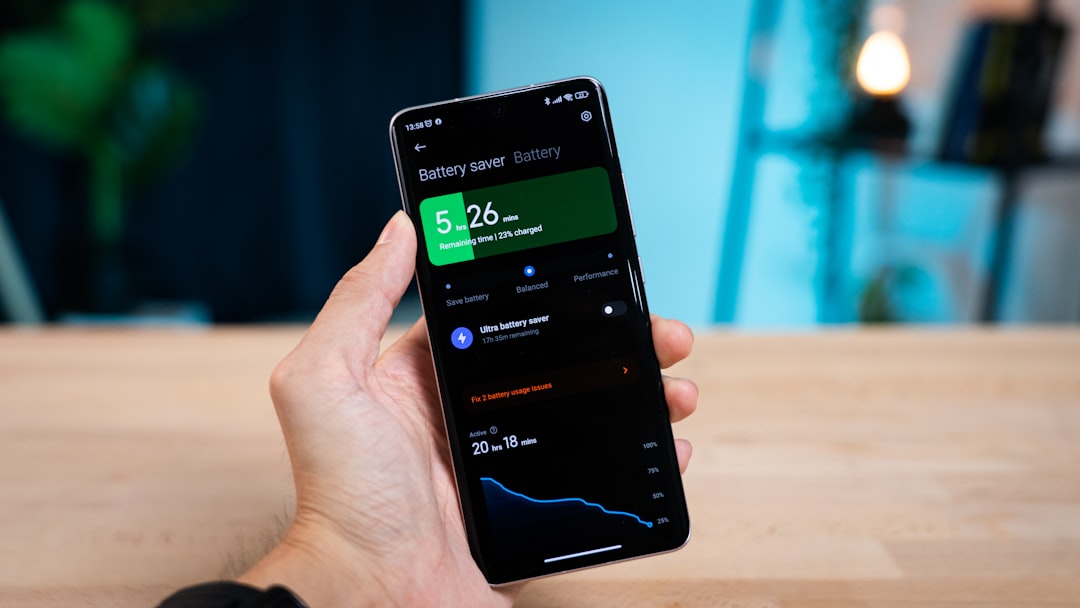
Leaked documents reveal that Samsung is testing smartphone batteries with 18,000 mAh capacity—nearly triple the capacity of current flagship phones. And unlike most battery "breakthroughs" that turn out to be lab experiments years from production, Samsung actually testing these cells suggests this technology is getting real.
For context, the iPhone 16 Pro Max has a 4,685 mAh battery. The Samsung Galaxy S25 Ultra packs 5,000 mAh. An 18,000 mAh battery would enable multi-day usage even with heavy use, or potentially week-long battery life for moderate users.
The key innovation is silicon anodes. Traditional lithium-ion batteries use graphite anodes, which have reached their theoretical limits in energy density. Silicon can store roughly 10 times more lithium ions than graphite, enabling dramatically higher capacity in the same physical volume.
Silicon batteries have been "the next big thing" for over a decade. The problem? Silicon expands up to 300% when absorbing lithium ions, then contracts when releasing them. This expansion-contraction cycle causes the anode to crack and degrade rapidly, leading to battery failure after just a few charge cycles.
Researchers have tried various solutions: silicon nanoparticles that can expand without cracking, silicon nanowires with space to accommodate expansion, and silicon-graphite composites that balance capacity with stability. But moving from lab demonstrations to mass production has proven difficult.
The fact that Samsung is testing 18,000 mAh cells suggests they've solved—or at least mitigated—the degradation problem. According to leaked documents, these batteries are undergoing validation testing, which typically happens after a technology has proven reliable enough for potential production.
This matters because Samsung doesn't test vaporware. They're one of the world's largest battery manufacturers, supplying not just their own devices but competitors' products. They have extensive experience in battery chemistry, safety testing, and manufacturing at scale. If they're validating 18,000 mAh cells, it means they believe they can produce them reliably and safely.