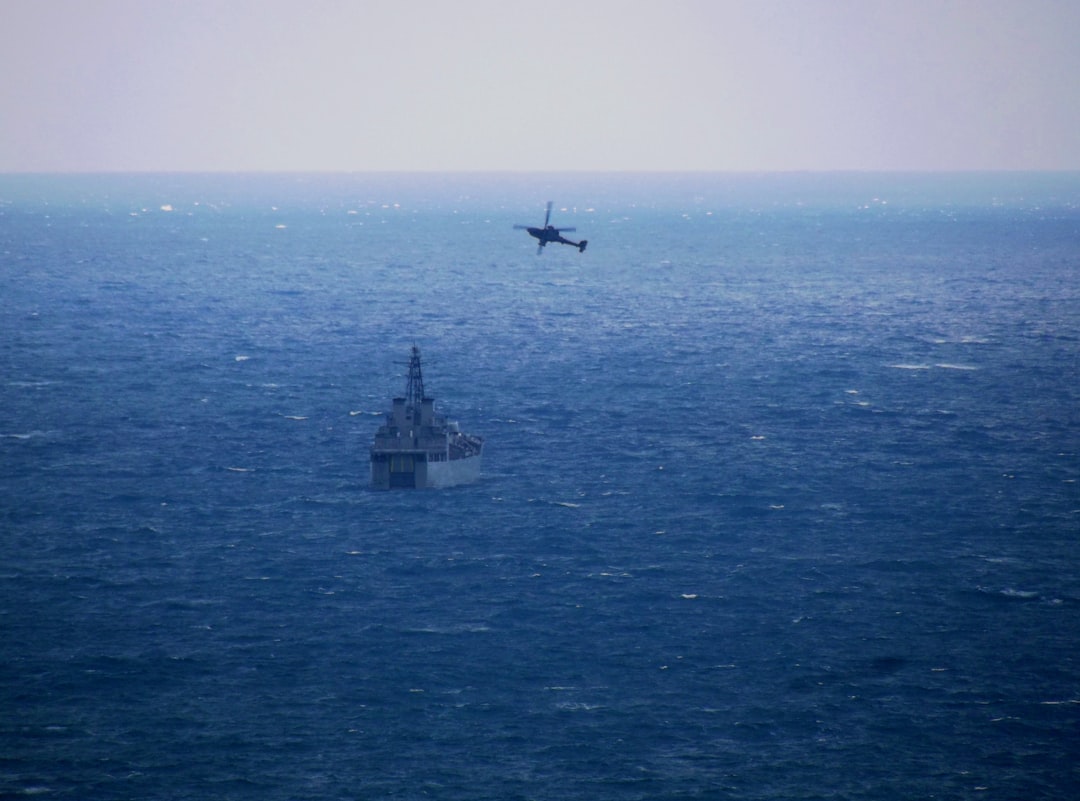
Russia has threatened to deploy naval vessels to escort ships in its so-called shadow fleet — the opaque network of ageing tankers used to circumvent Western oil sanctions — after several European nations moved to detain or seize vessels operating in their territorial waters, in what Moscow characterised as "Western piracy" on the high seas.
The warning, delivered through official Russian channels and reported by The Guardian, marks a significant escalation in the contest between Russia's sanctions evasion infrastructure and European efforts to enforce the oil price cap imposed following the invasion of Ukraine. It also raises the prospect of direct confrontation between Russian warships and the coast guards or naval forces of NATO member states — a scenario with potential escalatory consequences far beyond the immediate commercial dispute.
The shadow fleet — estimated to comprise between 600 and 1,400 vessels depending on the definition applied — operates through a web of obscure ownership structures, flags of convenience, and falsified documentation. The tankers transport Russian crude and petroleum products at prices above the G7-imposed cap of $60 per barrel, generating revenue that helps sustain Moscow's war economy.
To understand today's headlines, we must look at yesterday's decisions. The price cap mechanism, agreed by G7 nations in late 2022, was designed to allow Russia to continue selling oil — preventing a price spike that would harm importing countries — while limiting the revenue per barrel available to fund the war. To enforce the cap, G7 nations denied shipping services, insurance, and finance to tankers carrying Russian oil above the threshold.
Russia's response was to build an alternative ecosystem largely outside Western financial and insurance systems. Vessels registered in Gabon, Palau, the Cook Islands, and other small flag states, insured through obscure Moscow-linked firms, began carrying Russian crude to India, China, and Turkey — the principal importers of sanctioned Russian oil.
European enforcement has intensified in recent months. Finland and Estonia detained the tanker Eagle S in the Baltic Sea in January, suspecting it of sabotage to undersea cables in addition to sanctions violations. Denmark has stationed warships near its Bornholm island, a strategic chokepoint for Russian tanker traffic leaving Baltic ports. Greece, whose shipping industry has been implicated in shadow fleet operations, faces pressure to enforce compliance among ship owners registered in Piraeus.
The Russian threat of naval escorts is legally complex. Freedom of navigation in international waters is a cornerstone of maritime law, and naval escorts of commercial vessels in international straits are not prohibited per se. However, accompanying a vessel into the territorial waters of a third country — where the seized vessels were typically detained — would represent an unambiguous act of aggression against a NATO ally.
"Russia cannot legally protect these ships once they enter European territorial waters," said a senior maritime law expert at the University of Hamburg, speaking to The Guardian. "Any attempt to do so would be tantamount to a naval incursion into NATO territory."
Moscow has framed the European seizures as theft of legitimately trading vessels, dismissing the sanctions framework itself as illegal under international law — a position rejected by the overwhelming majority of international legal scholars.
The episode illustrates the fundamental tension at the heart of the Western sanctions regime: it can restrict Russian revenue at the margins, but enforcing it robustly risks incidents that could escalate unpredictably. For Europe, the question is whether the political will exists to accept that risk — and whether the oil price cap, increasingly porous after three years of Russian adaptation, is worth the confrontation it now threatens to provoke.