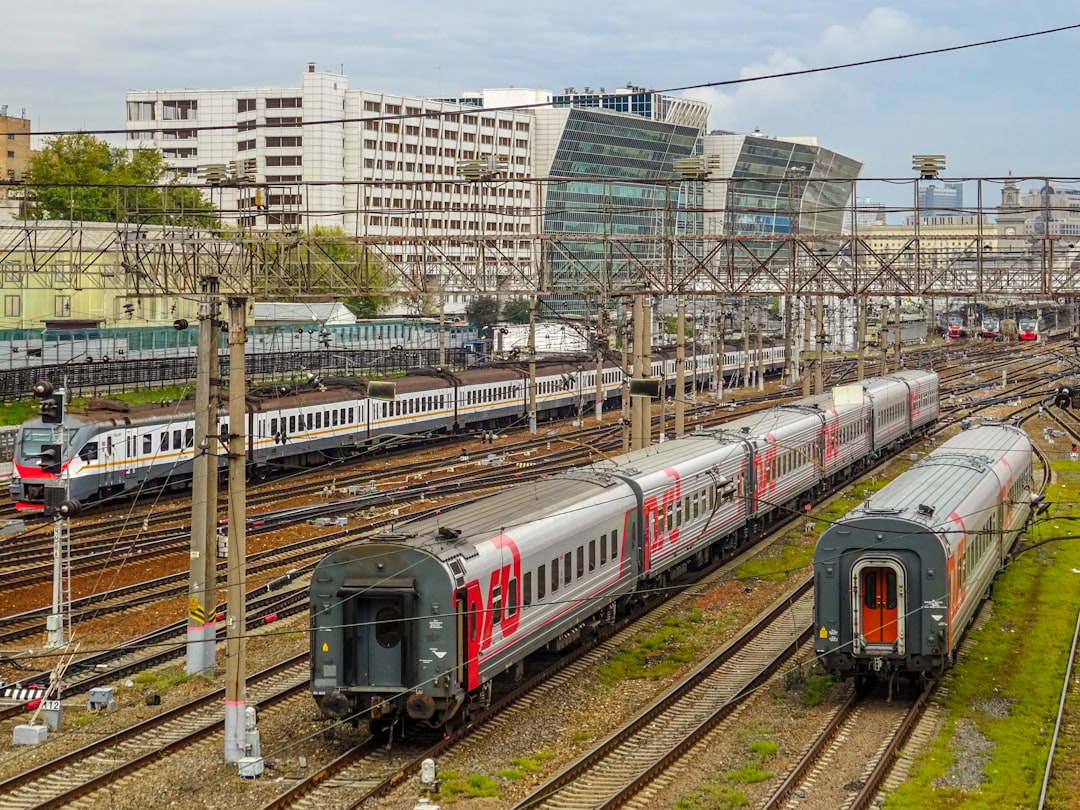
To understand the financial condition of Russian Railways — the state-owned network that forms the logistical spine of Russia's economy and, critically, of its military operations — is to understand something important about the sustainability of the war in Ukraine.
The Moscow Times — the independent Russian-language outlet operating in exile, which has maintained credible economic reporting on Russia throughout the war — reported this week that RZD (Rossiyskiye Zheleznye Dorogi) has accumulated 4 trillion rubles in debt since the invasion began, posted its first net loss since the early pandemic period in 2025, and is being characterised by one analyst as having "effectively gone bankrupt with no independent prospects for recovery."
The word "essentially" in that characterisation is doing meaningful work and requires careful attribution. This is analyst language, not official Russian state language. The Russian government has not declared RZD insolvent and is actively intervening to prevent that outcome. A 1 percent freight tariff increase effective March 1, 2026 is expected to generate 22.3 billion rubles in additional annual revenue. The government is preparing a 1.3 trillion ruble assistance package including debt restructuring. An emergency request for 200 billion rubles in direct support received only 65 billion. These are the measures of a government that regards the collapse of its railway system as an unacceptable outcome — and is spending urgently to prevent it.
The strategic frame is essential. RZD is not merely a commercial transport operator. Russia's railway network is the primary mechanism by which the military moves men and heavy equipment across the country's vast distances — from recruiting and training centres in the west to frontline staging areas in the south and east. Armoured vehicles, artillery systems, ammunition, and fuel move by rail. Wounded soldiers return by rail. The substitutability of other transport modes for the volumes and weights involved is extremely limited.
A railway system under severe financial stress does not collapse overnight. But the indicators documented by The Moscow Times suggest progressive degradation of operational capacity that will eventually manifest in military logistics: a 25 percent cut to RZD's 2026 investment programme, reducing capital expenditure from 890.9 billion rubles to 713.6 billion; personnel reductions initiated in October 2025; a 14 percent decline in cargo transportation volume since the war's onset; and ordered asset liquidations including the sale of a prominent Moscow skyscraper purchased as recently as 2024.
The austerity measures illuminate a broader pattern in the Russian war economy. The diversion of resources to military production has imposed real costs on civilian infrastructure — costs that are now becoming visible in the financial statements of strategic state enterprises. RZD is the most strategically significant example.
The Moscow Times should be explicitly credited as the source: it is an independent publication operating outside Russia following its forced closure under wartime media restrictions, and its economic reporting reflects a level of analytical independence unavailable within the country's domestic press. Single-source financial claims of this nature warrant appropriate hedging — the 4 trillion ruble debt figure and net loss data have not been confirmed by official RZD statements — but the broad picture of financial distress is consistent with what independent economists tracking Russia's war economy have documented through other channels.
When a country's primary rail network begins liquidating its own assets to service war debt, the economic cost of the conflict has reached a level that will eventually register in military capability. Whether that threshold arrives before or after a negotiated settlement is a question whose answer the Kremlin is working urgently to defer.