
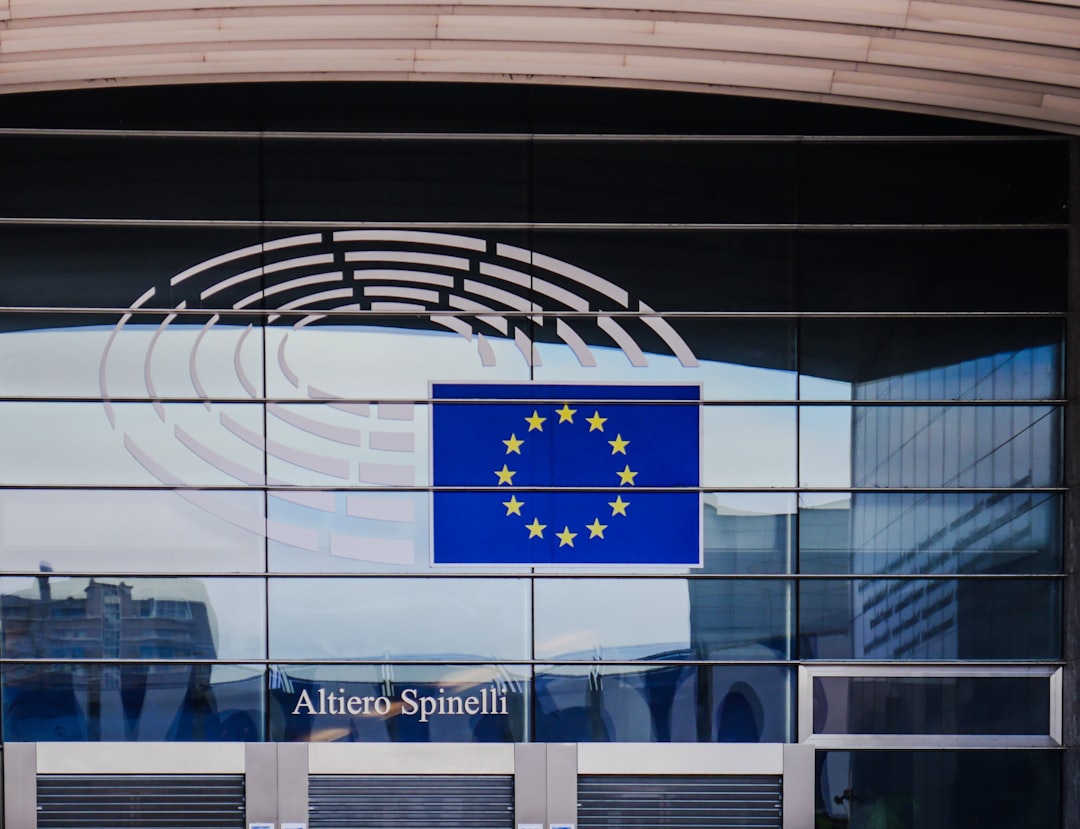
When Marco Rubio held warm discussions with Viktor Orbán in the margins of the Munich Security Conference this month, European officials reacted with familiar anxiety. But the audience watching most carefully was not in Brussels. It was in Moscow.
For Russian foreign policy strategists, the sight of Washington's top diplomat openly cultivating the most Kremlin-aligned leader within the European Union represented something beyond a transatlantic spat. It validated, in their reading, a long-running strategic calculation: that Europe's institutional solidarity is a fragile construct, and that patient pressure at its fault lines — particularly through Hungary — can yield strategic returns.
Analysis by The Guardian describes the episode as reinforcing EU fears that the current American administration "seeks disunity in Europe" — a framing that captures the European centrist reading of the moment. But from a Kremlin-watching perspective, the picture is both more specific and more consequential.
Orbán as structural asset
Viktor Orbán has occupied a singular position in European politics for more than a decade: nominally a member of the EU and NATO, but consistently acting as a blocking mechanism for Western consensus on Russia. His government has vetoed or delayed EU sanctions packages, maintained energy contracts with Moscow, blocked military aid coordination votes, and refused to allow Ukrainian troop transit across Hungarian territory.
In Russia, as in much of the former Soviet space, understanding requires reading between the lines. Orbán does not describe himself as pro-Russian. His public framing is one of "peace" and Hungarian national interest. But the operational effect of his positions — protecting Russian energy revenues, weakening sanctions coherence, fragmenting EU unity on Ukraine — aligns precisely with what Moscow's foreign policy apparatus requires.
The Kremlin has never needed Orbán to act as an agent. It has needed him to act as a sovereign. A sovereign leader of an EU member state who consistently produces outcomes favorable to Russian interests, without formal coordination, is more valuable than any recruited asset. He is deniable by definition.
What Russian analysts see in Rubio
Independent analysts with knowledge of Russian foreign policy deliberations note that Rubio's embrace of Orbán is being read in Moscow as confirmation of a structural shift rather than a tactical American maneuver. The previous American administration's posture — public pressure on Hungary to align with European consensus, visible coordination on sanctions enforcement, support for EU institutional solidarity — has been replaced by something qualitatively different.
American officials have in recent weeks simultaneously pressed Ukraine to accept a negotiated settlement, signaled skepticism about the costs of indefinite military support, and maintained warm relations with the European leader most closely associated with blocking measures that would strengthen Ukraine's position. From the Kremlin's strategic vantage point, these are not disconnected signals.
The Munich context
The Munich Security Conference has served since the Cold War as a barometer of transatlantic cohesion. This year's edition was notable for what European officials described as a widening distance between American and European security priorities. Rubio's Hungary engagement came against this backdrop — and was read by several European delegations as a deliberate signal rather than a diplomatic courtesy.
European Commission officials declined to comment directly on the Rubio-Orbán meeting. But officials from multiple EU governments, speaking on background to international outlets, expressed concern about what the engagement implies for the coherence of the Western response to the war in Ukraine.
The structural vulnerability
The deeper issue, which Moscow understands clearly, is that Europe's decision-making architecture on foreign and security policy operates on consensus. A single member state can block sanctions packages, veto military support decisions, and obstruct institutional coordination. Orbán's Hungary has used this structural veto consistently and with evident effect.
If Washington is now actively signaling approval of Orbán's posture — rather than pressure for alignment — the Kremlin's strategic planners see that as a force multiplier on an already significant blocking capability. This connects to a broader cluster of stories this week: Croatia has separately blocked Hungary's attempt to route Russian crude through the Adria pipeline, and Hungary has again delayed the EU's 20th Russia sanctions package. Viewed from Moscow, these developments form a coherent picture — not of conspiracy, but of structural opportunity being methodically exploited.