
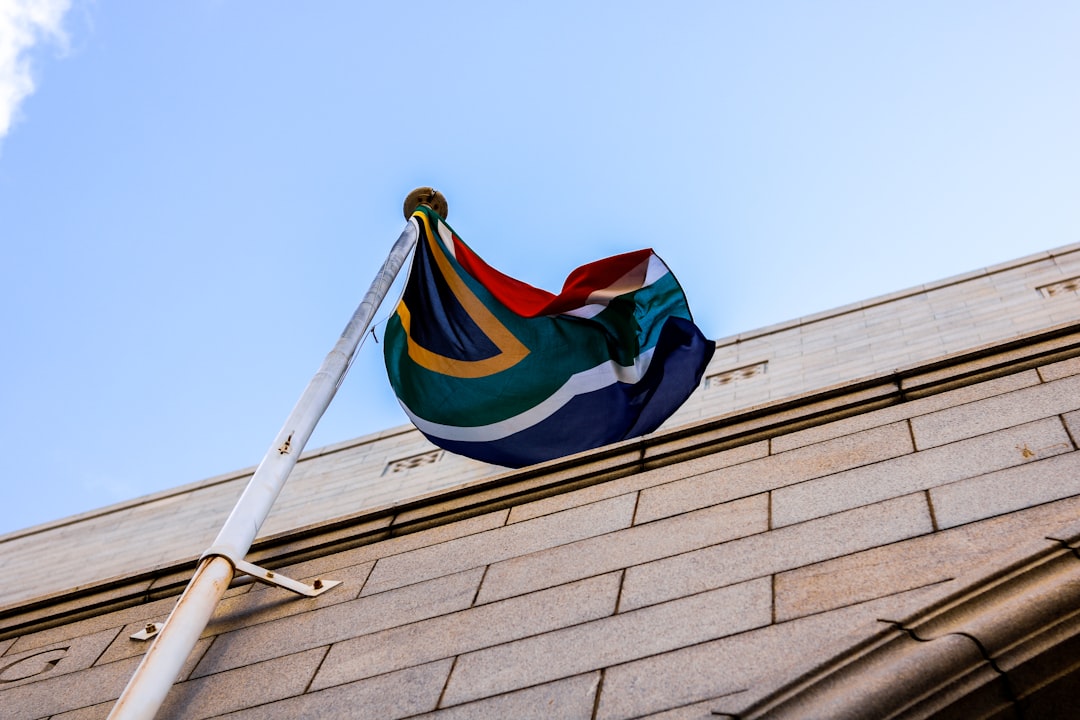
Pretoria, South Africa — President Cyril Ramaphosa has issued a pointed directive to ministers in South Africa's Government of National Unity (GNU): set aside party allegiances and govern in the national interest, signaling tensions within the historic coalition that emerged from last year's inconclusive elections.
The president's appeal, reported by Independent Online, comes as the GNU—which brings together the African National Congress (ANC), Democratic Alliance (DA), and several smaller parties—navigates ideological differences on economic policy, land reform, service delivery, and governance standards.
For Ramaphosa, whose ANC lost its parliamentary majority for the first time since 1994, the coalition represents both political necessity and democratic experiment. But bringing together parties that have spent three decades as adversaries—the liberation movement ANC and the opposition DA, historically favored by white and middle-class voters—requires more than procedural cooperation. It demands genuine policy compromise.
"President Ramaphosa is essentially asking ministers to do something politically unnatural," said political analyst Professor Lwazi Mahlangu of the University of the Witwatersrand. "These parties have fundamentally different visions for South Africa's future. The ANC emphasizes racial and economic transformation; the DA prioritizes governance efficiency and fiscal discipline. Those aren't easily reconciled."
The president's intervention suggests that partisan tensions have become visible—and problematic—within Cabinet deliberations. Ministers appointed from different parties likely face pressure from their political bases to defend party positions, even when those positions conflict with GNU consensus. Ramaphosa's directive appears aimed at preventing cabinet from becoming an extension of parliamentary debate.
Comparative examples offer both hope and caution. Germany's "grand coalitions" between Christian Democrats and Social Democrats have governed effectively despite ideological differences, prioritizing stability over partisan advantage. The Netherlands routinely forms multi-party governments that negotiate detailed coalition agreements before taking office.
But South Africa's GNU formed rapidly after elections, without the detailed policy negotiations common in European coalition governments. The arrangement prioritized continuity and stability over ideological coherence—creating potential for ongoing friction as ministers confront difficult decisions on budgets, state-owned enterprises, corruption prosecutions, and service delivery.
"Coalition governance requires institutional maturity," noted Dr. Sipho Ngubane, director of the Johannesburg-based Good Governance Africa. "Ministers must balance party loyalty with collective cabinet responsibility. In Westminster systems, that's enforced through cabinet confidentiality and collective decision-making. South Africa is testing whether that model works when cabinet includes genuine ideological opponents."
The GNU's success or failure carries enormous implications for South Africa's democratic future. If the coalition can deliver improved governance—reducing corruption, stabilizing electricity supply through Eskom reforms, accelerating economic growth, addressing unemployment—it could establish coalition government as a viable alternative to single-party dominance. That would represent democratic deepening three decades after apartheid's end.
But if the GNU fractures over policy disputes or partisan positioning, it could trigger political instability, early elections, or governance paralysis—outcomes South Africa can ill afford given persistent challenges of inequality, unemployment exceeding 30 percent, and infrastructure decay symbolized by recurring "load shedding" electricity cuts.
In South Africa, as across post-conflict societies, the journey from apartheid to true equality requires generations—and constant vigilance. The GNU experiment tests whether former adversaries can genuinely share power, whether democratic institutions can facilitate cooperation across deep ideological divides, and whether the national interest can supersede party advantage.
Ramaphosa's appeal to ministers reflects both the promise and fragility of this moment. South Africa's voters delivered a coalition mandate; the question now is whether political elites can honor that mandate with maturity, compromise, and shared commitment to service delivery.
Neither the ANC nor DA responded immediately to the president's statement, but political observers will watch closely for signs of compliance—or resistance—in coming weeks. Cabinet meetings, policy announcements, and ministers' public statements will reveal whether Ramaphosa's directive carries weight or remains aspirational.
What's certain is that South Africa has entered new democratic terrain. The GNU represents the most significant shift in the country's political architecture since 1994. How well it functions will shape not just current governance, but the viability of coalition politics for decades to come.