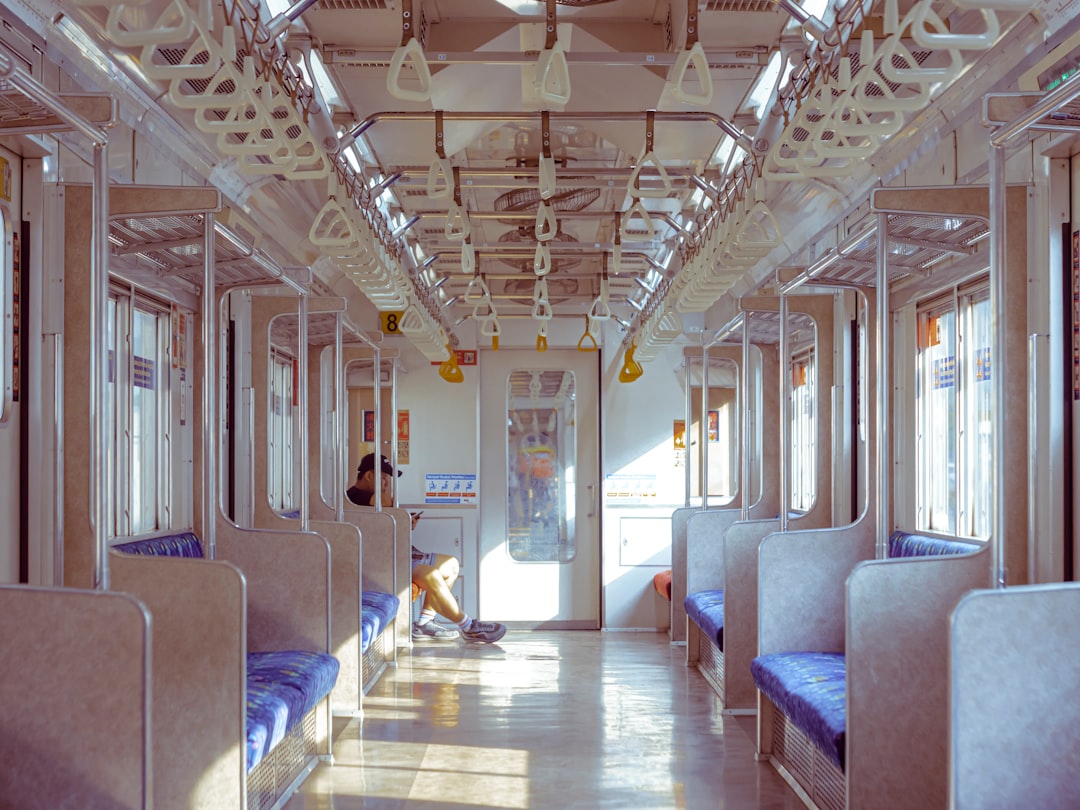
Indonesia has achieved significant emissions reductions through systematic rail electrification across the Jakarta metropolitan region, with state railway operator KAI reporting carbon savings exceeding 8 million tons annually.
The electrification program spanning the Rangkasbitung, Bogor, and Cikarang corridors demonstrates the effectiveness of Indonesia's quiet infrastructure revolution, according to Antara News. While international attention focuses on high-speed rail projects, Indonesia's approach prioritizes moving millions daily through upgraded commuter systems.
Ridership data illustrates the scale of transformation. The Bogor line carried 155 million passengers in 2025, up from 102 million in 2022. The Rangkasbitung corridor saw ridership nearly double from 43 million to 77 million over the same period, while the Cikarang line grew from 55 million to 85 million passengers.
In Indonesia, as across archipelagic democracies, unity in diversity requires constant negotiation across islands, ethnicities, and beliefs. The Jakarta metropolitan region's expansion across multiple provinces and ethnic communities makes integrated transportation essential for economic cohesion.
Anne Purba, KAI's Vice President for Corporate Communication, emphasized how electrification enables more frequent service and higher capacity. Electric multiple units can accelerate faster than diesel locomotives, allowing tighter headways and more trains per hour during peak periods.
The carbon reduction figures—2.7 to 2.8 million tons on the Rangkasbitung line, 4.1 to 4.3 million tons on the Bogor corridor, and 1.3 to 1.4 million tons on the Cikarang route—reflect both modal shift from private vehicles and operational efficiency. Electric trains convert energy more efficiently than diesel engines while eliminating local air pollution from stations and rail corridors.
The electrification program required coordination between KAI and the Ministry of Transportation's Railway Directorate General. Infrastructure upgrades included overhead catenary systems, electrical substations, and signal modernization to support higher train frequencies. Double-tracking projects eliminated bottlenecks that previously limited service expansion.
Jakarta's commuter rail system functions as the backbone of metropolitan mobility, connecting the capital with satellite cities across West Java and Banten provinces. The system serves workers commuting from affordable housing in outlying areas to employment centers in Jakarta, making economic opportunity accessible to middle and lower-income families.
The ridership surge reflects both population growth and improved service reliability. Commuters increasingly choose rail over congested highways, particularly during peak hours when road travel times become unpredictable. Rail electrification supports this modal shift by providing consistent, frequent service that competes effectively with private vehicles.
KAI's approach contrasts with the more visible Jakarta-Bandung high-speed rail project that opened in 2023. While the bullet train attracts international attention, the commuter rail electrification affects far more daily travelers. The Bogor line alone carries more passengers monthly than the high-speed rail serves annually.
The infrastructure investment demonstrates the effectiveness of state enterprises in delivering public services. KAI operates as a commercially oriented state-owned company that must balance profitability with public service obligations. Electrification improves both metrics by reducing operating costs while increasing ridership and revenue.
Further electrification is planned for the Rangkasbitung-Merak, Bogor-Sukabumi, and Cikarang-Cikampek extensions. These expansions will bring electric rail service to additional industrial zones and residential areas, further reducing the metropolitan region's transportation carbon footprint.
The success of Jakarta's rail electrification offers lessons for other Indonesian cities. Surabaya, Bandung, and Medan face similar challenges of rapid urbanization and traffic congestion. Adapting the Jakarta model to local contexts could significantly reduce urban transportation emissions while improving mobility.
Indonesia's climate commitments under the Paris Agreement require substantial emissions reductions from the transportation sector. Rail electrification represents one of the few proven strategies for achieving these reductions at scale in rapidly growing urban areas. The Jakarta metropolitan region's experience demonstrates that systematic infrastructure investment can deliver both climate benefits and improved public services.
The program also illustrates Indonesia's approach to development—pragmatic, incremental, and focused on moving large numbers of people rather than showcasing technological prowess. This approach may lack the glamour of high-speed rail announcements, yet it delivers measurable results in emissions reduction and economic connectivity.