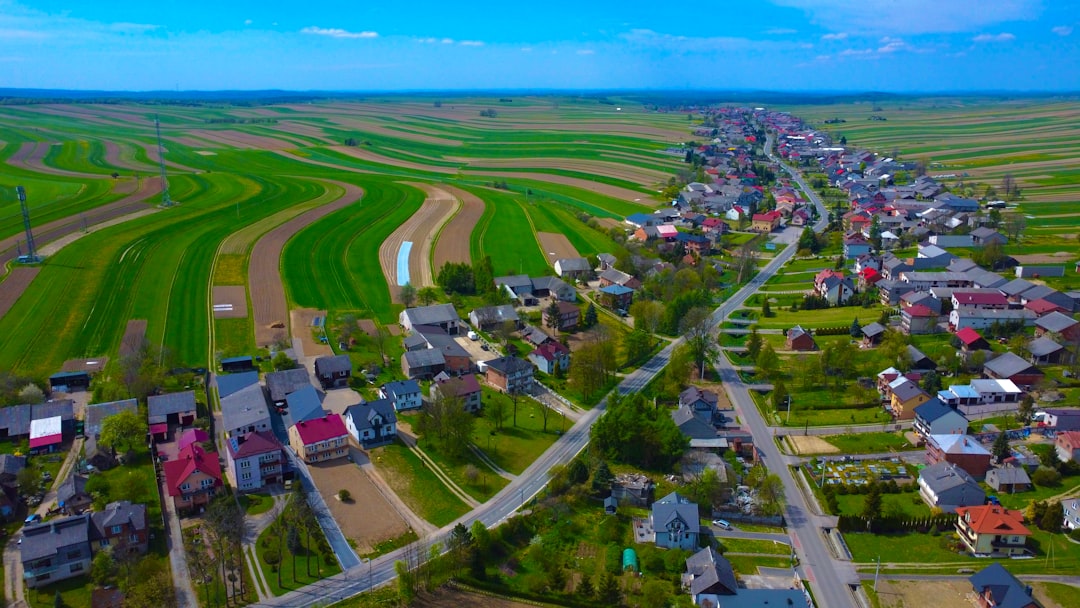
A profound demographic transformation is underway in Poland's conservative provincial heartland, where young women are abandoning smaller towns and rural areas in striking numbers—leaving behind what researchers are now calling a "land of bachelors."
The migration pattern, documented by InnPoland, reveals a widening gender gap in Poland's provincial areas as women increasingly seek opportunities in liberal urban centers like Warsaw, Kraków, and Wrocław—or leave the country entirely.
The trend exposes the lived reality behind Poland's well-documented urban-rural political divide. While Western media often frame Polish politics as a battle between cosmopolitan elites and traditional values voters, the demographic data tells a more complex story: young women are voting with their feet, reshaping Poland's future in ways that transcend electoral politics.
In Poland, as across Central Europe, history is never far from the surface—and neither is the memory of occupation. But this particular form of demographic change speaks to contemporary concerns about women's rights, economic opportunity, and social conservatism that have defined Polish political discourse since the country's EU accession in 2004.
The exodus is particularly pronounced in Poland's eastern and southeastern provinces—areas that have consistently supported conservative parties and where the Catholic Church maintains significant social influence. These regions now face a compounding crisis: economic stagnation combined with an increasingly skewed gender ratio that threatens their long-term viability.
"Provincial Poland is becoming a land of bachelors," the InnPoland analysis concludes, noting that the trend has accelerated in recent years as debates over abortion rights, women's healthcare, and gender equality have intensified in Polish politics.
For young women in these communities, the calculation is increasingly straightforward. Urban centers offer not only better employment prospects but also greater social freedoms, more comprehensive healthcare access, and escape from conservative social pressures. The 2020 near-total abortion ban, which sparked massive protests in Polish cities, appears to have further accelerated the migration pattern.
The demographic shift has significant political implications. Poland's conservative Law and Justice party (PiS) drew much of its electoral strength from provincial areas, positioning itself as the defender of traditional Polish values against liberal urban elites. But if those communities are losing their young women—often the most educated and economically productive members—the sustainability of that political coalition becomes questionable.
The phenomenon also reveals tensions within Polish conservatism itself. While PiS promoted pro-family policies including generous child benefits, these programs appear insufficient to retain young women in communities where they perceive limited personal autonomy and restricted life choices.
"It's not just about economics," one researcher noted. "Women are leaving places where they don't see futures for themselves as individuals, not just as mothers or wives."
The gender imbalance in provincial Poland mirrors patterns seen elsewhere in post-communist Central and Eastern Europe, where rural depopulation has been a persistent challenge. But Poland's situation is complicated by the country's recent political trajectory and ongoing debates over social values.
Urban Poland, meanwhile, has become increasingly female-dominated among young adults, contributing to the stark cultural and political differences between cities and provinces. Warsaw, in particular, has emerged as a magnet for ambitious young women seeking careers, education, and social environments more aligned with contemporary European norms.
The trend raises uncomfortable questions for all sides of Poland's political spectrum. For conservatives, it suggests that cultural policies intended to preserve traditional values may be driving away the very people needed to sustain those communities. For liberals, it highlights how Poland's political geography is becoming self-reinforcing, with progressive-minded individuals clustering in cities while rural areas become more homogeneous.
The demographic transformation also has implications for Poland's broader development trajectory. The country has already experienced significant emigration to Western Europe, particularly the UK and Germany, following EU accession. The internal migration of women from provincial areas to cities adds another layer of population redistribution that will shape Poland's economic and social landscape for decades.
For the communities being left behind, the consequences are stark. A shortage of young women means fewer families, declining birth rates, aging populations, and diminished economic vitality. Some towns are already experiencing what researchers call a "demographic death spiral"—where population loss makes areas less attractive, accelerating further departures.
The phenomenon underscores a fundamental reality often obscured by Poland's political rhetoric: the country's urban-rural divide is not merely about voting patterns or cultural attitudes, but about fundamental life choices that young people—particularly young women—are making about where and how they want to live.
As Poland continues to navigate its position between traditional values and European integration, between Warsaw's cosmopolitanism and provincial conservatism, the "land of bachelors" may be the most tangible evidence of how those tensions are reshaping the nation from the ground up.
In Poland, as across Central Europe, history is never far from the surface—and neither is the memory of occupation. But this new form of departure speaks to the future, not the past.