Pope Leo XIV delivered his sharpest criticism yet of the Iran war Thursday, declaring that "God does not bless any conflict" in remarks clearly aimed at both Washington and Tehran as ceasefire negotiations continue in Islamabad.
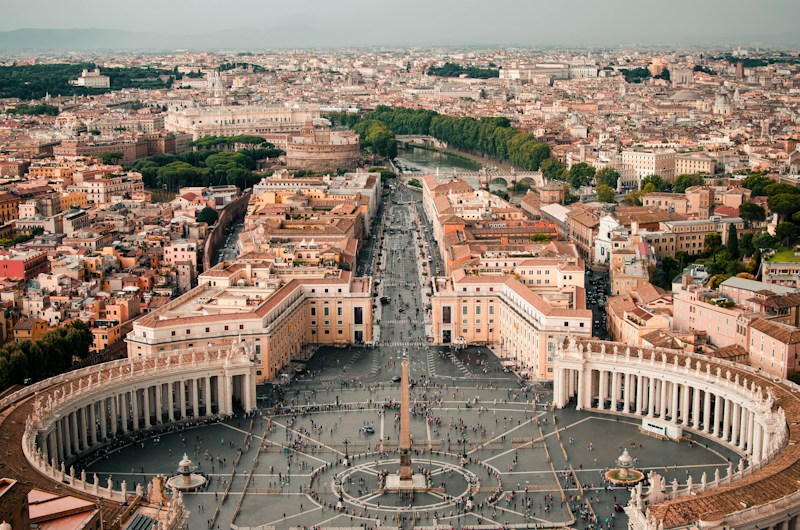
Speaking to a crowd of approximately 30,000 in St. Peter's Square, the pontiff departed from his prepared text to address the Middle East crisis, his voice rising with emotion as he condemned the violence and called for immediate peace.
"When will we learn that war resolves nothing?" Pope Leo said, according to a Guardian report. "Every bomb that falls, every missile that flies, takes us further from the kingdom of God. There is no such thing as a holy war, a just war, a blessed war. God does not bless any conflict."
To understand today's headlines, we must look at yesterday's decisions. Papal intervention in international conflicts carries a tradition dating to the medieval period, but modern popes have generally exercised that authority cautiously. Pope John Paul II's 2003 opposition to the Iraq invasion, for instance, used similarly strong language but failed to prevent the war.
The timing of Pope Leo's statement is significant. With Vice President JD Vance in Islamabad for negotiations, the Pope's words add moral pressure on both sides to reach agreement. Vatican diplomats have maintained quiet contacts with Iranian officials throughout the crisis, positioning the Holy See as a potential mediator should formal talks break down.
The rebuke also carries domestic political implications in the United States and Europe. Millions of Catholic voters supported the Trump administration's hardline Iran policy, and the Pope's criticism creates tension for Catholic politicians who backed military action. "This puts pressure on everyone from the president to congressional leaders," said a Washington-based Catholic policy analyst.
Vatican observers noted that Pope Leo, who has served less than a year since succeeding Pope Francis, has shown willingness to take strong public positions on geopolitical issues despite potential backlash from conservative Catholics. His Iran comments align with broader papal emphasis on peace, dialogue, and rejection of militarism.
The Catholic Church maintains significant institutional presence across the Middle East, including in Iran, where a small Christian minority has existed for centuries. Escalation of the conflict threatens these communities, giving the Vatican direct interest in promoting de-escalation beyond general moral opposition to warfare.
Reaction to the Pope's statement divided along predictable lines. Progressive Catholic organizations praised the intervention as moral leadership, while conservative commentators criticized what they characterized as naïve pacifism that ignores legitimate security threats.
"The Pope speaks from a position of moral authority but not military responsibility," said a former US national security official. "It's easy to condemn all conflict when you don't have to protect your citizens from attack."
Defenders countered that precisely because the Pope lacks military power, his voice carries unique credibility as independent moral witness. "He's not speaking for any nation's interests," said a Vatican expert. "That's what gives his words weight."
The papal statement follows a pattern of religious leader involvement in the Iran crisis. Earlier this week, senior clerics from multiple Islamic schools of thought issued a joint call for ceasefire, while Christian, Jewish, and Muslim leaders in the United States have coordinated interfaith peace advocacy.
Whether Pope Leo's intervention will influence policy remains uncertain. Modern wars proceed despite religious objections more often than not. But at a moment when negotiators in Islamabad seek common ground, the Pope's insistence that "God does not bless any conflict" offers a shared framework that transcends national and religious divisions—if anyone chooses to listen.