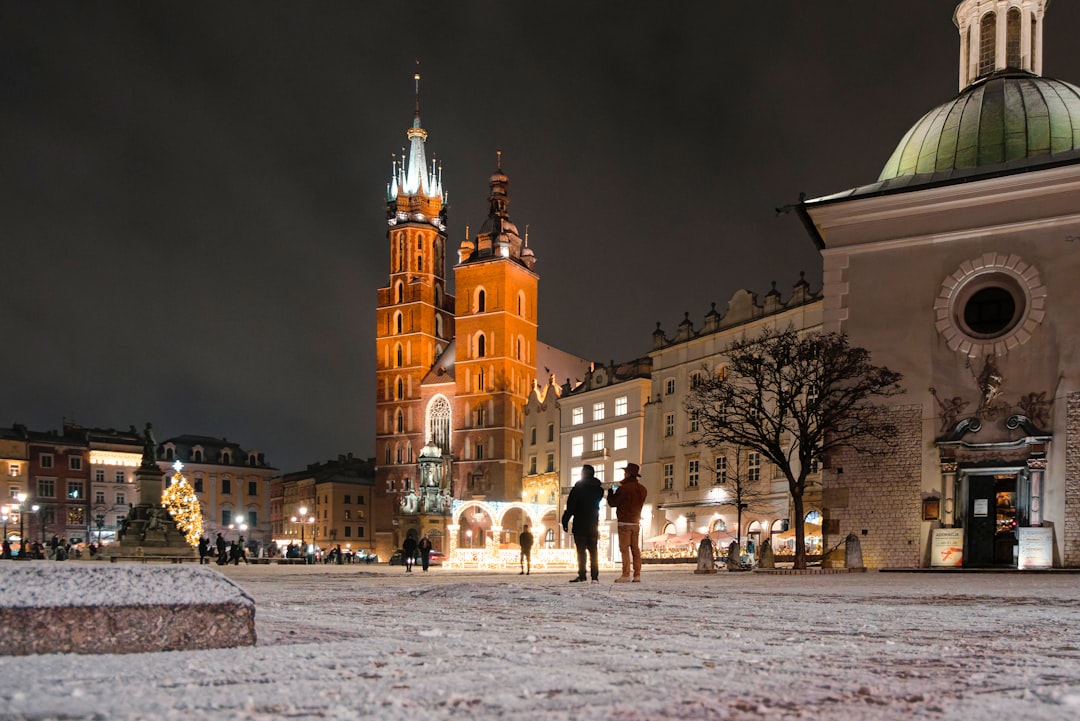
Krakow, once notorious as Poland's smog capital, has prevented an estimated 6,000 premature deaths since 2019 through aggressive policies targeting black carbon and particulate pollution, offering a replicable model for cities worldwide struggling with air quality crises.
The city's transformation demonstrates how targeted local action—banning coal heating, subsidizing clean energy transitions, and enforcing emission standards—can deliver measurable public health gains within years, not decades.
"We went from being Poland's most polluted city to a success story," said Aleksandra Duliban, climate adviser to Krakow's mayor. "The key was making clean heating affordable and coal heating illegal. Policy works when you combine carrots and sticks."
In 2013, Krakow recorded particulate pollution levels that exceeded World Health Organization guidelines by 400 percent during winter months. Residents burned coal and trash in antiquated home furnaces, blanketing the city in toxic smog that reduced visibility and triggered respiratory emergencies.
The city council enacted Poland's first coal ban in 2019, prohibiting solid fuel combustion in residential heating. Crucially, the ban came with a €35 million subsidy program helping households transition to natural gas, heat pumps, and district heating connections.
"You can't just ban coal without providing alternatives," said Dr. Piotr Siergiej, environmental health researcher at Jagiellonian University. "Low-income families were burning coal because it was cheapest. Subsidies made clean heating economically viable."
The results exceeded public health projections. Analysis published in Environmental Health Perspectives found that PM2.5 concentrations—fine particulates that penetrate deep into lungs—dropped 39 percent between 2018 and 2025.
Black carbon, produced by incomplete combustion of coal and biomass, fell even more dramatically. Winter black carbon levels decreased 62 percent, with corresponding reductions in cardiovascular and respiratory hospital admissions.
Epidemiological modeling estimates the air quality improvements have prevented 6,000 premature deaths from heart disease, stroke, and lung disease since the coal ban took effect. Hospital data show emergency room visits for respiratory distress fell by one-third during winter months.
"The health benefits appeared almost immediately," said Dr. Anna Gładyszewska-Fiedoruk, pulmonologist at Krakow's University Hospital. "We saw fewer COPD exacerbations, fewer heart attacks during smog events. The correlation was clear."
The policy framework combined regulation, economic incentives, and enforcement. Inspectors equipped with thermal imaging cameras identified homes still burning coal, triggering fines and mandatory heating system upgrades. Repeat violators faced escalating penalties.
Simultaneously, the city accelerated deployment of district heating networks using combined heat and power plants with modern emission controls. District heating now serves 65 percent of Krakow residents, up from 52 percent in 2018.
For buildings where district heating connection was impractical, subsidies covered up to 80 percent of heat pump installation costs for low-income households. Middle-income families received 50 percent subsidies.
"The subsidy structure was progressive," said Duliban. "We recognized that energy poverty was real. Families weren't burning coal because they liked pollution—they were burning coal because they couldn't afford alternatives."
In climate policy, as across environmental challenges, urgency must meet solutions—science demands action, but despair achieves nothing. Krakow's experience demonstrates that air pollution is not an intractable problem requiring decades of gradual improvement.
The city's success has catalyzed national policy changes. Poland now has coal heating bans in 144 municipalities, covering roughly 12 million residents. The national government committed €3 billion to heating transition subsidies through 2030.
"Krakow proved it was possible," said Paweł Kukiz, energy policy analyst at Warsaw's Institute for Structural Research. "Other cities saw the health data and demanded similar programs. Political momentum built quickly once results were visible."
The model is particularly relevant for cities in developing countries facing similar air quality crises. New Delhi, Dhaka, Ulaanbaatar, and dozens of other cities exceed WHO air quality guidelines by multiples, with coal and biomass combustion as major contributors.
"The Krakow approach is replicable," said Dr. Wojciech Szymalski, air quality specialist at the European Environment Agency. "You need political will, adequate subsidies, and enforcement. But the technology exists and the economics work."
Economic analysis found the health benefits far exceeded program costs. Avoided mortality and morbidity were valued at €420 million through 2025, against subsidy and enforcement costs of €78 million. The benefit-cost ratio exceeded 5:1.
The policy also accelerated energy efficiency improvements. Households replacing coal furnaces typically added insulation and upgraded windows, reducing overall energy consumption by an average of 28 percent.
"Clean heating became the entry point for deeper retrofits," said Duliban. "Once you're replacing the heating system, it makes sense to insulate properly. Energy bills dropped even with higher fuel costs."
Challenges remain. Enforcement in rural areas surrounding Krakow is less consistent, with some households continuing to burn coal illegally. Regional coordination is needed to address pollution transport from neighboring jurisdictions.
Climate advocates note that Poland's coal transition extends beyond residential heating to power generation. The country still derives 70 percent of electricity from coal, requiring much larger-scale transformation to meet European Union climate targets.
However, the residential heating transition demonstrates that rapid change is achievable when policy design addresses both environmental and economic concerns. Public support for the coal ban exceeded 75 percent in surveys, partly because subsidies made compliance feasible.
"People want clean air," said Dr. Gładyszewska-Fiedoruk. "They just need affordable pathways to get there. Krakow showed that climate policy and social policy can align—you don't have to choose between environmental protection and economic fairness."