Marine plastic pollution extends beyond visible contamination to fundamentally alter how ocean predators hunt and survive, according to new research examining octopus behavior in polluted environments—revealing ecosystem cascades scientists are only beginning to understand.
The study, published in Ecomagazine, demonstrates that plastic debris disrupts the chemical and visual cues octopuses rely on to detect prey, reducing hunting success and forcing behavioral adaptations that carry survival costs. Rather than simply posing ingestion risks or entanglement hazards, plastic pollution acts as an invisible interference in the sensory ecology that shapes marine life.
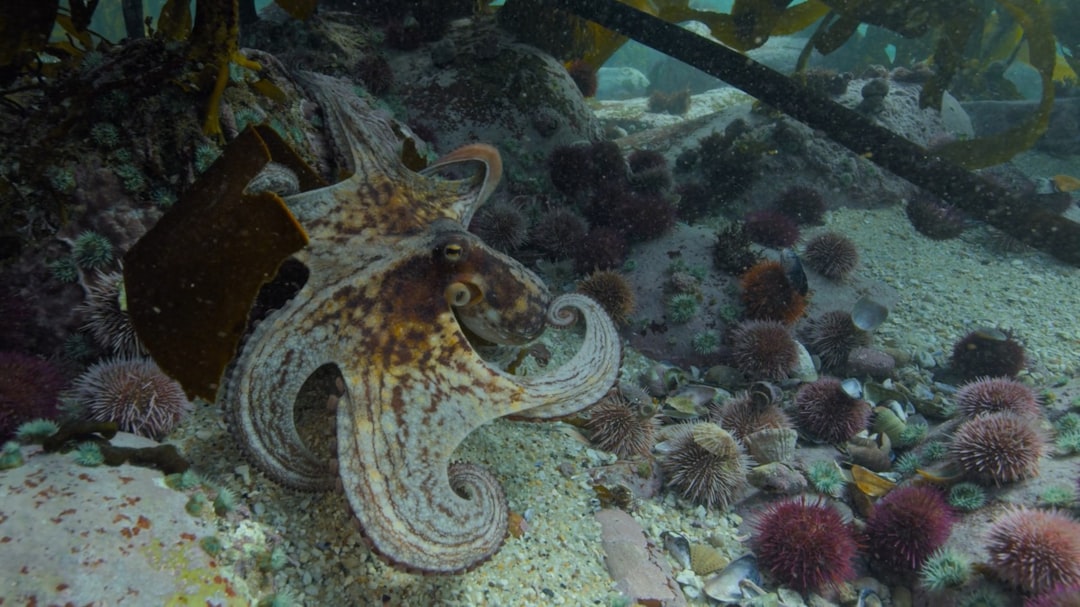
Researchers from the University of Plymouth observed octopuses in controlled environments with varying plastic concentrations, documenting decreased prey capture rates and altered hunting patterns when microplastics and larger debris were present. The octopuses spent more energy searching, made more unsuccessful strikes, and showed signs of stress-related behaviors—changes that compound across predator populations and reshape food web dynamics.
Dr. Kara Ladd, marine ecologist and co-author, explained that octopuses use chemoreception—essentially tasting the water—to detect prey hidden in sediment or crevices. Plastic particles leach chemicals that confuse these sensory systems, creating false signals or masking authentic prey cues. It's the aquatic equivalent of trying to track a scent through a cloud of industrial pollution—the signal exists, but it's overwhelmed by noise.
The implications extend far beyond octopuses. As opportunistic predators occupying middle trophic levels, octopuses regulate populations of crustaceans, mollusks, and small fish. When their hunting efficiency declines, prey populations may spike in some areas while octopus populations face nutritional stress—cascading effects that ripple through ecosystems already stressed by overfishing, warming waters, and habitat degradation.
The research adds new dimension to understanding plastic pollution's ecological toll. Scientists have documented microplastics in organisms from plankton to whales, traced toxic chemical accumulation through food webs, and measured physical damage from ingested debris. But this study illuminates a subtler threat: the disruption of evolutionary relationships between predators and prey that have developed over millions of years.
In nature, as across ecosystems, every species plays a role—and humanity's choices determine whether the web of life flourishes or frays. Plastic pollution demonstrates how human activity introduces not just physical contaminants but functional chaos into natural systems. An octopus that misses prey because microplastics have corrupted its sensory world isn't just hungrier—it's evidence of how thoroughly human waste has penetrated ocean chemistry.
The study's authors call for research on plastic pollution's sensory impacts across species, noting that many marine organisms—from sharks to sea turtles—rely on chemical cues for hunting, navigation, and mating. Understanding these disruptions could reshape how scientists assess pollution's true ecological cost and inform cleanup priorities that focus on removing plastic from critical feeding or breeding areas.
For octopuses, already facing pressures from climate change and expanding fisheries, plastic pollution adds another stressor to populations balancing on ecological edges. The research demonstrates that ocean health requires more than reducing visible trash—it demands recognition that pollution operates at molecular scales, disrupting the invisible relationships that sustain marine life.