Peru has ousted yet another head of state. This is the eighth president removed or forced from office in less than a decade — a statistic that, by itself, should alarm every democratic government in the hemisphere and every foreign investor with exposure to one of South America's most strategically significant economies.
Peru's Congress voted to remove the sitting president on grounds of "moral incapacity," an elastic constitutional clause so broad and so cheaply applied that it has become, in the words of constitutional scholars across the region, a parliamentary weapon rather than a democratic safeguard. The president had been in office for just four months.
The vote crossed the required threshold of 87 of 130 congressional seats, following a now-familiar script in Lima: a fractured legislature with no dominant party, an executive stripped of reliable allies, and a constitutional mechanism that makes removal easier than governing. Peru's "moral incapacity" impeachment standard requires no criminal conviction, no formal judicial finding — only a congressional supermajority persuaded, for whatever reason, that the president is unfit. The bar is low by design. Congress has learned to use it with efficiency.
The succession falls to the first vice president, who assumes the presidency under constitutional protocols — the third time in recent years that a vice president has been elevated to the nation's highest office through this mechanism rather than the ballot box.
Eight presidents in under a decade. To feel the full weight of that number, consider the names: Pedro Castillo, removed and jailed in 2022 after an attempted autogolpe; Martín Vizcarra, ousted in 2020 on moral incapacity grounds after surviving an earlier removal attempt; Manuel Merino, who resigned within days of taking office after mass protests; Francisco Sagasti, a transitional figure who stabilized the country briefly; and Dina Boluarte, who governed through relentless crisis before her own departure. Each removal has been constitutionally defensible in isolation. Together, they constitute a pattern of institutional failure that no constitutional text can resolve on its own.
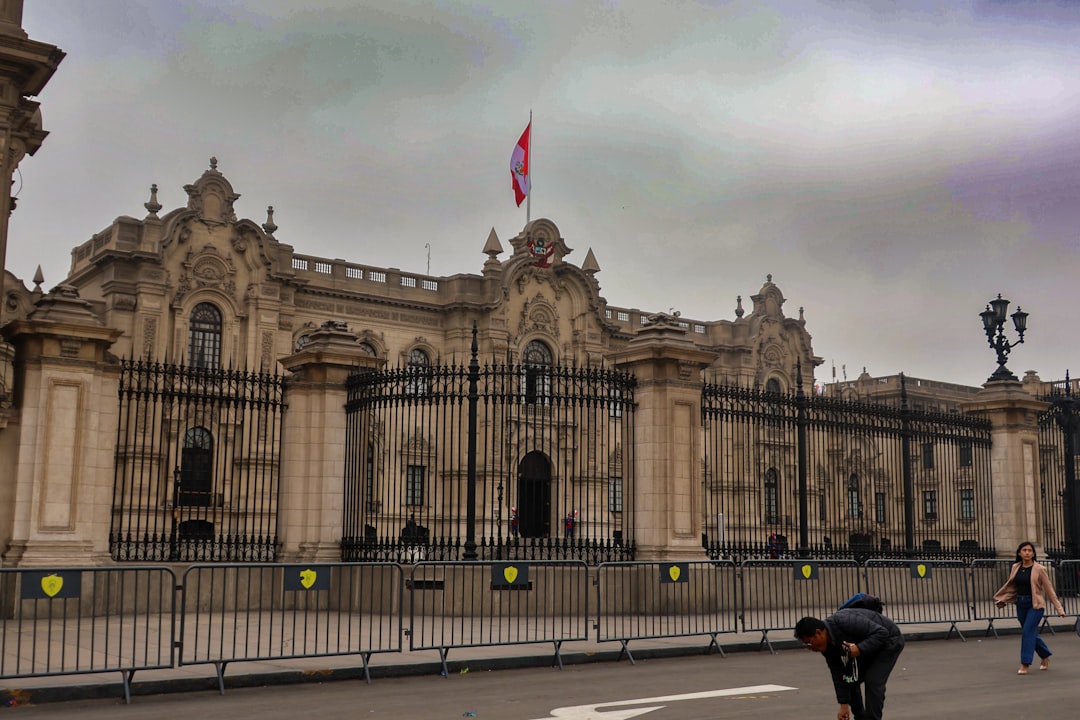
The structural flaw is not a mystery. Peru's political system produces presidents elected by pluralities too thin to govern and congresses too fragmented to legislate. The 2016 and 2021 elections both produced second rounds between candidates who polarized the country before either took office. No president since 2016 has entered the Palacio de Gobierno with anything resembling a legislative majority. In that vacuum, Congress has discovered that impeachment is the one tool it can reliably deploy.
The consequences fall on 33 million Peruvians who live in a country that should, by its resource endowment alone, be a regional success story. Peru holds some of the world's largest copper, silver, zinc, and gold deposits. It sits astride Pacific trade routes that connect South America to Asia. The Andean nation has, in calmer decades, been a model of orthodox macroeconomic management that attracted sustained foreign direct investment.
None of that structural advantage survives perpetual political paralysis. The mining sector, which accounts for roughly 60 percent of Peru's export revenue, has already seen project delays and investor caution mount with each successive crisis. International Monetary Fund engagement with Lima has grown more complicated with each government transition. When the head of state changes faster than a fiscal year closes, medium-term economic planning becomes structurally impossible.
The Organization of American States has repeatedly expressed concern about democratic erosion in Peru, though its interventions have remained largely rhetorical. Regional neighbors — including Colombia, Chile, and Brazil — have watched the cycle with a mix of alarm and diplomatic caution, reluctant to intervene in what each removal's architects insist is a constitutional process.
And therein lies the cruelest irony of Peru's predicament. Each individual removal can be defended as constitutional. Each one, in isolation, represents Congress exercising a power the constitution explicitly grants. It is the accumulation — eight presidents, one decade — that reveals the constitutional design itself as incompatible with stable democratic governance.
Twenty countries, 650 million people. When one of them cannot keep a president in office long enough to develop a policy, the entire region's democratic narrative suffers. Peru's crisis is not a curiosity. It is a warning about what happens when constitutional mechanics are separated from the democratic spirit that is supposed to animate them.
Somos nuestra propia historia — and right now, Peru's chapter is one the hemisphere cannot afford to keep ignoring.