
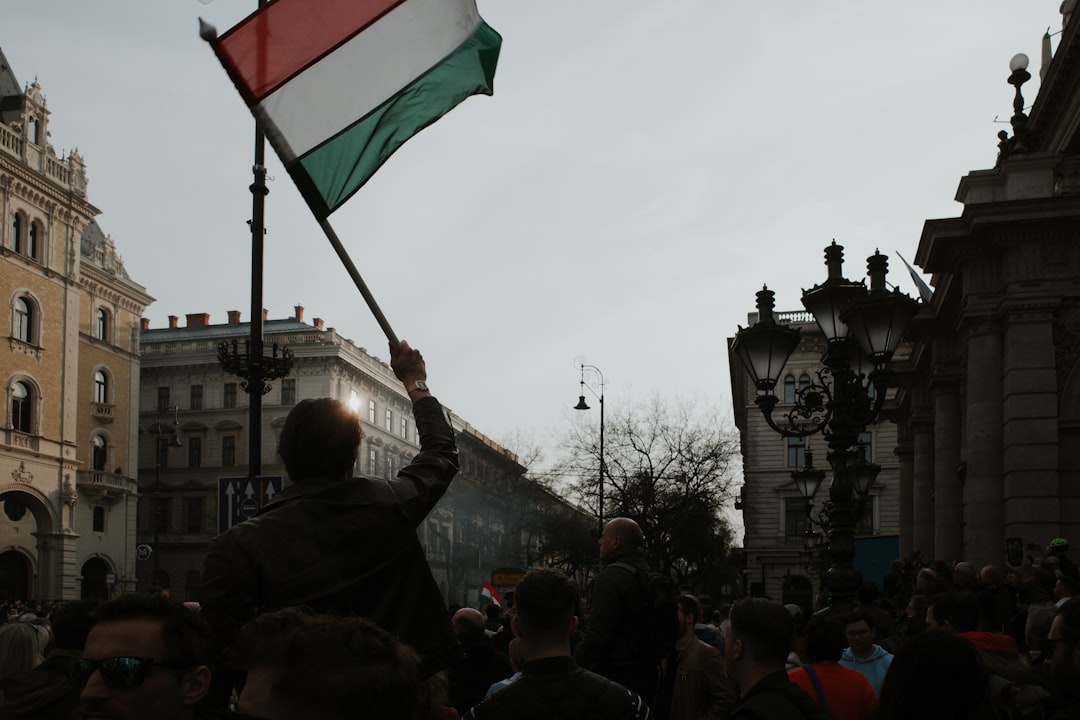
For the first time since Viktor Orbán consolidated his supermajority in 2010, polling data now shows his Fidesz party trailing a unified opposition movement by a double-digit margin — with the Tisza party of Péter Magyar standing at 48 percent against Fidesz's 38 percent, according to figures cited by ProTV România. With Hungary's parliamentary election scheduled for April 12, 2026, the political arithmetic is beginning to move in ways that matter well beyond Budapest — including inside Romania.
<h2>The Numbers and Their Limits</h2>
A ten-point lead in pre-election polling does not translate automatically into a parliamentary majority in Hungary. The country uses a mixed electoral system combining single-member constituencies — which historically have favoured Fidesz through boundary arrangements — with proportional representation top-up seats. Fidesz has benefited structurally from this design for over a decade, meaning that an opposition party must substantially outperform polling projections simply to overcome built-in systemic advantages. Magyar's Tisza party has acknowledged as much, framing the election as requiring not merely a plurality but something approaching a supermajority of popular support to produce a change of government.
Tisza itself is a phenomenon worth examining closely. Péter Magyar, a conservative who built his public profile partly through his former marriage to a Fidesz insider, has positioned his party not as a left-wing alternative but as a pro-European, anti-corruption force operating on terrain Fidesz once claimed as its own. Magyar has pledged that a Tisza government would, "from day one," join the European Public Prosecutor's Office — the EU body that Hungary has pointedly refused to participate in throughout the Orbán era. That commitment carries particular weight in Brussels, where frustration with Budapest's resistance to EU rule-of-law mechanisms has been building for years.
<h2>Why Romania Watches Closely</h2>
In Bucharest, the polls from Budapest are read with a mixture of cautious hope and institutional wariness. Romania's relationship with Orbán-era Hungary has been defined by three persistent irritants: Schengen accession, the Transylvania Hungarian minority, and the question of whether Budapest uses Romanian domestic politics as a proxy arena.
Schengen remains the most consequential file. Romania achieved partial Schengen accession for air and sea borders in March 2024 after years of obstruction, but full land border integration — which would transform movement for millions of Romanians and reshape logistics across the eastern EU — has remained hostage to political dynamics in which Hungary has at times played a complicating role. A Budapest government aligned with European norms rather than adversarial toward them would remove one potential source of friction in an already complex negotiation.
The minority question is more delicate. Transylvania's ethnic Hungarian community — numbering roughly 1.2 million people, concentrated in counties such as Harghita, Covasna, and Mureș — has its principal political representative in the Democratic Alliance of Hungarians in Romania, known by its Romanian acronym RMDSZ. For much of the past decade, critics in Bucharest have argued that Orbán has used RMDSZ as an instrument to extend Fidesz's political influence into Romanian coalition politics, leveraging Romania's coalition arithmetic to embed friendly voices in successive Romanian governments. A post-Orbán Hungary less invested in transnational ethnic nationalism would alter that dynamic, potentially allowing RMDSZ to operate as a straightforwardly Romanian minority party rather than as a satellite of a foreign ruling power.
<h2>Reading the Regional Tea Leaves</h2>
Across Eastern Europe, analysts are cautious about extrapolating too confidently from current polls. Orbán has survived adverse polling before; his political machine is experienced, well-funded, and adept at shaping the media environment in which Hungarian voters make their decisions. The state-aligned media ecosystem that Fidesz has built since 2010 remains largely intact, and the ruling party retains formidable capacity to define the election's terms in the final months before polling day.
Nonetheless, the direction of travel is unmistakable. The consolidation of the Hungarian opposition around a single credible figure — rather than the fragmented, ideologically incoherent blocs that Fidesz dispatched with relative ease in previous cycles — represents a structural shift. Whether Magyar's 48 percent holds, grows, or contracts under the pressure of a full campaign remains the central question of Central European politics between now and April.
For Romania, the answer will determine not just a neighbour's government but the texture of its own European integration. In Romania, as across Eastern Europe, the transition is not over — it's ongoing. And sometimes the most important transitions happen across the border.