
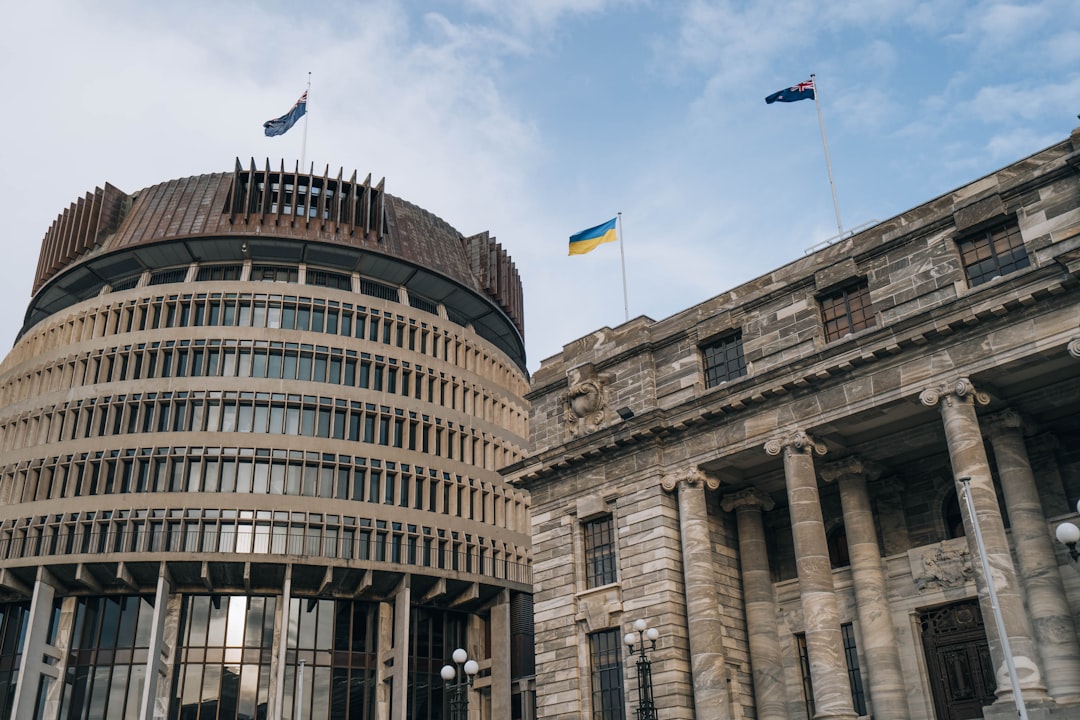
The New Zealand government has issued an ultimatum to councils across the country: voluntarily amalgamate or face forced mergers, marking the most aggressive assertion of central control over local democracy in recent memory.
According to Radio New Zealand, Local Government Minister Simeon Brown has made clear that the government won't tolerate the status quo of smaller councils struggling with infrastructure deficits and spiraling rates increases.
The target is obvious: smaller territorial authorities across provincial New Zealand, many barely able to maintain aging water infrastructure, let alone fund the upgrades required by new environmental standards. Councils in regions like Northland, the West Coast, and parts of the Waikato are looking nervously at merger maps.
Mate, this is central government deciding it knows better than local communities what's good for them. And while there's a fiscal logic to amalgamation, the track record isn't exactly inspiring confidence.
The promised benefits are familiar: economies of scale, shared services, stronger balance sheets, professional management. The same pitch was made for the Auckland super-city merger, which delivered... mixed results at best. Rates didn't fall, bureaucracy expanded, and suburban communities lost meaningful local representation.
Mayors from smaller councils aren't buying what Wellington is selling. The Mayor of Matamata-Piako recently told media she doesn't think "the Government have a clue" about local needs—a sentiment echoed across provincial New Zealand.
Their argument has merit. Local councils understand their communities' specific challenges far better than bureaucrats in Wellington. A merged super-council spanning diverse regions risks homogenizing solutions that need to be tailored.
But there's also reality to face. Many smaller councils genuinely can't afford the infrastructure investment required for water reform compliance. Their rating bases are too narrow, their populations aging and declining, their technical capacity limited. Something has to give.
What's galling is the ultimatum approach. Rather than genuinely consulting communities about what structure works best, the government is presenting forced amalgamation as inevitable while dressing it up as "voluntary" initially.
The political calculation is transparent: blame councils for rates increases, position amalgamation as the solution, take credit when the merged entity can borrow more cheaply. Never mind that the fundamental problem—underfunded local infrastructure after decades of neglect—doesn't vanish through administrative reshuffling.
What's missing from this entire debate is genuine discussion about sustainable local government funding. Councils are trapped: ratepayers revolt if rates climb, central government won't increase funding, and infrastructure continues deteriorating. Amalgamation doesn't solve this—it just creates bigger councils with the same impossible math.
The government claims this is about fiscal discipline and efficient service delivery. Critics see an ideological power grab, centralizing control while gutting local democracy.
Both are probably right.
The amalgamation push will likely succeed—governments hold the legislative cards. But don't expect it to deliver the promised savings. More likely: fewer councils, higher debt, and communities feeling even more disconnected from the decisions that shape their lives.
For smaller towns across provincial New Zealand, this marks the latest chapter in a long story of centralization. First the post offices closed, then the banks left, now local councils face extinction. What gets lost isn't just administrative efficiency—it's the democratic principle that communities should have meaningful say in governing themselves.