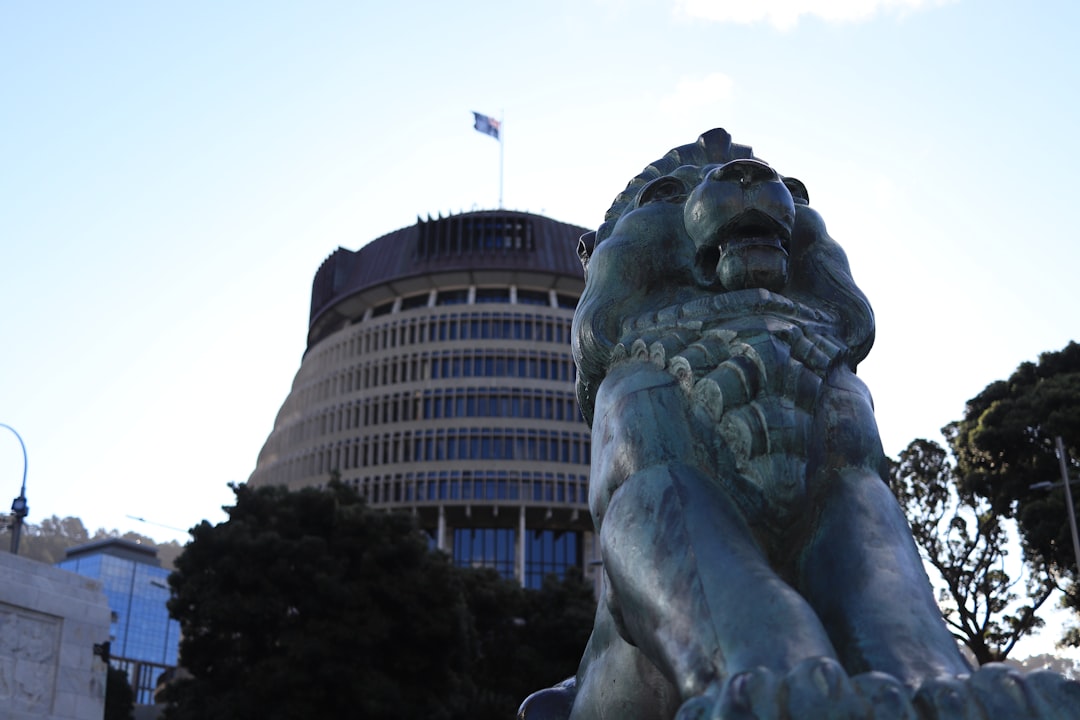
Following erratic statements from Washington, New Zealand is having a public debate it hasn't had in decades: whether the traditional assumption that NZ must be allied with a superpower — and that America is preferable to China — still holds.
The discussion, sparked by recent posts on Truth Social from what one Kiwi commentator described as the "Very Stable Genius," reflects broader Pacific unease about American reliability. For a country that's maintained strategic distance from Washington since going nuclear-free in the 1980s, the questions being asked now are significant.
Mate, here's the context. New Zealand has walked a careful line for decades. The ANZUS alliance effectively ended when Wellington banned nuclear-powered and nuclear-armed vessels in 1984. America suspended its treaty obligations. New Zealand built a foreign policy around being a good international citizen rather than a great power's junior partner.
That positioning worked when America was predictable, even if New Zealand disagreed with specific policies. But recent American political volatility has Kiwis questioning whether strategic alignment with Washington is worth the risks. And whether genuine independence might be preferable to choosing between America and China.
The online discussion revealed several schools of thought. Some argued New Zealand should strengthen ties with Australia and other middle powers rather than relying on either superpower. Others suggested China's authoritarian governance makes it unacceptable regardless of American chaos. Still others questioned whether small nations have any choice but to align with someone.
This isn't just abstract geopolitics. China is New Zealand's largest trading partner. Chinese students, tourists, and investors are integral to the Kiwi economy. But Beijing's increasing assertiveness in the Pacific — security pacts with Solomon Islands, infrastructure deals across the region, military expansion — creates genuine security concerns.
America, meanwhile, has been trying to rebuild Pacific influence through initiatives like the Indo-Pacific Economic Framework and increased diplomatic engagement. But if Washington's commitment appears unreliable, Pacific nations may hedge their bets or drift toward China by default.
For New Zealand, which has cultivated relationships across the Pacific and positions itself as a trusted partner to island nations, this creates a dilemma. If the choice is between an unpredictable America and an authoritarian China, maybe the answer is to chart a genuinely independent course.
That's easier said than done. New Zealand's defense capabilities are modest. The country relies on allies for security guarantees it couldn't provide alone. And Australia, its closest partner, remains firmly in the American orbit through AUKUS and other defense arrangements.
But the fact that New Zealanders are publicly questioning assumptions that went unexamined for decades signals a shift. The Pacific is entering an era of great power competition whether it wants to or not. Middle powers like New Zealand are deciding whether to choose sides, play both sides, or try to stay neutral.
The traditional Kiwi approach has been pragmatic rather than ideological. Trade with China, security cooperation with Australia, diplomatic independence from everyone. Recent American volatility tests whether that balance remains viable.
There's a whole continent and a thousand islands down here. And increasingly, they're wondering whether either superpower actually has their interests at heart — or whether it's time to build a Pacific-centered security architecture that doesn't depend on either Washington or Beijing.