
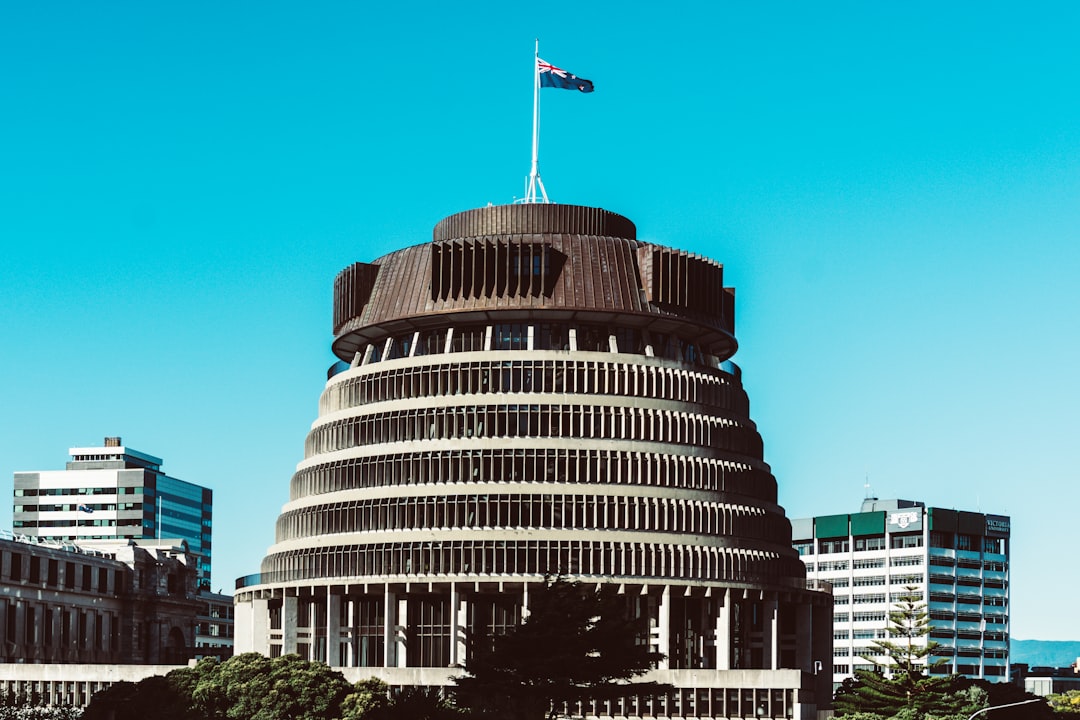
New Zealand has dropped from a score of 91 to 81 on Transparency International's Corruption Perceptions Index over the past decade, according to the 2025 results — a ten-point slide that has pushed the country to joint fourth globally and sparked renewed calls for Wellington to establish a dedicated anti-corruption body.
The country now ties with Norway at 81, sitting behind Denmark (89), Finland (88), and Singapore (84). Two points in a single year might not sound calamitous. But ten points over a decade is a structural story, not a statistical blip — and it is happening while every other member of the Five Eyes intelligence partnership has moved to institutionalise dedicated anti-corruption oversight.
Australia established its own National Anti-Corruption Commission in 2023 and, notably, gained two points on the same index in the period following. Canada, the United Kingdom, and the United States all have comparable bodies. New Zealand does not — and has chosen not to, through successive governments of both stripes.
Transparency International's analysis of the New Zealand decline points to a familiar constellation of failures: weak lobbying regulations, inadequate political donation disclosure, gaps in electoral safeguards, and opaque ministerial decision-making. High-profile fraud cases in construction, health, and public procurement have compounded the picture. So have local election breaches and data misuse allegations that have received scant consequence.
The formula doing the intellectual heavy lifting here comes from corruption scholar Robert Klitgaard: corruption equals monopoly power plus discretion minus transparency. By that measure, New Zealand's structural vulnerabilities are precisely where accountability frameworks are weakest — in sectors with limited competition and in ministerial decisions insulated from public scrutiny.
Mate, let us be clear about what is being measured here. The Corruption Perceptions Index does not capture petty bribery or envelope-stuffing. It measures the perceived integrity of public institutions among business executives, country analysts, and governance experts. When that score falls ten points over a decade, something real is happening — and the people who work closest to government are the ones noticing it.
The comparison to Australia's NACC is pointed and politically uncomfortable for Wellington. The commission is barely two years old and already demonstrably shifting perceptions. New Zealand's Serious Fraud Office handles financial crime; the Independent Police Conduct Authority handles complaints about police — but there is no body with a mandate to investigate and expose systemic corruption across the full machinery of government.
This matters beyond domestic governance. New Zealand has long leveraged its clean-government reputation commercially and diplomatically. Roughly 30 percent of its exports go to high-integrity countries — those with CPI scores above 70 — while about 33 percent go to low-integrity nations. That clean-country premium is real, and it erodes when the underlying data stops supporting it.
There is also the regional dimension. New Zealand operates as a major governance partner across the Pacific, providing institutional support and technical assistance to countries like Fiji, Samoa, and Tonga that are managing their own governance pressures. A New Zealand that is itself sliding on corruption metrics is a less credible partner in that project — and a less useful counterweight to China's expanding influence in the region, where governance norms are very much part of the contest.
RNZ's full analysis of the index results lays out the structural vulnerabilities in detail. The policy response from the coalition government, so far, has been silence.