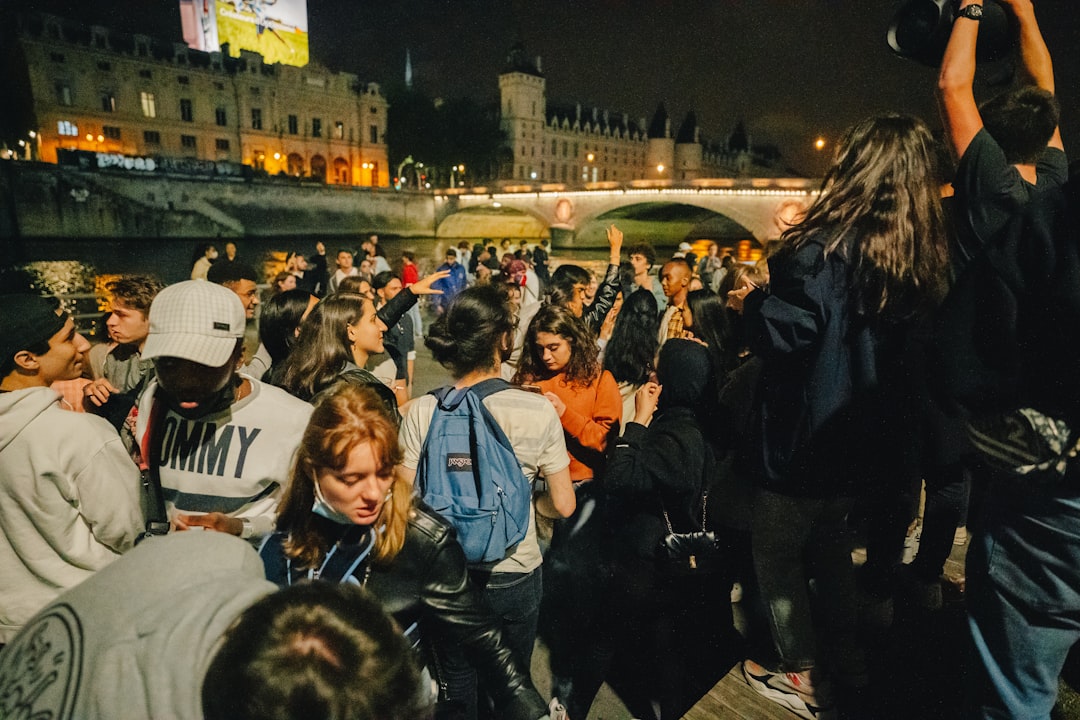
In the early hours of April 18, a group of approximately twenty neo-fascist militants descended upon a bar in Paris's 15th arrondissement, transforming an evening of celebration into a theater of political violence that has reignited urgent questions about the normalization of extremist ideology in contemporary France.The assault, captured in its entirety by surveillance cameras, began when the assailants displayed Nazi salutes and photographs of Jordan Bardella—leader of the far-right Rassemblement National—on their mobile phones while congregating in the bar's basement. Several bore supremacist tattoos including Celtic crosses and the numerals "14-88," coded references deeply embedded in neo-Nazi iconography. When patrons began documenting this provocative display, the situation escalated into brutal violence.Gabriel Loustau, identified as the leader of the extremist group Hussards Paris, headbutted Louis, a patron who had been celebrating the Paris Marathon earlier that evening. What followed was a coordinated assault involving multiple attackers. Mathieu, Louis's boyfriend, reported to StreetPress: "Four or five attacked me with strikes to ribs and back while shouting." Other patrons, including a man named Martin, were similarly targeted in what witnesses described as a methodical, orchestrated attack.<h2>Known Extremists With Violent Histories</h2>The perpetrators were not anonymous street thugs but individuals with documented connections to France's organized neo-fascist movements. Loustau himself had been convicted of homophobic violence just months earlier, in June 2024, along with charges of issuing death threats via social media. Among those accompanying him was Louis Germanaz, associated with the notorious Groupe Union Défense (GUD) and previously imprisoned for homophobic attacks.Also present was Théodore D., detained during a 2022 operation targeting neo-fascist activity surrounding the World Cup, and Tristan Lugan, son of historian Bernard Lugan and described as a childhood friend of Loustau. The composition of the group suggests not a spontaneous gathering but a coordinated action by a networked extremist cell.<h2>The Uncomfortable Question of Political Mainstreaming</h2>In France, as throughout the Republic, politics remains inseparable from philosophy, culture, and the eternal question of what France represents. The presence of Bardella's image during this assault raises profound concerns about the relationship between mainstream far-right political discourse and street-level extremist violence.The Rassemblement National has spent years attempting to distance itself from France's neo-fascist fringe, a strategy of "dédiabolisation" initiated under Marine Le Pen and continued by Bardella. Yet when young militants display the party leader's photograph while performing Nazi salutes and moments before committing violent assault, the efficacy of that separation becomes subject to legitimate scrutiny.This incident did not occur in isolation. Paris authorities this week banned both a planned neo-fascist demonstration by the Comité du 9 Mai and its corresponding antifascist counter-protest, acknowledging the escalating tensions surrounding far-right mobilization in the capital. The judicial validation of these prohibitions reflects growing official concern about extremist violence, even as it raises questions about proportionality in restricting both fascist and antifascist organizing.<h2>From Margins to Mainstream</h2>The French intellectual tradition has long grappled with the relationship between ideas and violence, between rhetoric and action. The phenomenon witnessed in the 15th arrondissement represents what sociologists of extremism term "ideological permission structures"—the ways in which political discourse at one level can be interpreted as authorization for violence at another.When a mainstream political party garners over 40 percent support in presidential elections while advocating policies of national preference and civilizational anxiety, when its rhetoric frames certain populations as existential threats to French identity, marginal actors may perceive not merely permission but imperative to act.The victims in this case filed formal complaints for violence and for apologizing for crimes against humanity—the latter charge specifically addressing the public display of Nazi imagery and symbols. Yet as of the latest reports, the Paris prosecutor's office had not yet engaged with the case, a delay that victims' advocates suggest reflects insufficient prioritization of far-right political violence.<h2>Provincial and Parisian Anxieties Converge</h2>While this attack occurred in the capital, the anxieties it represents extend throughout the Republic. Provincial France has witnessed its own surges in far-right organizing, from Marseille to Lyon to Lille, often targeting LGBTQ venues, migrant solidarity organizations, and leftist political spaces. The 15th arrondissement assault follows a pattern: organized groups, documented extremists, symbolic displays of supremacist ideology, and violence directed at those perceived as political or cultural enemies.The bar's manager, who requested anonymity to protect the establishment, told StreetPress that the violence was entirely unprovoked from the perspective of the venue. Yet for the assailants, the provocation may have been ideological—the presence of openly gay patrons, the cosmopolitan atmosphere of urban Paris, the very existence of spaces that embody values antithetical to their exclusionary worldview.<h2>The Republic's Response</h2>France's republican tradition demands égalité before the law and fraternity across difference. When neo-fascist militants can assault citizens for celebrating life in the capital while displaying symbols of history's most murderous ideology, the question becomes whether republican institutions can adequately respond.The surveillance footage provides unambiguous documentation. The perpetrators have been identified. Their histories of violence are matters of public record. What remains to be seen is whether the justice system will treat this as an isolated incident of hooliganism or recognize it as political violence intended to terrorize communities and normalize extremist presence in public space.Louis, still recovering from the assault, told investigators he had simply wanted to celebrate completing the marathon. Instead, he became another data point in the escalating pattern of far-right violence that France's political class has struggled to adequately name, much less address.In the bars and cafés of the 15th arrondissement, as in similar establishments throughout the Republic, the question now being asked is not whether such violence will recur, but when—and whether those who celebrate Jordan Bardella's political ascent bear any responsibility for the militants who invoke his name while performing Nazi salutes and beating strangers in the night.
|