
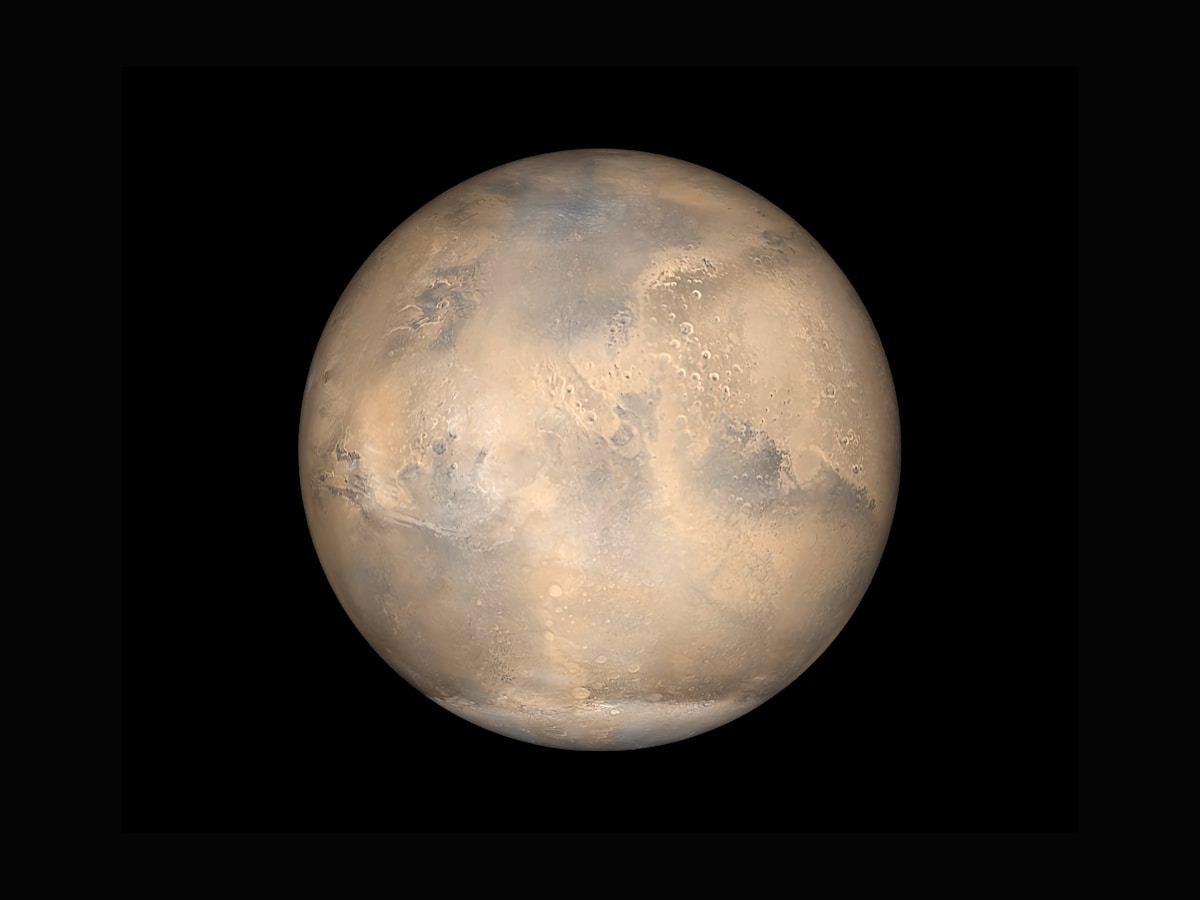
NASA confirmed today that it will launch a nuclear thermal propulsion spacecraft to Mars in 2028, cutting transit time nearly in half while demonstrating technology essential for deep-space exploration. The announcement pairs with the agency's moon base commitment as part of a comprehensive roadmap beyond low-Earth orbit.
Nuclear thermal propulsion (NTP) uses a fission reactor to superheat hydrogen propellant, achieving specific impulse roughly twice that of chemical rockets. The technology promises four-month Mars transits instead of the conventional eight to nine months—a reduction that dramatically improves crew safety and mission feasibility.
"Radiation exposure scales with transit time," explained Dr. Bhavya Lal, NASA's Associate Administrator for Technology, Policy, and Strategy. "Halving the journey duration cuts deep-space radiation dose proportionally. That's not just convenience—it's the difference between acceptable risk and unacceptable risk for human missions."
The spacecraft, designated Mars Thermal Demonstrator, will carry scientific instruments rather than crew on its 2028 maiden voyage. The mission tests reactor performance, propellant management in zero gravity, and thermal control systems under actual deep-space conditions—engineering validation that can't be fully replicated in ground testing.
Beyond speed, NTP offers crucial flexibility. Chemical propulsion operates on narrow launch windows dictated by orbital mechanics—miss your window, wait 26 months for the next one. Nuclear thermal systems provide enough delta-V to enable more frequent launch opportunities and emergency abort scenarios if crew health issues emerge mid-mission.
The reactor core, developed by Los Alamos National Laboratory and BWX Technologies, uses high-assay low-enriched uranium rather than weapons-grade material—a safeguard addressing nuclear proliferation concerns. The engine will achieve specific impulse exceeding 900 seconds, compared to roughly 450 seconds for the best chemical rockets.