
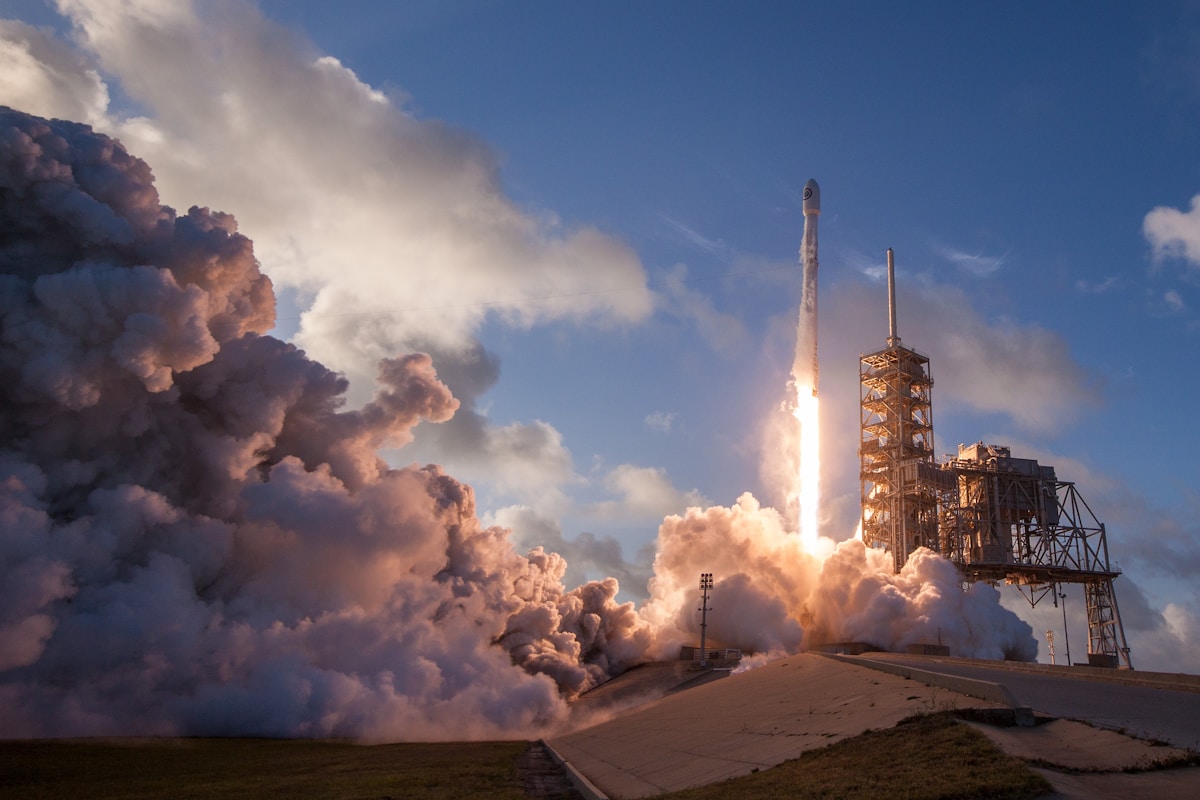
Following a New Glenn rocket explosion at Cape Canaveral, NASA leadership has publicly recommended alternative launch vehicle solutions for Blue Origin's Artemis moon landers—a development that signals deep concern about lunar mission timelines and reveals fragility in the agency's multi-provider architecture.The incident, reported by Spaceflight Now, represents a significant setback for Blue Origin's heavy-lift ambitions and raises questions about the company's ability to meet contractual obligations for Artemis III and subsequent lunar missions.<h2>Heavy-Lift Workhorse Grounded</h2>"This is a significant setback for Blue Origin," explained an aerospace analyst tracking commercial launch providers. "New Glenn was supposed to be their heavy-lift workhorse. If NASA is already talking about alternative launchers, confidence in the vehicle is shaken."Blue Origin's Blue Moon lander, selected as one of two commercial providers for Artemis lunar surface access, was designed with New Glenn as its primary launch vehicle. The 270-foot rocket, intended to compete with SpaceX's Falcon Heavy and ULA's Vulcan, has faced repeated development delays since its initial target launch date in 2020.The explosion occurred during what Blue Origin described as a "static fire test," though details remain limited. NASA leadership's rapid public pivot toward alternative launchers suggests the incident was more than a routine development setback.<h2>Integration Challenges Mount</h2>In space exploration, as across technological frontiers, engineering constraints meet human ambition—and occasionally, we achieve the impossible. But substituting launch vehicles for complex deep-space payloads is far from simple engineering."Artemis timelines were already stretched," noted a veteran Artemis program follower. "If Blue Origin's lander can't fly on New Glenn, what are the options? Vulcan? Falcon Heavy? Each has its own integration challenges."ULA's Vulcan Centaur could theoretically accommodate the Blue Moon lander, but payload fairing modifications and mission profile adjustments would require extensive analysis and testing. SpaceX's Falcon Heavy presents political and competitive complications, given that SpaceX already holds the primary Artemis lander contract with Starship.The technical challenges extend beyond basic payload capacity. New Glenn's payload integration systems, propellant loading procedures, and launch trajectory profiles were specifically designed for Blue Moon. Adapting the lander to a different vehicle could require substantial hardware modifications and months of additional testing.<h2>Artemis Architecture Under Pressure</h2>NASA's Artemis program relies on a complex web of contractors and vehicles: SLS for crew launch, SpaceX's Starship for the initial landing, and Blue Origin's Blue Moon for competition and redundancy. The architecture was designed to avoid single-point failures, but also creates interdependencies that can cascade into schedule delays."Launch failures happen, especially early in a program," acknowledged a space safety officer. "But the timing is terrible for Artemis III+ timelines."Artemis III, the first crewed lunar landing since Apollo 17, is currently scheduled for late 2027—a date many space policy experts already consider optimistic. The mission depends on successful execution of multiple unprecedented systems: SLS Block 1B, SpaceX's orbital propellant transfer for Starship, and reliable lunar landers from commercial providers.Blue Origin's setback compounds existing concerns about Artemis sustainability. Congressional appropriators have questioned the program's cost trajectory, while technical challenges with spacesuit development and lunar Gateway construction have already introduced delays.<h2>Commercial Space Reality Check</h2>The incident underscores both the promise and peril of NASA's commercial partnerships. By contracting with multiple providers, the agency gains competition and innovation—but also accepts development risk that previous government-led programs internalized.Blue Origin has not publicly commented on alternative launcher scenarios or timeline impacts. The company continues ground operations at Cape Canaveral, though the New Glenn test stand remains inactive pending investigation results.For NASA, the path forward involves difficult choices: accept delays to Blue Moon while New Glenn recovers, invest in costly lander redesigns for alternative vehicles, or rely more heavily on SpaceX's Starship despite concerns about single-provider dependence. Each option carries schedule, budget, and political implications for a program already under intense scrutiny.
|