
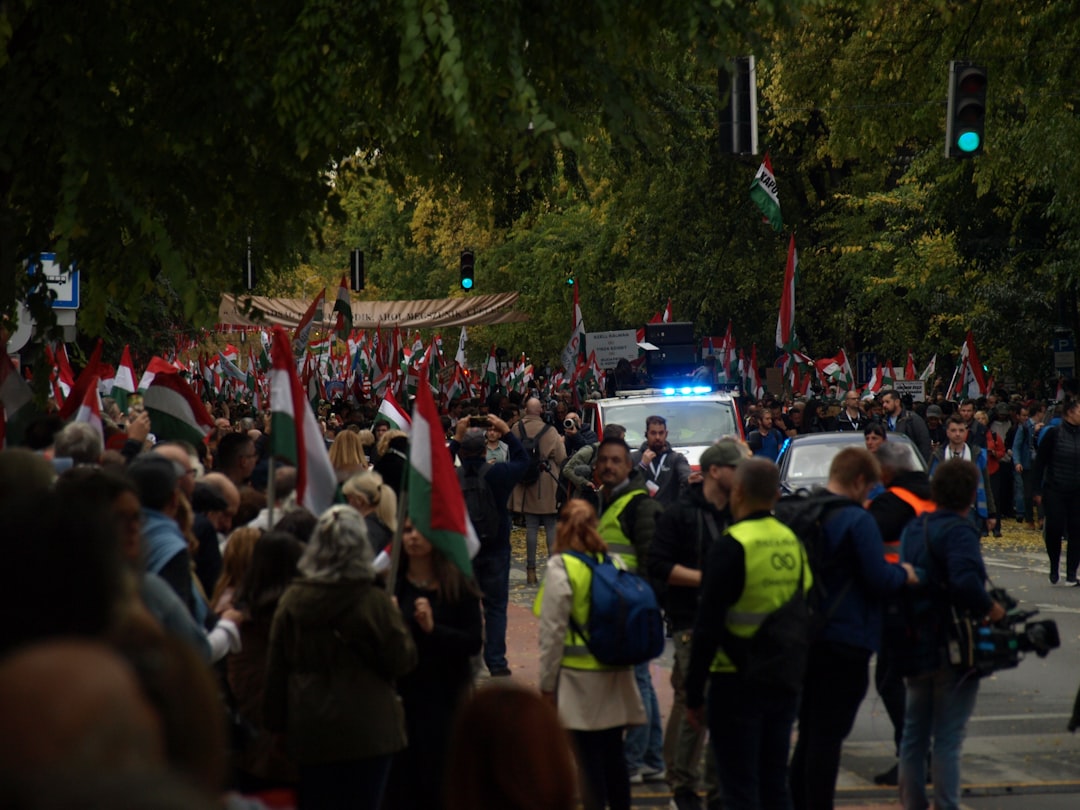
Opposition supporters filled streets across Hungary in unprecedented demonstrations just days before the country's parliamentary elections, marking the most significant challenge to Prime Minister Viktor Orbán's 14-year grip on power.
The rallies, <link url='https://telex.hu/english/2026/04/08/opposition-protests-hungary-cities'>reported by Telex</link>, extended far beyond the traditional opposition stronghold of Budapest, with significant turnouts in regional cities including Debrecen, Szeged, Pécs, and Miskolc. This geographic spread represents a departure from previous election cycles, when opposition energy concentrated primarily in the capital.
In Hungary, as across the region, national sovereignty and European integration exist in constant tension. The government's relationship with Brussels has deteriorated sharply during Orbán's tenure, with disputes over rule of law, judicial independence, and media freedom leading to billions in frozen EU funds.
Government spokesperson Zoltán Kovács dismissed the demonstrations as "orchestrated theater" by opposition parties with foreign backing, emphasizing Fidesz's consistent polling lead. "Hungarian voters understand the choice," he stated, "between a government that defends national interests and opposition parties that would surrender sovereignty to Brussels."
Opposition coalition leaders countered that the rallies reflect genuine frustration with corruption, media control, and economic hardship. Péter Márki-Zay, the coalition's joint candidate for Prime Minister, addressed crowds in Budapest, declaring: "Hungarians across every region are ready for change, ready to reclaim our democracy and our European future."
The demonstrations come amid heightened European attention to Hungary's democratic institutions. The European Parliament recently voted to <link url='https://www.europarl.europa.eu/news/en'>maintain pressure on Budapest</link> over rule of law concerns, while the European Court of Justice imposed substantial fines related to asylum policy violations.
Analysts note that while Fidesz maintains structural advantages—including overwhelming dominance of rural media and an electoral system favoring the incumbent—the opposition's ability to mobilize beyond Budapest could shift dynamics in closely contested constituencies.
András Bíró-Nagy, political analyst at Policy Solutions, observed that regional mobilization remains crucial. "Previous opposition efforts foundered because they couldn't penetrate the countryside," he explained. "These rallies suggest a different dynamic, though converting enthusiasm into votes remains the challenge."
The election occurs against the backdrop of Hungary's contentious position within NATO and the European Union. Orbán's government has blocked EU sanctions against Russia, delayed support for Ukraine, and cultivated relationships with China that alarm Western partners.
Domestic issues also feature prominently, with opposition parties focusing on healthcare system strain, education underfunding, and inflation affecting living standards. Government supporters emphasize economic stability, family support policies, and Orbán's experience navigating international pressures.
Voters will cast ballots this Sunday in elections that international observers from the Organization for Security and Co-operation in Europe will monitor closely. The outcome will shape not only Hungary's domestic trajectory but also Europe's ability to maintain unified positions on critical foreign policy challenges.