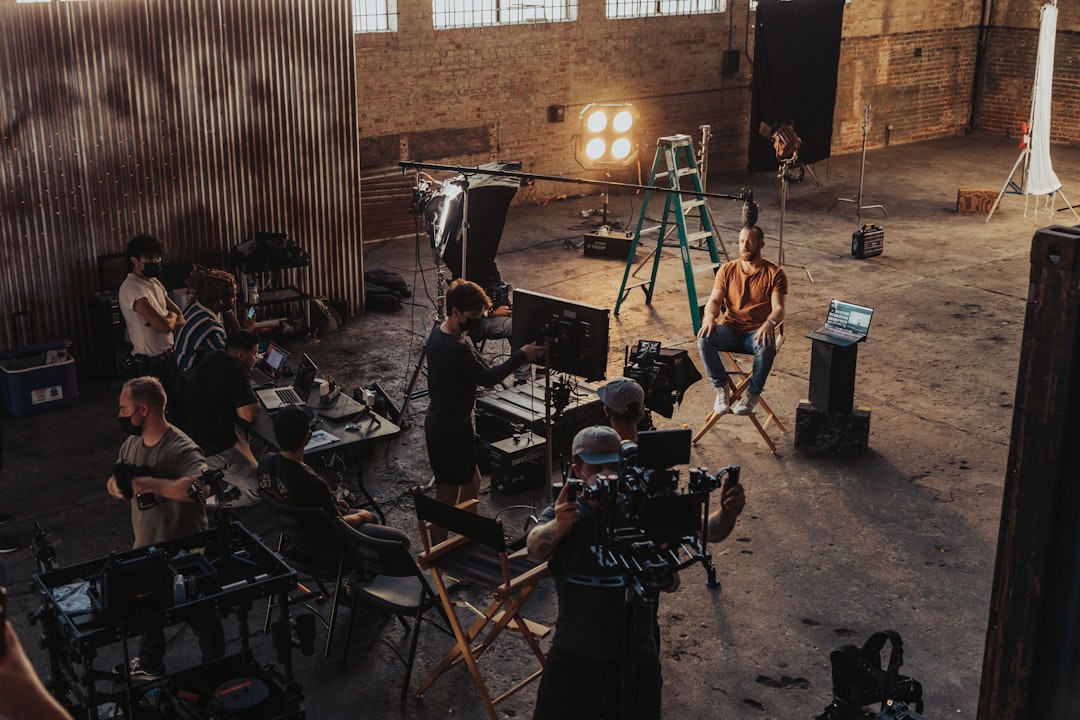

Here's a question Hollywood apparently needs to wrestle with: at what age is a filmmaker officially "allowed" to be talented?
Because if you've been following the discourse around Backrooms, you'd think Kane Parsons committed a crime by directing a feature film at age 20. The speculation and backseat-directing conspiracy theories have gotten so intense that producer Mark Duplass felt compelled to defend the filmmaker on social media, pointing out the obvious: maybe the kid is just good at this.
"I hate that we're at this point in the discourse," Duplass wrote. "I wish this new generation of filmmaking talent could just be celebrated rather than torn down. The backseat-directing conspiracy theories are insane. It should be a testament to Parsons' talent that so many established directors wanted to produce this movie."
He's absolutely right, and the fact that this needs to be said reveals something ugly about how we discuss young talent in film.
Parsons built a massive following with his Backrooms web series on YouTube, demonstrating a sophisticated grasp of atmosphere, pacing, and visual storytelling. He created genuinely unsettling horror using minimal resources, which is significantly harder than making expensive films look good. A24 and the producing team behind the theatrical Backrooms didn't hire him out of charity - they recognized someone with a distinct vision and the skills to execute it.
But because he's 20, there's this pervasive assumption that he must be a puppet. That established producers are secretly directing while he takes credit. That he's too young to actually know what he's doing. It's patronizing, ageist nonsense that we'd never tolerate if applied to other fields.
When Taylor Swift wrote brilliant songs at 19, nobody assumed Max Martin was secretly doing it for her. When Greta Thunberg became a climate activist at 15, the skepticism about her agency was rightly called out as dismissive and sexist. But in film, apparently, we're still comfortable assuming young directors are frauds until proven otherwise.
The irony is that cinema loves the idea of young prodigies - right up until they're too young, at which point we decide they're fake. Orson Welles made Citizen Kane at 25. Jean-Luc Godard revolutionized cinema in his early 30s. Spike Lee announced himself with She's Gotta Have It at 29. Barry Jenkins was in his mid-30s with Moonlight, but he'd been making films for years before that.
You know who else was young? Steven Spielberg, who directed his first theatrical feature at 24. Francis Ford Coppola, who made The Godfather at 32 after years of apprenticeship. These filmmakers weren't born with decades of experience - they learned by doing, often making remarkable work while still figuring it out.
Parsons has the added advantage of growing up in the YouTube generation, where you can publish work, get immediate feedback, and iterate rapidly. He's been training in public, accumulating the kind of directorial hours that previous generations needed film school or apprenticeships to acquire. By 20, he's logged more directing experience than many film school graduates.
None of this guarantees Backrooms will be great, of course. Young filmmakers are allowed to make imperfect work - that's how you learn. What's frustrating is the assumption that if it is great, that proves he didn't actually direct it. It's a no-win situation designed to diminish his achievement regardless of outcome.
Duplass pointing out that "so many established directors wanted to produce this movie" is key. Producers don't sign onto projects to secretly direct them - they have their own projects for that. They produce films because they believe in the director's vision and want to help realize it. Having experienced producers is a benefit, not evidence of fraud.
The "backseat-directing conspiracy theories" Duplass mentions are particularly galling because they assume collaboration equals control. Film is a collaborative medium. Every director works with experienced cinematographers, editors, production designers. Having veterans on your crew doesn't diminish your authorship - it's literally how movies get made.
This discourse also ignores that plenty of older directors make terrible films despite decades of experience. Age doesn't guarantee quality. M. Night Shyamalan was brilliant at 28 with The Sixth Sense, then spent years making increasingly questionable choices before finding his groove again. Talent isn't linear.
What we should be doing is celebrating the fact that a 20-year-old created something compelling enough to attract significant industry support. That's remarkable! Instead, we're questioning whether he's "really" responsible for his own work, which is both insulting and counterproductive.
Backrooms hits theaters this week. Whether it's great, good, or merely okay, Kane Parsons directed it. He earned this opportunity through work that spoke for itself. The discourse should be about the film, not his birth certificate.
In Hollywood, nobody knows anything - except me, occasionally. And what I know is that talent doesn't wait for permission or the "right" age. It just shows up and demands attention. We can either celebrate that or tear it down out of discomfort with someone succeeding "too early."
Let's choose celebration.