
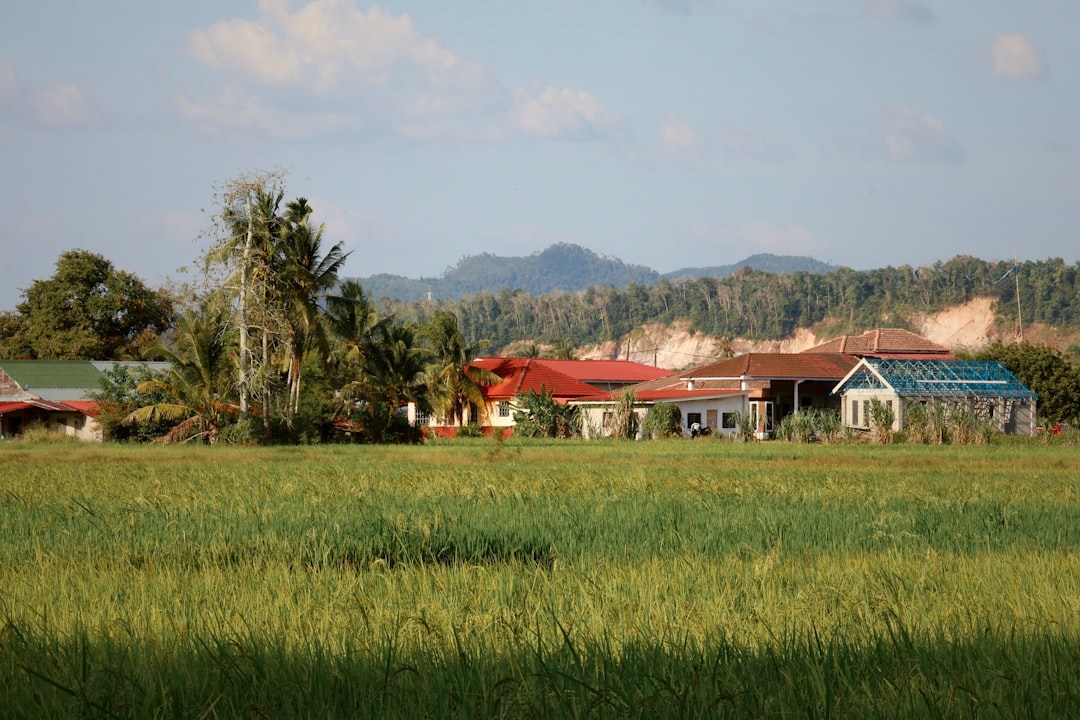
Malaysia has lost nearly half its designated livestock farmland since 2017, a dramatic conversion driven by the data center boom that positions the country as Southeast Asia's digital infrastructure hub while raising urgent questions about long-term food security.
Livestock farming areas within Malaysia's Food Production Parks shrank 48% between 2017 and January 2026, falling to just 4,482 hectares, according to data from the Ministry of Agriculture and Food Security (KPKM). Grazing land declined 25% to 20,741 hectares over the same period, reflecting relentless development pressure as Malaysia attracted RM 144.4 billion ($33 billion) in approved data center investments from 2021 to March 2025.
"Over the past few years, we have seen an increase in land being converted," Norazman Ayob, KPKM deputy secretary-general, told reporters. "Many lands have been converted from the agricultural sector" to data centers and artificial intelligence infrastructure, he said, warning that the trend poses "food security risks."
The tension reflects Malaysia's chosen development path. The government has aggressively courted U.S. and Asian tech giants seeking alternatives to China and Singapore, offering tax incentives, cheap electricity, and permissive land conversion policies. Microsoft, Google, Amazon Web Services, and ByteDance have all announced Malaysian data center expansions, creating thousands of jobs in construction and IT services.
But data centers sit uneasily in Malaysia's limited land base. Unlike Singapore, which accepted food import dependency decades ago, or Vietnam, which fiercely protects rice paddy designation, Malaysia has attempted a middle path—pursuing tech-driven growth while maintaining food production targets that successive governments have failed to meet.
The 48% livestock land decline is particularly striking because it occurred within Food Production Parks—zones specifically designated and protected for agriculture. The conversion of supposedly protected farmland underscores the economic pressure local governments face when data center developers offer immediate revenue versus the long-term value of food production.
Malaysia currently imports 60% of its food, a ratio that rises to over 90% for beef and mutton. The KPKM has set ambitious targets to increase self-sufficiency, but the ministry controls land use only indirectly—state governments approve conversions, often prioritizing development over agriculture.
Data centers also consume enormous quantities of water and electricity, resources that agriculture depends on. Malaysia's Tenaga Nasional estimates that data centers will account for 15-20% of national power demand by 2030, up from less than 5% today. That load growth may force difficult choices between powering servers or subsidizing electricity for farmers.
The dilemma is not unique to Malaysia. Thailand faces similar pressures in its Eastern Economic Corridor, where industrial zones compete with rice farming. Indonesia has seen palm oil plantations displace food crops. But Malaysia's concentrated geography—urban areas, agriculture, and industry competing for space on the Malay Peninsula—makes trade-offs more acute.
"You can't eat data," said Manivanan Gowin, a livestock farmer in Selangor state whose grazing land was rezoned for industrial use last year. "The government says we need both tech and food. But when companies offer RM 50 million for land that produces RM 2 million in beef annually, which do you think wins?"
KPKM officials say they are working with state governments on vertical farming pilots and higher-yield livestock systems to maintain production on less land. But those technologies remain unproven at scale, and Malaysia's food import bill continues to rise—reaching RM 65 billion ($14.8 billion) in 2025.
What Malaysia does next will be watched across ASEAN. The region faces a collective choice: chase digital economy growth with its immediate revenue and employment, or protect agricultural land with its long-term food security but lower economic returns. Most countries, like Malaysia, are trying to do both. The 48% decline in livestock land suggests that, so far, growth is winning.
Ten countries, 700 million people, one region—and every hectare of farmland converted to a server rack is a bet that global food markets will remain stable when Southeast Asia needs them.