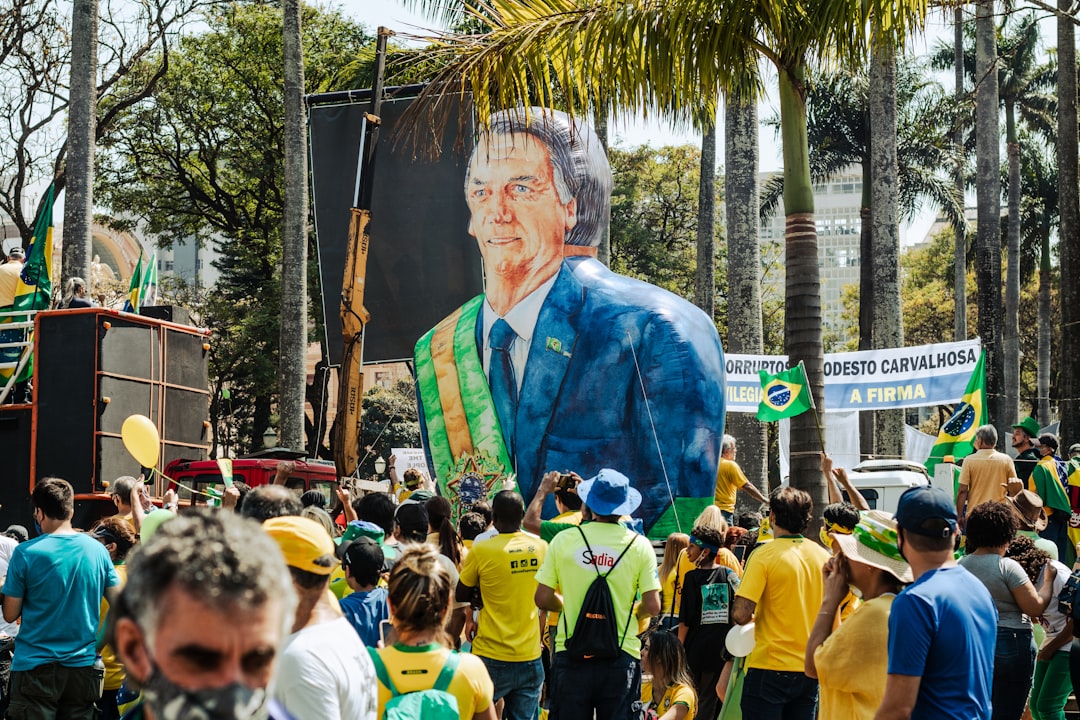
President Luiz Inácio Lula da Silva warned cabinet ministers that opposition candidate Flávio Bolsonaro would "deliver Brazil to Trump" if elected president in 2026, framing the upcoming election as a referendum on Brazil's sovereignty and position as an independent global power.
The comments, reported by Folha de S.Paulo, came during a private ministerial meeting where Lula outlined his concerns about the rising electoral prospects of Flávio Bolsonaro, eldest son of former president Jair Bolsonaro and currently a senator representing Rio de Janeiro. The president reportedly told his team that a Bolsonaro family return to power would subordinate Brazilian foreign policy to American interests, undermining Brazil's leadership in the BRICS bloc and across Latin America.
In Brazil, as across Latin America's giant, continental scale creates both opportunity and governance challenges. As the region's largest economy and most populous nation, Brazil has historically asserted independence in foreign relations, maintaining ties with China, Russia, and Iran even when such relationships create tension with Washington. The 2026 election increasingly appears to center on whether Brazil will continue this autonomous stance or align more closely with American geopolitical priorities.
Flávio Bolsonaro has emerged as the leading opposition figure following his father's political ban and conviction for abusing power while attacking the electoral system. Recent polls show the younger Bolsonaro commanding strong support among right-wing voters, evangelical Christians, and agribusiness sectors, though he remains behind Lula in head-to-head matchups. His campaign has emphasized conservative social values, economic liberalization, and closer ties with the United States under President Donald Trump.
The sovereignty-versus-alignment framing represents a strategic shift for Lula, who has struggled to maintain coalition unity amid economic challenges and corruption scandals affecting his Workers' Party. By emphasizing foreign policy independence, the president aims to rally nationalist sentiment across the political spectrum while portraying the opposition as willing to compromise Brazilian interests for American approval.
Celso Amorim, Lula's foreign policy advisor and former foreign minister, has been crafting this messaging for months. In recent speeches, he has emphasized Brazil's role in mediating the Russia-Ukraine conflict, expanding BRICS membership to include Argentina and Saudi Arabia, and resisting pressure to take sides in U.S.-China competition. "Brazil is not a satellite of any great power," Amorim said in a February address. "We chart our own course based on our national interests and values."
The Bolsonaro campaign dismissed Lula's comments as "desperate fear-mongering" from a president facing declining approval ratings. Flávio Bolsonaro issued a statement saying that strong relationships with democratic allies like the United States strengthen rather than weaken Brazil. "President Lula prefers dictators in Caracas and Beijing to democratic partners in Washington," the senator said. "That's not independence—it's ideological alignment with authoritarianism."
The exchange reflects deeper tensions about Brazil's international positioning. During Jair Bolsonaro's presidency from 2019 to 2022, Brazil cultivated close ties with the Trump administration, with the then-president describing himself as Trump's "favorite president" and aligning Brazilian votes at the United Nations with American positions on Israel, Iran, and climate policy.
Lula's return to power in 2023 marked a sharp reversal. His government has refused to join Western sanctions against Russia, pursued strategic partnerships with China on infrastructure and trade, and championed developing-nation concerns at international forums. The approach has won praise from Global South leaders but created friction with Washington and European capitals on issues from Ukraine support to Amazon development.
International relations experts note that Brazil's geopolitical stance carries weight far beyond its borders. Professor Oliver Stuenkel of the Getúlio Vargas Foundation in São Paulo explained that as Latin America's largest economy and the only Portuguese-speaking country in the Americas, Brazil serves as a bridge between continents. "Brazilian foreign policy choices influence whether Latin America develops as an independent pole in a multipolar world or remains within a U.S.-led hemisphere system," he said.
The sovereignty framing also allows Lula to connect foreign policy with domestic economic concerns. His government has emphasized that Brazil's commercial independence—particularly its massive agricultural exports to China—depends on maintaining balanced relationships rather than choosing sides. Brazilian farmers sell more than $50 billion worth of soybeans, beef, and other products to China annually, making it the country's largest trading partner by far.
Business groups have expressed concern about aggressive anti-China rhetoric from some Bolsonaro allies, fearing that diplomatic tensions could jeopardize market access. The National Confederation of Agriculture warned in a recent statement that "ideology should not trump commerce" and urged politicians to maintain pragmatic relationships with all major buyers of Brazilian products.
The Trump connection adds another dimension to the debate. President Trump's return to the White House has been characterized by aggressive tariff policies and demands that allies align with American positions on China and other issues. Flávio Bolsonaro visited Washington in February and met with Trump advisors, fueling speculation about coordination between the two right-wing movements.
Lula's warning that a Bolsonaro presidency would "deliver Brazil" to Trump appears designed to frame such collaboration as subordination rather than partnership. The language echoes nationalist critiques of previous Brazilian leaders who were perceived as too deferential to American interests, particularly during the military dictatorship era from 1964 to 1985.
Opposition analysts suggested that Lula is attempting to distract from domestic problems including stubbornly high inflation, crime waves in major cities, and corruption investigations affecting government allies. Federal Deputy Kim Kataguiri, a center-right legislator, accused the president of "manufacturing foreign policy controversies because he has no answers for kitchen-table issues affecting Brazilian families."
The election is still more than 18 months away, but both sides are already defining the central narratives. Beyond the sovereignty debate, voters will weigh economic management, crime, healthcare, and education policy. Lula's approval ratings have fluctuated between 35% and 45% depending on the poll, reflecting a polarized electorate with strong feelings about both the president and the Bolsonaro family.
Regional dynamics also shape the contest. Lula dominates in the Northeast, Brazil's poorest region where his social programs remain popular. Flávio Bolsonaro performs strongly in the South and parts of the Southeast, particularly in agribusiness-dependent interior regions. The battle for São Paulo state, with its 46 million residents and diverse economy, will likely determine the outcome.
International observers are watching closely. A return to Bolsonaro-style governance would significantly alter Latin American geopolitics, potentially weakening regional integration efforts and strengthening U.S. influence. Conversely, a Lula victory would consolidate Brazil's role in the BRICS alliance and the broader movement toward multipolarity in international relations.
The president's focus on sovereignty also reflects lessons from his previous presidencies from 2003 to 2010, when Brazil emerged as a vocal advocate for developing nations and helped create the BRICS grouping alongside Russia, India, China, and South Africa. That era saw Brazil gain international prestige as a mediator and voice for the Global South, a role Lula clearly hopes to reclaim.
As the campaign intensifies over the coming months, expect sovereignty and international alignment to feature prominently alongside traditional domestic issues. Lula's framing of Flávio Bolsonaro as willing to "deliver Brazil" to foreign powers represents an opening salvo in what promises to be a fierce ideological battle for the soul of Latin America's largest democracy.