
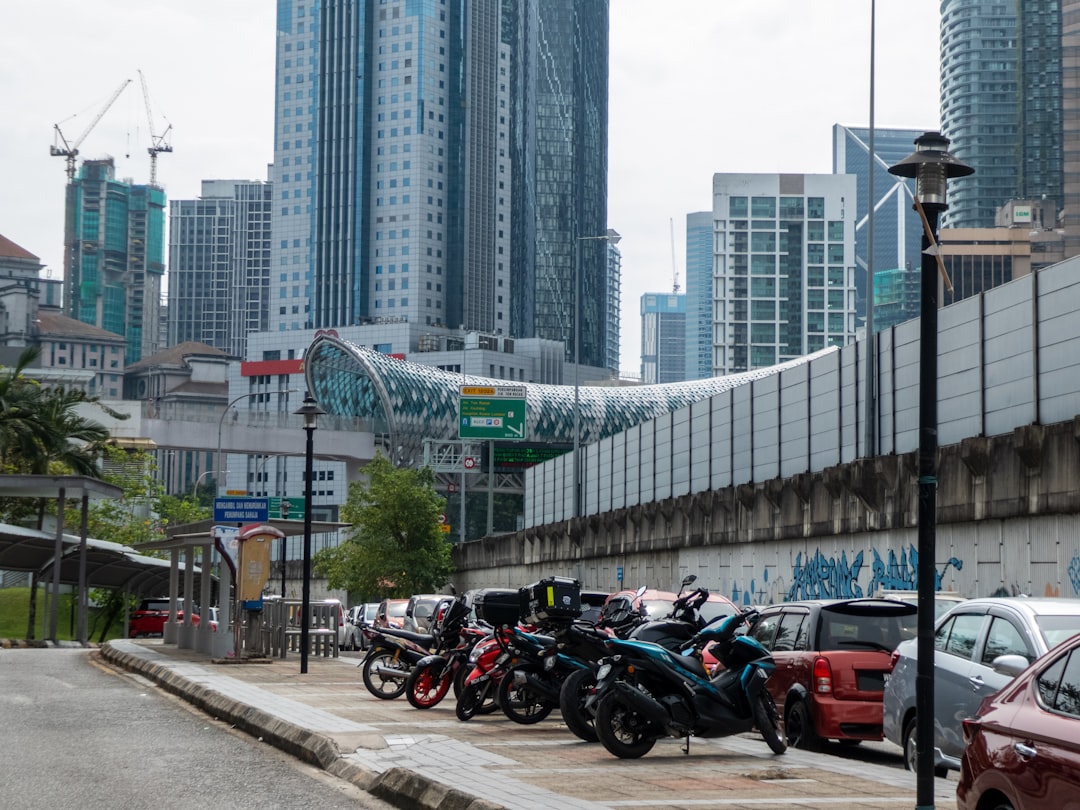
Kuala Lumpur has rolled out 10,000 AI-enabled CCTV cameras equipped with facial recognition technology across the Malaysian capital, a massive surveillance deployment that raises questions about privacy protections and regulatory oversight in Southeast Asia's rapidly digitizing cities.
The system, confirmed through social media posts by city officials and local tech communities, represents one of the largest urban surveillance networks in the region. But details about vendor selection, data governance, and legal safeguards remain murky—highlighting the gap between ASEAN's technological adoption and its regulatory frameworks.
Facial recognition technology has proliferated across Asia faster than in the West, driven by less stringent privacy laws and greater public acceptance of surveillance for security. China pioneered mass deployment, but Singapore, Thailand, Indonesia, and now Malaysia have followed with varying degrees of transparency.
Singapore's police lamp post camera network sparked privacy debates in 2019, leading to parliamentary scrutiny and eventual guidelines restricting facial recognition use to terrorism and serious crimes. Malaysia has no equivalent regulatory framework in place.
"The technology is here, it's cheap, and municipalities are deploying it without understanding the implications," said Khairul Azman, a digital rights researcher in Kuala Lumpur. "We don't have a data protection law that covers government surveillance. We don't know who has access, how long data is retained, or what happens if the system misidentifies someone."
Ten countries, 700 million people, one region—and a patchwork of privacy standards that ranges from Singapore's relatively robust Personal Data Protection Act to countries with virtually no enforceable data privacy legislation.
The KL deployment appears designed primarily for crime prevention and traffic management. Facial recognition can identify wanted suspects, track vehicle movements, and analyze crowd patterns. In theory, it makes cities safer and more efficient. In practice, the risks include false positives, function creep, and authoritarian misuse.
Malaysia's politics add another layer of concern. The country has oscillated between reformist and conservative governments, with periodic crackdowns on opposition figures and activists. A surveillance network capable of tracking individuals' movements could be a tool for legitimate law enforcement—or for monitoring dissent.
The system's vendor and technical specifications have not been publicly disclosed. Chinese companies like Hikvision and Dahua dominate the global surveillance market and have supplied systems across Southeast Asia. Western governments have banned these vendors over security concerns, but ASEAN countries continue to procure them, drawn by low costs and integrated AI capabilities.
Data sovereignty becomes an issue. If camera feeds or facial recognition databases connect to foreign servers, who controls that data? Malaysia has no clear legal answer.
Compare this to Singapore, which developed its own surveillance protocols with strict compartmentalization. Police access requires senior approval, data is automatically deleted after 31 days unless part of an investigation, and annual reports track usage. Malaysia has none of these safeguards publicly documented.
The broader pattern across ASEAN is adoption without adaptation. Governments embrace smart city technologies—AI traffic management, digital payments, biometric identification—but lag on governance frameworks. Thailand's Personal Data Protection Act finally took effect in 2022 after years of delays. Indonesia passed similar legislation in 2024. Vietnam, Cambodia, and Laos have minimal protections.
Singapore remains the outlier, combining aggressive tech deployment with relatively transparent governance. Its smart nation initiative includes privacy impact assessments, public consultations, and parliamentary oversight. The model isn't perfect—critics note Singapore's broad security exceptions—but it's more than most regional peers attempt.
For Kuala Lumpur's 10,000 cameras, the questions accumulate. What is the error rate for facial recognition, particularly for non-Malay ethnic groups in a diverse society? How will data be protected from breaches? Can citizens request deletion of their biometric profiles? Will there be independent oversight?
Civil society groups have called for transparency, but Malaysian authorities have offered few details beyond general assurances about public safety. The deployment proceeded without the public debate that would be expected in democracies with stronger privacy cultures.
The technology isn't going away. ASEAN cities will continue digitizing, and surveillance capabilities will expand. The question is whether governance can catch up—whether the region develops privacy frameworks before the infrastructure becomes too entrenched to reform.
Right now, Kuala Lumpur's cameras are watching. But who's watching the cameras remains unclear.