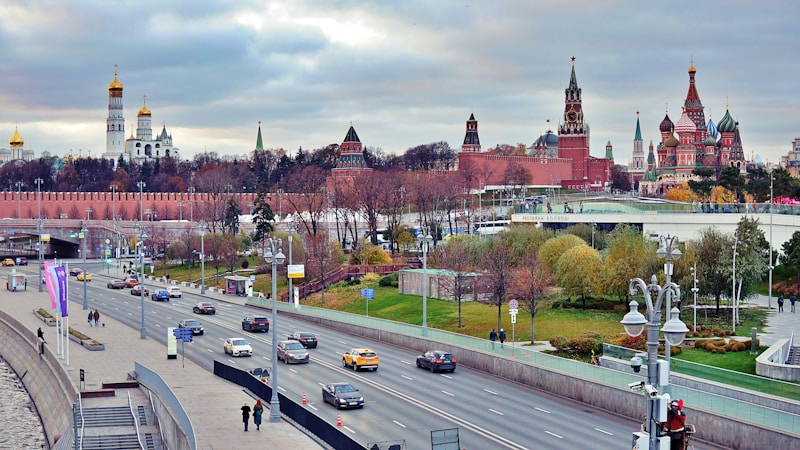
Russia is reveling in the spectacle of NATO's most powerful member threatening military action against a fellow alliance member, with Moscow seizing on the Greenland crisis to declare that Europe is "at a total loss" and its security guarantees worthless.
Russian state media and government officials have spent the past week gleefully amplifying the discord within the Western alliance, portraying President Donald Trump's refusal to rule out seizing Greenland by force as evidence that NATO has become a hollow institution incapable of defending its members.
"Europe is at a total loss," Russian state television commentator Dmitry Kiselyov declared in broadcasts monitored by the BBC, according to reporting this weekend. The Kremlin's message is unmistakable: if Washington threatens Denmark, what value do American security guarantees to Poland, the Baltic states, or any other European ally really hold?
The Russian government has carefully avoided taking an official position on the substance of the Greenland dispute, instead positioning Moscow as a detached observer commenting on Western dysfunction. But the schadenfreude is palpable.
To understand today's headlines, we must look at yesterday's decisions. NATO's Article 5 mutual defense commitment—the principle that an attack on one member is an attack on all—has served as the cornerstone of European security since the alliance's founding in 1949. The credibility of that guarantee has rested primarily on American military power and the assumption that Washington would come to the defense of any member facing external aggression.

The current crisis turns that logic on its head. When the United States itself is the source of threats against a NATO member, the alliance's collective defense mechanisms offer no remedy. Denmark cannot invoke Article 5 against its own guarantor.
Russian officials have been quick to exploit this paradox. Moscow has spent years arguing that NATO expansion represents a threat to Russian security and that Western security guarantees are merely instruments of American hegemony rather than genuine mutual defense arrangements. The Greenland crisis, from the Kremlin's perspective, validates that narrative.
The timing could hardly be worse for Europe. The continent faces continued Russian pressure on its eastern flank, with the war in Ukraine grinding through its third year. European governments have spent the past decade trying to reassure nervous allies in Central and Eastern Europe that NATO would defend them against Russian aggression. Those reassurances now ring hollow when the alliance's dominant power is threatening military action against Denmark.
Several European officials, speaking to journalists on condition of anonymity, have expressed deep concern that Russia may test NATO's cohesion while the alliance is consumed by internal crisis. The fear is that Moscow could probe defenses in the Baltic region or increase pressure on Moldova or Georgia, calculating that Washington is distracted and European capitals are paralyzed by uncertainty about American intentions.
The Kremlin's propaganda apparatus has also sought to draw parallels between Trump's claims to Greenland and Russia's annexation of Crimea in 2014—a comparison designed to muddy international condemnation of Moscow's actions in Ukraine. If Washington asserts the right to acquire territory based on strategic interests, Russian commentators ask, what moral authority does the West have to criticize similar behavior by Russia?
Whether the Greenland crisis permanently damages NATO's credibility depends largely on how it is resolved. But for now, Moscow is enjoying the spectacle of the Western alliance tearing itself apart—precisely the outcome Russia has sought for years through disinformation campaigns and influence operations. This time, the damage is self-inflicted.