
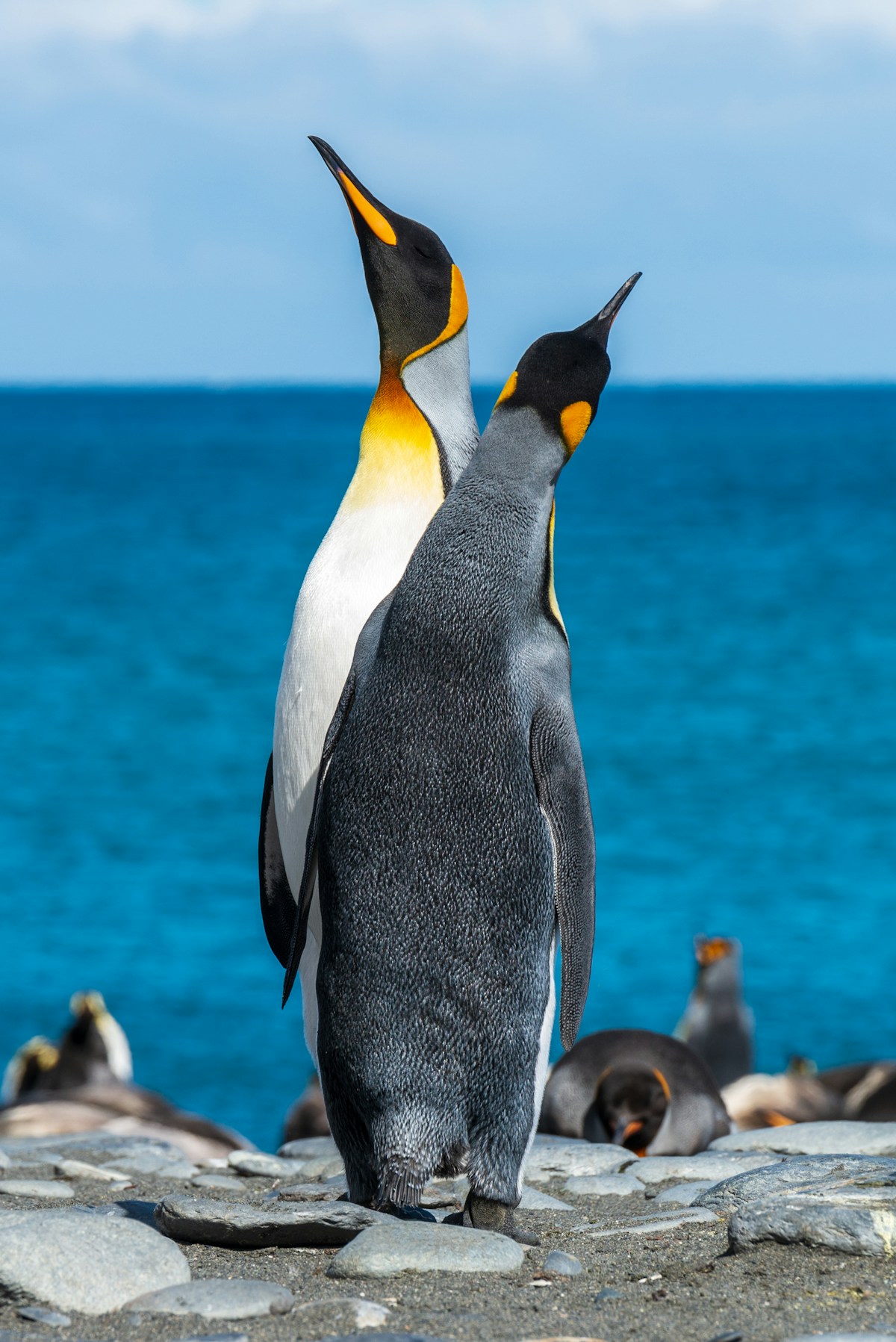
In a remote bay on Chile's windswept southern coast, a kindergarten teacher has become an unlikely guardian for 200 king penguins—the country's only continental colony of these majestic, climate-sensitive seabirds.
The colony at Useless Bay, Tierra del Fuego, represents a rare conservation success story emerging from an unexpected alliance between ordinary citizens and wildlife in an era of accelerating environmental change. King penguins, the second-largest penguin species, typically nest on sub-Antarctic islands thousands of kilometers from continental shores, making this mainland colony extraordinary.
The Guardian reports that the kindergarten teacher's dedication reflects a growing pattern of grassroots conservation emerging across South America, where local communities increasingly shoulder responsibility for protecting wildlife as government resources remain limited.
King penguins stand nearly a meter tall, with distinctive orange and yellow plumage adorning their heads and necks. Unlike their Antarctic cousins, king penguins breed on islands with milder climates—but climate change threatens their traditional breeding grounds as warming waters push their primary food sources farther from shore. The species requires stable temperatures and accessible fishing grounds during their lengthy 14-to-16-month breeding cycle.
The Useless Bay colony's continental location makes it scientifically significant for understanding how king penguins adapt to changing conditions. Researchers monitor the birds to understand whether mainland colonies might offer refuge as climate shifts make traditional island breeding sites less viable.
Yet the colony faces persistent threats. Tourism pressure increases as word spreads about the accessible penguin population. Domestic dogs from nearby settlements pose predation risks. Marine pollution and fishing pressure affect food availability. Without formal protected status, the penguins depend largely on voluntary stewardship.
The kindergarten teacher's work involves monitoring the colony, educating visitors about appropriate viewing distances, coordinating with researchers, and advocating for official protection measures. This hands-on conservation requires daily commitment—observing nesting patterns, documenting population changes, and intervening when human activities threaten the birds' well-being.