
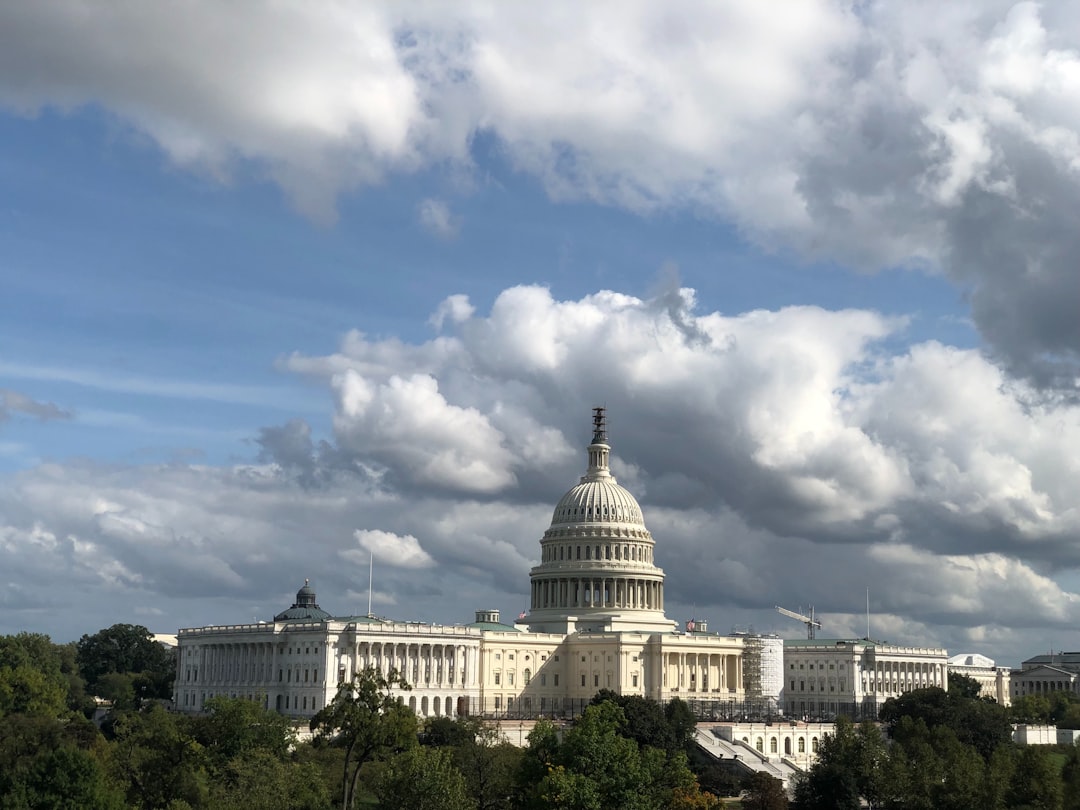
A progressive Democrat from California and a libertarian-leaning Republican from Kentucky walked into the same congressional office building this week with the same constitutional argument: the president of the United States does not have the unilateral authority to launch strikes on Iran. That left-right coalition — Representative Ro Khanna of Silicon Valley and Representative Thomas Massie of rural Appalachia — is the news, and it matters more than the partisan breakdown that typically dominates coverage of foreign policy votes.
Khanna and Massie announced this week they would force a House floor vote on a War Powers resolution specifically prohibiting the Trump administration from conducting military strikes against Iran without prior congressional authorization, according to Jewish Insider, which first reported the announcement. The resolution invokes the War Powers Resolution of 1973 — passed over President Nixon's veto at the height of the Vietnam War — which requires the president to consult Congress before committing armed forces to hostilities and limits unauthorized deployments to 60 days.
"Congress must do its job and stop this march to war," Khanna said in a statement accompanying the announcement. The framing is deliberate: this is not a statement about whether Iran is a threat or whether the administration's concerns about Iranian nuclear and proxy activities are legitimate. It is a constitutional claim — that the branch of government the founders gave the power to declare war should actually exercise it, rather than outsourcing the decision to the executive by default.
The constitutional backdrop here is decades in the making. Since the passage of the War Powers Resolution in 1973, presidents of both parties have treated the law as advisory at best and unconstitutional at worst, conducting military operations in Libya, Somalia, Syria, Yemen, and Iraq — among others — without formal declarations of war and with minimal congressional input. Congress has been largely complicit in its own marginalization, avoiding the political accountability that comes with a formal war vote while retaining the option to criticize outcomes.
What makes the Khanna-Massie push significant is the specific context: the Trump administration has ratcheted up pressure on Iran simultaneously with withdrawing US troops from Syria — a move defense analysts say reduces the number of American forces exposed to Iranian proxy retaliation while repositioning military assets. That sequencing has alarmed lawmakers on both sides of the aisle who see the moves as preparation for escalation, not de-escalation.
Massie's participation in the coalition is particularly significant. A consistent skeptic of American military intervention abroad, Massie has voted against foreign aid packages and defense authorizations that most of his Republican colleagues supported, often as the sole or one of a handful of dissenting voices. His willingness to stand alongside Khanna — one of the most prominent progressive voices in the House — signals that concern about an unauthorized war with Iran crosses the ideological spectrum in ways that a purely partisan framing would miss.
The practical mechanics of forcing a floor vote on a War Powers resolution are complex. House leadership controls the floor schedule and can, in most circumstances, prevent a vote from occurring simply by not scheduling it. The procedural tools available to individual members to force floor consideration of measures the majority opposes are limited but not non-existent. Whether Khanna and Massie can actually get their resolution to a recorded vote — rather than simply using the announcement to generate pressure and public debate — will depend on whether they can assemble enough cosigners to compel leadership's hand.
The vote, if it happens, would force every member of the House to answer a simple question on the record: should the president need Congress's permission before bombing Iran? In states like Ohio, Pennsylvania, Wisconsin, and Georgia — where military families and veterans communities are politically decisive constituencies — that is not an abstract constitutional seminar. It is a question about who gets to send their neighbors' children to war.
As Americans like to say, "all politics is local" — even in the nation's capital. The constitutional debate over war powers lands differently in a congressional district with a major military installation than it does in a Washington think tank. What Khanna and Massie are betting on is that it lands the same way on both sides of the aisle, in both kinds of districts.