
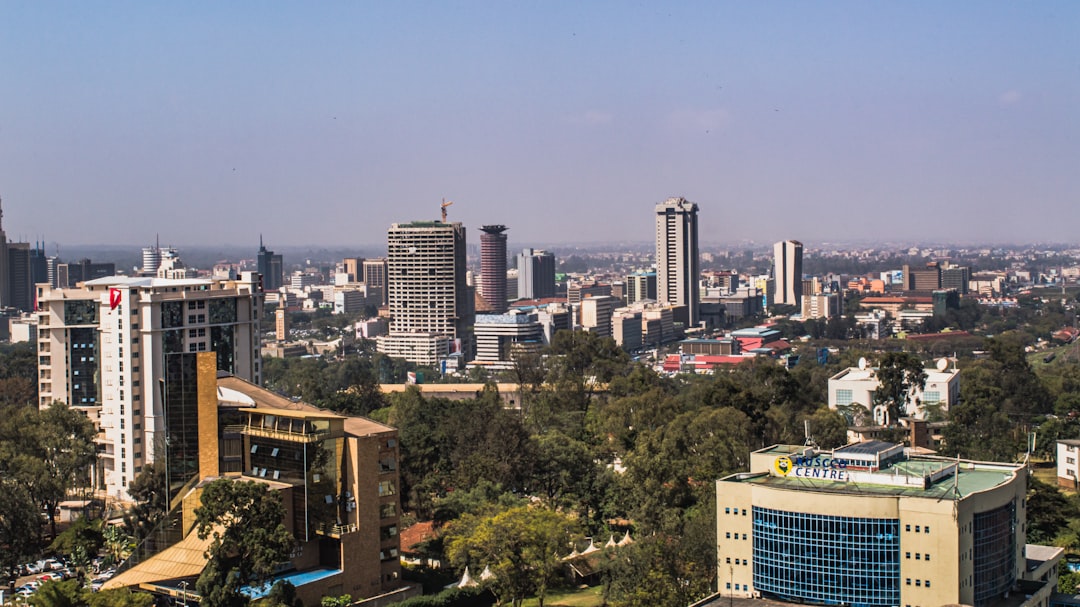
When Grace Wanjiru arrived at a public hospital in Nairobi's Mathare district last October, she was turned away at the admissions desk. Her Social Health Authority card — the government's promised replacement for the old National Hospital Insurance Fund — showed no active coverage, despite months of contributions deducted from her salary. She sat on the kerb outside the ward for three hours before a relative wired money for a private clinic.
"I paid into NHIF for eight years," she told a community health worker who later documented her case. "They tell me I must re-register for SHA. Nobody told me this. I thought it was the same thing."
Hers is not an isolated case. Across Kenya, patient advocacy groups and hospital administrators report a surge in treatment denials since the Social Health Authority was formally operationalised in October 2023, replacing the decades-old National Hospital Insurance Fund in what the government of President William Ruto described as a bold modernisation of universal health coverage.
But a picture is emerging — through audit documents, parliamentary testimony, and civil society research — of a transition conducted too rapidly, with inadequate systems, and with billions of shillings whose movement cannot be fully accounted for.
What the Auditors Found
The Office of the Kenya Controller of Budget and the National Audit Office have both raised red flags about the NHIF-to-SHA transition. According to documentation reviewed by health policy researchers, the handover of financial reserves from NHIF to SHA was conducted without a complete forensic reconciliation of outstanding member contributions, pending claims, and contractual obligations.
The National Audit Office flagged KSh 14.7 billion — roughly $113 million — in transactions from the final operational years of NHIF that could not be traced to approved expenditure heads. A separate parliamentary inquiry by the National Assembly's Health Committee heard testimony that SHA launched its digital claims platform before completing data migration from NHIF, leaving an estimated three million registered members in a registration limbo where their contribution histories were inaccessible.
"The transition was mandated by the Universal Health Coverage Act and there was genuine political will behind it," said Dr. Collins Omondi, a health financing analyst at the University of Nairobi's School of Public Health. "But auditors are finding that the financial architecture of the move — the actual accounting of where member premiums went — was not managed with the rigour this kind of transition demands. That is a serious governance failure."
A System Under Strain
SHA's mandate is ambitious: to provide Kenya's citizens with a single universal insurance pool covering primary care, hospitalisation, and specialist services, funded through income-graduated contributions. The government promoted the scheme as the centrepiece of the Ruto administration's "Bottom-Up Economic Transformation Agenda."
In practice, healthcare workers and patient advocates describe a system in systemic distress. The Kenya Medical Practitioners and Dentists Council has received complaints from doctors at both public and private facilities about SHA claim reimbursements arriving months late or not at all. The Kenya Hospitals Association, which represents private facilities contracted under SHA, warned in a statement that several member hospitals were considering suspending SHA-covered admissions due to accumulated unpaid claims now exceeding KSh 9 billion.
Bernadette Muthoni, a programme officer at the civil society watchdog AfyaWatch Kenya, said her organisation had documented more than 400 cases in which patients with valid SHA cards were refused elective procedures, diagnostic tests, or chronic disease medication because the relevant SHA benefit packages had not yet been gazetted into the claims system.
"When we probe these cases, we find the problem is not always fraud or corruption," Muthoni said. "Sometimes it is pure administrative unreadiness. They launched a scheme before the scheme was ready."
The Accountability Question
Parliament has struggled to extract clear answers about the financial trail. The SHA Board, appointed in 2023, has pointed to NHIF-era management for the accounting gaps. Former NHIF officials have, in turn, argued that the transition team did not follow agreed handover protocols. The result is a gap in accountability that health economists say is unacceptable given the public trust — and public money — at stake.
Dr. Njeri Mwangi, a health economist who has advised the Nairobi-based African Population and Health Research Center, was direct: "The Abuja Declaration committed African governments to allocate at least 15 percent of national budgets to health. Kenya has never met that threshold. And now money collected specifically for health insurance — from ordinary workers — appears to have disappeared into a bureaucratic black hole. That demands a full forensic audit, not a parliamentary back-and-forth."
The Ministry of Health has defended the transition, saying SHA's registration base now exceeds 22 million Kenyans — a significant expansion from NHIF's 11 million. Officials argue the claims backlog is a transitional challenge being resolved through a digital reconciliation process.
But for patients turned away from wards across Nairobi, Mombasa, and Kisumu, the abstract metrics of registration numbers offer little comfort. Kenya has one of the most innovative public health ambitions on the continent. The SHA scandal raises a harder question: ambition without accountability is not health reform — it is a ledger with missing pages.
Amara Diallo reports from Nairobi. Additional research by civil society health monitors in Kenya contributed to this report.