
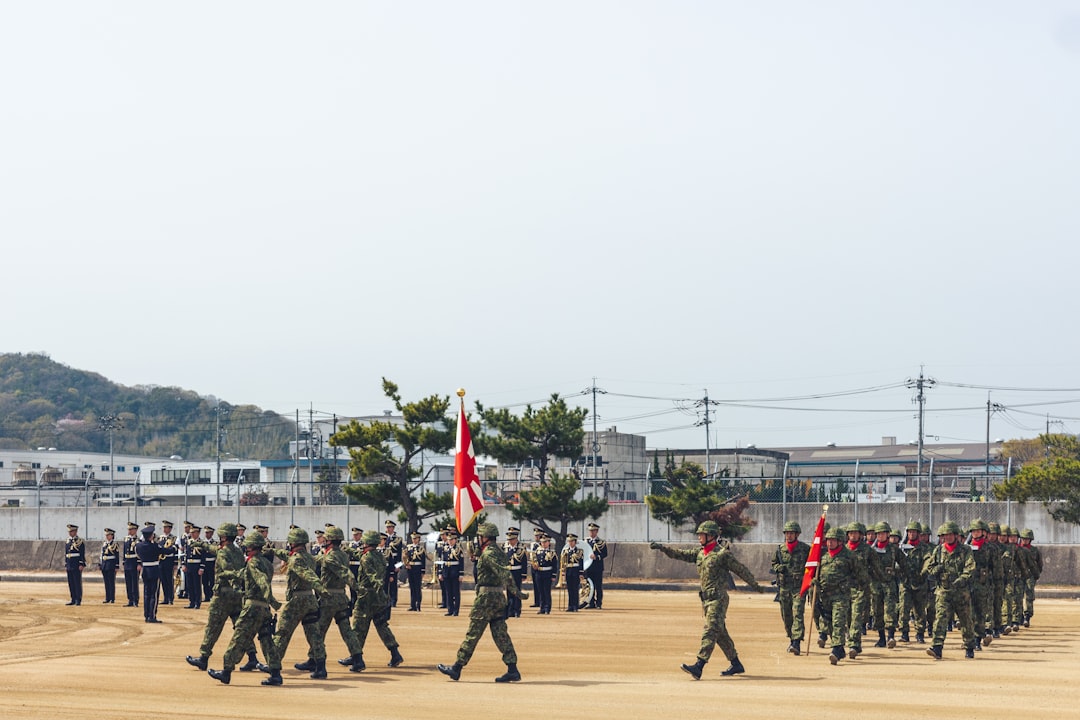
Prime Minister Sanae Takaichi declared Friday that Japan would "examine all options without exclusion" as the government prepares fundamental revisions to the nation's defense posture, marking the most explicit signal yet that Tokyo is prepared to dramatically expand its military capabilities beyond post-war constraints.
Speaking at the National Defense Academy graduation ceremony in Yokosuka, Takaichi outlined an increasingly dire security environment facing Japan. She cited China and North Korea's military expansion, the strengthening trilateral military coordination between Beijing, Pyongyang, and Moscow, and what she described as global shifts threatening the international rules-based order.
The remarks come as Tokyo prepares to revise three critical security documents later in 2026 — the National Security Strategy, National Defense Strategy, and Defense Buildup Program. Takaichi's "all options" language, deliberately open-ended, appears designed to signal that no aspect of Japan's defense architecture is off-limits for reconsideration.
Watch what they do, not what they say. In East Asian diplomacy, the subtext is the text.
While the Prime Minister did not specify which capabilities are under consideration, defense analysts note the phrasing leaves room for discussions that would have been politically impossible even five years ago. Japan's constitution, particularly Article 9, has long constrained the nation's military posture through its renunciation of war as a sovereign right.
The security revisions will be closely watched across the region. South Korea has long harbored concerns about Japan's military expansion due to historical grievances, while routinely condemns any strengthening of Japan's Self-Defense Forces as threatening regional stability. , by contrast, has encouraged to take on greater security responsibilities within the U.S.-Japan alliance framework.