
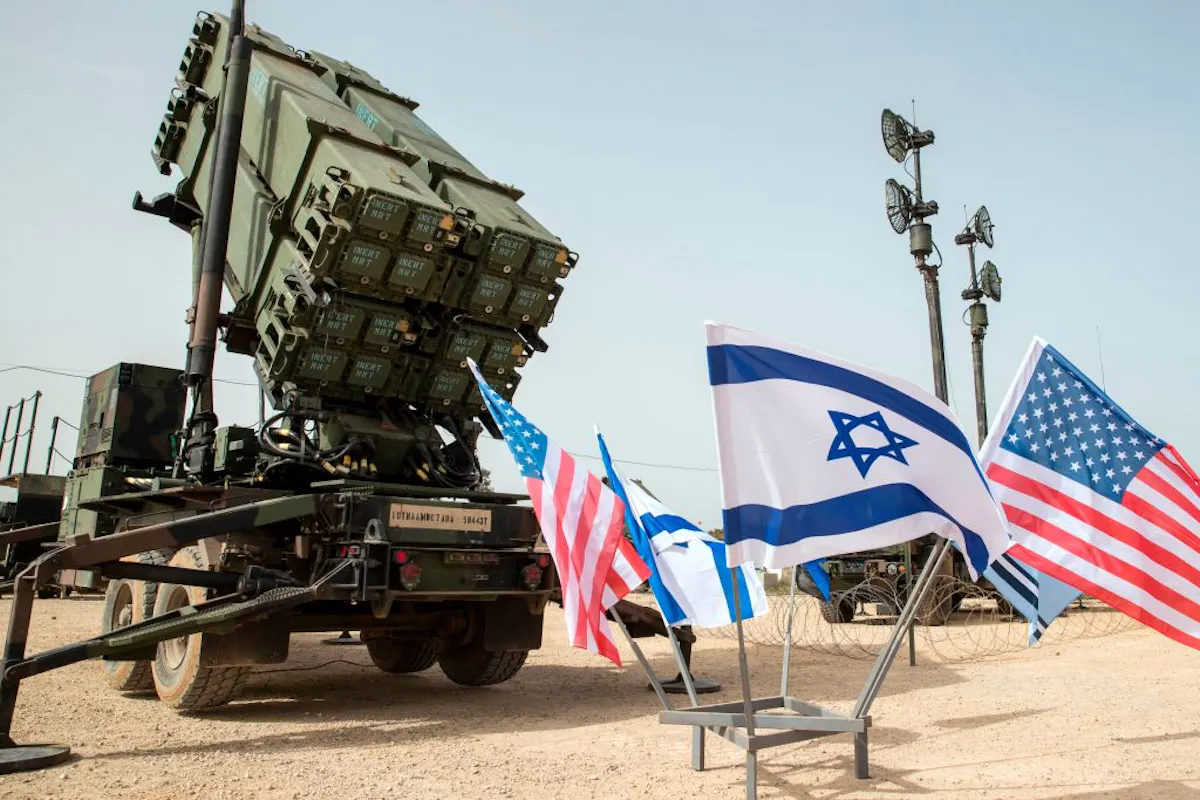
Israeli Prime Minister Benjamin Netanyahu unveiled a decade-long, $108 billion investment designed to build an independent domestic munitions industry, signaling a strategic shift toward reducing Israel's reliance on American military aid that has underwritten the country's defense capabilities for more than seven decades.
The initiative, reported by The Daily Wire, aims to "taper off military aid within the next 10 years," according to Netanyahu. The plan represents roughly 30% of Israel's current GDP concentrated into defense industrial capacity—a massive peacetime rearmament unprecedented in the country's history.
Currently, Israel receives approximately $3.8 billion annually in U.S. military aid, with roughly $3.3 billion required for purchases from American companies under agreements negotiated during the Obama administration. Total U.S. aid since 1948 totals $140.6 billion, making Israel the largest cumulative recipient of American foreign assistance.
U.S. funding represented 16.2% of Israel's 2022 defense budget and peaked at 28.5% during 2024 wartime operations. Projections suggest American support will decline to 10.66% by 2026 even without the new initiative, as Israeli defense spending has grown faster than aid increases.
Israeli officials cite multiple motivations for pursuing independence. Sovereignty concerns loom large, with officials referencing past incidents where American administrations restricted weapons transfers. The 2014 suspension of Hellfire missile shipments and Biden-era bomb embargoes during Gaza operations remain sensitive topics in Jerusalem.
"When your survival depends on ammunition, you cannot be subject to another nation's political calculations," said one senior Israeli defense official who spoke on condition of anonymity. "We've seen how quickly 'ironclad commitments' can be reinterpreted."
Structural constraints also drive the push for independence. Under Obama-era agreements, Israel can spend only 25% of annual aid on domestic procurement—declining to 0% by 2028. This requirement effectively subsidizes American defense contractors while limiting Israel's ability to build its own industrial base.
The $108 billion figure is staggering in context. Israel's entire 2024 GDP approximates $530 billion, meaning the defense investment equals roughly 20% of national economic output. For comparison, this would be equivalent to the United States announcing a $5 trillion defense industrial program—fifteen times the annual Pentagon budget.
Rather than ending the U.S.-Israel alliance, officials envision shifting from aid-dependent relationships to mutual strategic partnerships. This vision aligns with Trump administration priorities emphasizing allied self-sufficiency and burden-sharing, particularly as Washington reorients toward great power competition with China.
"We're not walking away from America," said one Jerusalem-based analyst. "We're proposing a more mature relationship—Israel as an independent military power and technology partner, not a client state."
In Israel, as across contested regions, security concerns and aspirations for normalcy exist in constant tension. The independence initiative reflects deep anxiety about American political volatility and determination to control the country's strategic destiny regardless of who occupies the White House.
The plan faces significant challenges. Building domestic production capacity for precision munitions, missile defense interceptors, and advanced systems currently sourced from American contractors requires not just funding but years of industrial development. Israel's defense industry excels at high-tech systems like Iron Dome and cyber capabilities, but mass-producing basic munitions at American scale remains unproven.
Economic implications are profound. Redirecting $10.8 billion annually into defense production could crowd out other investments, though proponents argue it will create jobs and technological spillovers similar to Israel's high-tech sector.
The timing connects to broader regional shifts. As Abraham Accords states like the UAE pursue more overt security cooperation with Israel, reducing dependence on American political approval for weapons transfers could facilitate joint defense production and technology sharing without Washington's bureaucratic oversight.
American reaction remains uncertain. While the Trump administration has emphasized allied self-sufficiency, the plan would reduce orders for American defense contractors who have benefited from decades of guaranteed Israeli purchases. Congressional supporters of Israel may resist losing the leverage that aid provides, even as they support Israeli security.
"This is about the future of U.S.-Israel relations," said one Washington-based analyst. "Do we want Israel as a dependent client, or as an independent ally? The answer determines whether this plan strengthens or strains the relationship."
For Israel, the calculation extends beyond immediate military considerations to questions of national identity and strategic autonomy. Seven decades after independence, the country that pioneered self-reliance in nuclear weapons, intelligence capabilities, and high-tech innovation now seeks the same independence in conventional military production—betting $108 billion that sovereignty is worth the cost.